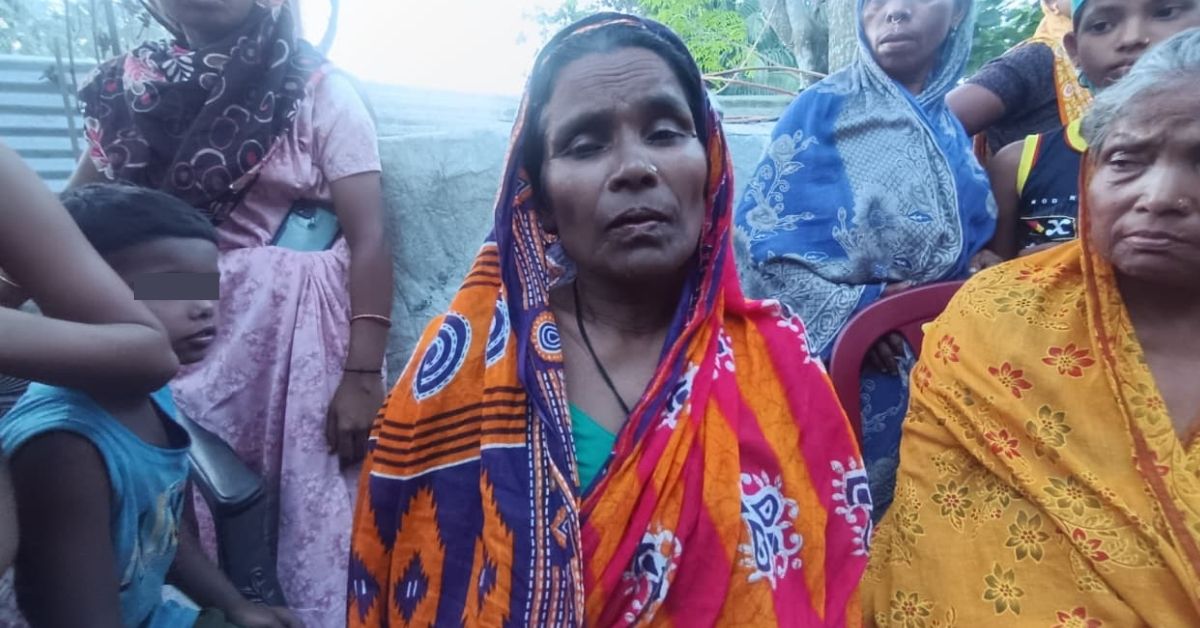
CJP helps secure Ajabha Khatun’s release after 772 days in Assam’s Matia detention camp Back home after CJP’s intervention, she appeals for Sehera, a visually impaired detainee she cared for at Matia Transit Camp
15, Oct 2026 | CJP Team
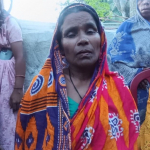
After 772 days in detention, Ajabha Khatun is finally home. A resident of Koetkuchi village in Assam’s Barpeta district, Ajabha is an ailing, marginalised woman who had been confined at the Matia Transit Camp in Goalpara since September 2, 2024, after being declared a foreigner. On October 13, 2026, following months of legal intervention, persistent follow-up with the authorities and extensive coordination by Citizens for Justice and Peace (CJP), she walked out of the camp on conditional bail.
For Ajabha and her family, her release marked the end of an agonising wait. For CJP’s Assam team, it was a deeply significant milestone in 2026. But the relief was accompanied by a painful reminder of the many people who remain trapped in detention, separated from their families, their health deteriorating and their futures uncertain. Her freedom is also a reminder of what timely legal assistance can mean to someone who has been left without the resources to fight alone.
Every week, CJP’s dedicated team in Assam, comprising community volunteers, district volunteer motivators, and lawyers, provides vital paralegal support, counseling, and legal aid to many affected by the citizenship crisis in over 24 districts in Assam. Through our hands-on approach, 12,00,000 people successfully submitted completed NRC forms (2017-2019). We fight Foreigner Tribunal cases monthly at the district level. Through these concerted efforts, we have achieved an impressive success rate of 20 cases annually, with individuals successfully obtaining their Indian citizenship. This ground level data ensures informed interventions by CJP in our Constitutional Courts. Your support fuels this crucial work. Stand with us for Equal Rights for All #HelpCJPHelpAssam. Donate NOW!
From a forgotten case to a sustained legal fight
On September 2, 2024, twenty-eight Bengali-speaking Muslims from Barpeta district were taken into custody and placed in a detention camp. When the CJP team met their families, it learnt that Ajabha’s family had not approached the Gauhati High Court on her behalf. The family was extremely marginalised and lacked the means to pursue the legal remedies available to her. At the family’s request, CJP took up Ajabha’s case, providing legal and paralegal assistance and helping bring her plight before the Gauhati High Court.
Detailed story may be read here.
On March 3, 2025, the Gauhati High Court stayed her deportation and sought the Foreigners Tribunal records to review the order declaring her a foreigner. The legal challenge, however, remained pending, and Ajabha continued to be held at Matia.
Detailed piece may be read here.
The High Court proceedings were crucial, but the immediate reality remained stark: an unwell woman was still confined in a detention camp, separated from her family, with no certainty about when she would return home. Without timely legal intervention, Ajabha could have remained without effective recourse to challenge her situation, while the threat of deportation continued to hang over her.
CJP’s work did not end with bringing her case before the Court. The team continued to stand by Ajabha and her family, pursuing every available avenue to secure her release while her substantive legal battle remained unresolved.
Two years in detention. A new effort to bring her home.
On September 1, 2026, Ajabha completed two years in the Matia Transit Camp. Her illness and prolonged confinement made the urgency of securing her release all the more pressing. Although her case was still pending before the Gauhati High Court, CJP’s Assam team began exploring additional avenues for her release on the grounds of her two years in detention and her deteriorating health. The effort drew upon the Supreme Court’s and Gauhati High Court’s suo-motu proceedings concerning detention during and around the COVID-19 period.
From August onwards, the team intensified its efforts. Alongside its continuing legal work, it counselled family members, visited the detention camp, documented her circumstances and initiated the administrative process required to secure her release. CJP Assam State In-charge Nanda Ghosh and legal team member Abhijeet Choudhury contacted the relevant authorities and submitted an application through Ajabha’s son. The work that followed was painstaking and often bureaucratic: identifying suitable bailors, verifying their documents and preparing the necessary applications, affidavits and supporting papers for submission to the District Border Police Office.
By October, Ajabha had spent more than two years and one month in detention. After the documents were submitted to the District Border Branch, officials informed the team that they would be forwarded to Guwahati and that the remaining process would depend on a favourable response. A few days later, the team received word that the processing in Guwahati had been completed and that the next steps could begin.
The team continued to follow up with the authorities through the following week. On October 11, the process was finalised for Ajabha’s release on conditional bail. On October 12, the Border Branch informally indicated that transportation difficulties could delay her release, but that an alternative arrangement might make it possible for her to leave the following day. CJP immediately coordinated with the Border Police and Ajabha’s family to ensure that the arrangements could be made. After more than two years of waiting, October 13 would finally bring her home.
October 13: The long journey back to freedom
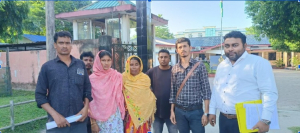
CJP Team Assam with Ajabha Khatun after being released
The day began before dawn. At 3:40 a.m., Nanda Ghosh, on behalf of CJP’s Assam team, and office driver Ashikul Hussain set out for Barpeta. The journey involved multiple stops: the Border Branch police quarters, the local police station and Ajabha’s home, where family members had to be brought together with the police for the journey to the Matia Transit Camp in Goalpara. They reached Matia at around 9:30 a.m. After completing the required formalities, the team accompanied Ajabha out of the camp and began the return journey to Barpeta.
By around 1:30 p.m., after hours on the road without food, Ajabha, the CJP team and the three police personnel accompanying them stopped to eat. It was a small, ordinary moment, but one that underscored how much had gone into making this day possible. The journey continued to the Barpeta District Border Branch at the Superintendent of Police’s office, where Abhijeet Choudhury had already begun the necessary work. CJP’s Barpeta District DVM, Jafar Ali, and the two bailors were also present.
Once the team arrived, the remaining formalities involving Ajabha and the bailors were completed, and the Border Police handed her over to the bailors. There was one more official requirement. The team accompanied Ajabha, the two bailors and a family member to Barpeta Sadar Police Station, where she is required to report once a week under the conditions of her release. Only after all these formalities were completed could the team finally take Ajabha home.
“The suffering there is indescribable. Only those who have been there know that pain.”
As soon as Ajabha got into the car, the weight of her long ordeal began to surface. Overcome with emotion, she struggled to find words to express her gratitude to the CJP team. “Baba, may God bless you all!” she said.
Then, speaking about her time in detention, she described the suffering she had endured. “What can I say about the suffering in that detention camp? It is a hell. The suffering there is indescribable. Only those who have been there know that pain!”
But even in that moment of relief, Ajabha was thinking of someone she had left behind. She told the team about Sehera, a visually impaired woman from Barpeta district who remains in the detention camp. Ajabha had cared for her during their time together, bringing her food, washing her clothes and plate, and making her bed.
“Baba, there is a blind woman there who cannot see. She suffers a lot. I used to bring her food, wash her clothes, wash her plate and make her bed. Her name is Sehera. She is from Barpeta district itself, but I don’t know exactly where. I only know her name. Can you please get her released, Baba?”
Ajabha recalled that as she was leaving, Sehera had hugged her and wept. She had asked Ajabha to appeal to the people who had helped secure her release to do the same for her. When I was leaving, she hugged me and cried a lot. She told me to request those who got me released to get her released too. Please get her out of that detention camp just like me. Allah will surely bless you,” Ajabha pleaded.
The request was heartbreaking. After 772 days of confinement, after enduring illness, separation and the uncertainty of her own future, Ajabha’s first concern was for another woman still inside. The CJP team knew Sehera only by name. They assured Ajabha that they would make every effort to trace her and explore the legal avenues available to help secure her release, while acknowledging that they could not guarantee the outcome. Ajabha had finally found her way out. Yet, even as she returned to freedom, she carried with her the anguish of someone who had not.
A village waits. A family welcomes her home.
As the sun began to set, the CJP team reached Koetkuchi village with Ajabha. Word of her return had drawn almost the entire village to her home. The moment the car arrived, people rushed forward. Tears, cries and overwhelming emotion filled the scene. After such a long separation, the sight of Ajabha returning home proved almost too much to bear. She fainted several times amid the emotional upheaval.
The team finally handed her over to her family, urging them to take particular care of her physical and mental well-being over the coming days after her prolonged confinement and the strain of the journey. Ajabha’s son, Buddu, works as a migrant labourer in the coal mines of Meghalaya. Unable to be present throughout the release process, he called the team by telephone and expressed his heartfelt gratitude to CJP for helping bring his mother home.
For a family that had spent months grappling with uncertainty and helplessness, her return offered a moment of immense relief. Yet Ajabha knows that her release is conditional and that her case before the Gauhati High Court remains unresolved. Before the team departed, she folded her hands and made one final plea. “I pray that my case ends permanently, Baba, as soon as possible, so that I never have to go to the camp again!”She prayed to Allah for the CJP team.
It was around 9 p.m. when the team finally began its journey home. The day had been long, physically exhausting and emotionally overwhelming. For months, the distress of Ajabha’s family had weighed heavily on the team as it worked to find a way to bring her home. That night, there was finally some relief.
It was not the end of the legal battle. It was not yet the permanent resolution Ajabha desperately wants. But it was a moment when sustained legal work, careful documentation, administrative follow-up and the determination to stand by a marginalised family had helped make a tangible difference.
The fight is not over
Ajabha Khatun’s release is an important milestone for CJP’s Assam team in 2026. It demonstrates the importance of legal assistance that does not stop at filing a petition, but continues through the practical, often exhausting work required to secure relief for a person who may otherwise struggle to navigate the system alone.
Her case also brings into focus the human consequences of prolonged detention for people declared foreigners, particularly those who are ill, economically marginalised and separated from their families while legal proceedings remain pending.
For Ajabha, freedom has meant returning to her village, embracing her family and sleeping once again under the open sky. But her relief remains shadowed by the knowledge that Sehera and others continue to endure detention.
As CJP’s team celebrates Ajabha’s return, it also carries forward the responsibility her plea has placed before it: to try to trace Sehera, explore the available legal remedies and continue working towards relief for those still confined.
After 772 days, Ajabha is home. Her legal case must still reach its conclusion, and the conditions of her release must be respected. For now, a family has its mother back, a village has welcomed one of its own, and a woman who endured the suffering of detention has found the strength to speak for someone still inside. Her freedom is a milestone. Her plea for Sehera is a reminder of the work that remains.
Related:
CJP Win! Gauhati HC stays deportation of Ajabha Khatun, will address bail demand on April 4
From Detention to Deportation: The mass deportations and detention crisis at Assam’s Matia centre
Declared Foreigner, buried Indian: The tragic death of Abdul Matleb in Assam’s detention camp