Clashes, Slogans, Stone-Pelting: How Eid Milad processions turned tense across India Mumbai, Bengaluru, Rajasthan and Madhya Pradesh reported confrontations as police appealed for calm and warned against rumours
27, Aug 2026 | CJP Team
Eid-e-Milad-un-Nabi, observed across India on August 26, 2026, was marked in several cities by processions, prayers and public celebrations. But the day also saw a series of clashes, confrontations and disputes in different parts of the country, with Mumbai, Bengaluru and parts of Rajasthan among the places where tensions were reported.
The incidents varied significantly in their immediate triggers. In some cases, police and media reports described clashes between groups following arguments and slogan-shouting; elsewhere, disputes centred on religious imagery, procession routes, sound systems or alleged acts of provocation. Yet a common feature ran through many of the reports: once videos began circulating on social media, competing narratives about who had provoked whom spread rapidly, often well ahead of verified police findings.
- Mumbai: Parel-Chinchpokli turns tense after Eid procession
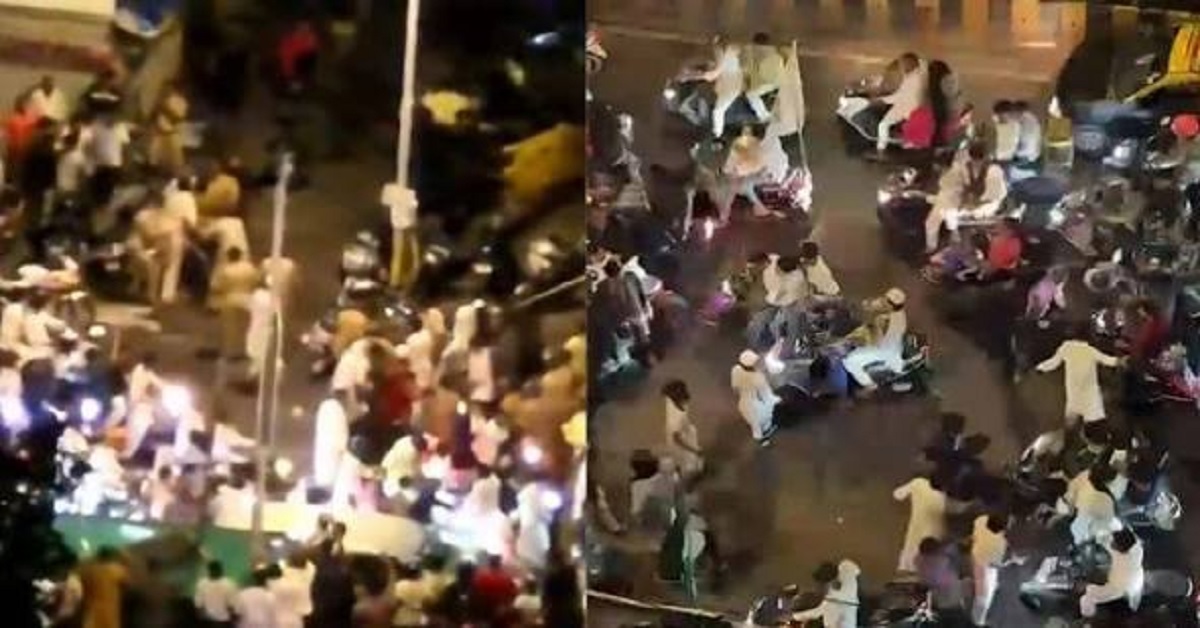
The most prominent incident in Maharashtra was reported from Mumbai’s Parel-Chinchpokli area on the night of August 26. According to The Indian Express, tension erupted near Laxmi Cottage after two groups clashed following an Eid procession. Police said they suspected that both groups had raised slogans, leading to a verbal altercation. Reports of stone-pelting and the use of mild police force subsequently emerged. The Free Press Journal similarly reported that a scuffle and stone-pelting occurred near Laxmi Cottage during the Eid Milad-un-Nabi procession. It reported allegations that banners were torn and slogans were raised, while videos circulating online showed crowds blocking roads and police attempting to disperse those involved.
The police response was immediate. Mumbai Police Joint Commissioner (Law and Order) Dr Manoj Sharma said senior officers were present and appealed to people not to believe rumours, stating that the situation had returned to normal. Additional police personnel were deployed in Parel, Chinchpokli and surrounding areas, while roads leading towards the area were blocked as a precaution. The Byculla-Lalbaug-Parel Bridge was also shut to vehicular traffic temporarily.
The incident has since generated sharply divergent accounts on social media. One set of claims alleges that Muslim youths were assaulted by Hindutva activists after a dispute over the alleged desecration or disrespect of a flag associated with the procession. Videos circulated online appear to show a physical altercation involving several people. However, subsequent reporting indicates that police were still investigating the precise trigger.
The Times of India reported on August 27 that three people had been booked following the Parel clash, while additional police personnel were deployed to prevent further disturbances. A later report by ABP Majha provided another version of the sequence, reporting that the confrontation occurred during police nakabandi and involved bikers allegedly violating traffic rules. It said the altercation began late on August 26 and continued into the early hours of August 27, with some police personnel also injured and three people booked.
- Bengaluru: Hindutva activists named in FIRs as police investigate competing complaints
A more detailed picture emerged from Bengaluru, where a clash took place in Basavanagudi during an Eid Milad procession. According to The Hindu‘s reporting, tensions flared near Garadi Apartments on KR Road when members of a Hindutva group, including activist Puneeth Kerehalli, allegedly raised slogans as the procession passed. Police intervened, but a youth identified as Murali was subsequently allegedly assaulted with a weapon.
Police later registered multiple FIRs arising from the confrontation. One case, based on a complaint by Abdul Razak Khan, invoked provisions of the Bharatiya Nyaya Sanhita relating to promoting enmity between groups, unlawful assembly, assault and criminal intimidation. Kerehalli, Gopi Gowda and Vinod Nayak were among those arrested in connection with that case.
At the same time, a second FIR was registered on the basis of a complaint by Kerehalli. That case included allegations of attempt to murder and provisions of the Scheduled Castes and Scheduled Tribes (Prevention of Atrocities) Act. Three people, namely Kamal Pasha, Abubakar Siddiq and Syed Anas, were arrested in that case, while two juveniles were produced before the Juvenile Justice Board.
A third case was registered by traffic police concerning obstruction of a public road. Police were examining CCTV footage and recording statements as the investigation continued. The Times of India reported that complaints had been filed by both sides following the Basavanagudi confrontation, with police maintaining additional security in the area.
- Rajasthan: Religious imagery triggers dispute in Chittorgarh
In Rajasthan, a separate confrontation was reported during an Eid Milad procession in Bassi town of Chittorgarh district. The Times of India reported that controversy arose over religious images on plastic sheets allegedly thrown into the air from a tempo-mounted setup accompanying the procession. The incident led to protests, and around 200 people from the Hindu community reportedly gathered near the old bus stand, shut shops and recited the Hanuman Chalisa. Police intervened and stopped the throwing of the plastic sheets. Additional forces were deployed and officials negotiated with representatives of the two communities. The procession was subsequently allowed to continue to its destination.
A complaint was later filed and Bassi police registered a case against unidentified persons under Sections 125, 299 and 302 of the BNS, according to The Times of India. Another report by Aaj Tak described the dispute as involving fariya, sheets or objects thrown during the procession, which allegedly contained images of Hindu deities. Hindu organisations objected and sought action from the administration.
- Gwalior: Confrontation over DJ music
Gwalior also witnessed a dispute during Eid Milad celebrations over the playing of DJ music. Reports from Madhya Pradesh said an argument broke out after police attempted to stop the DJ. A report by IBC24 News provided that the confrontation reportedly involved heated exchanges between police personnel and people participating in the procession.
The social-media battle begins almost immediately
The events of August 26 also demonstrate another increasingly familiar feature of communal tension in India: the speed with which isolated incidents become competing communal narratives. Within hours of the Mumbai incident, videos circulated claiming to show Muslims attacking Hindus; other accounts alleged that Hindutva activists had attacked Muslim participants. Neither narrative can safely be adopted merely because a video appears dramatic.
In fact, The Indian Express explicitly cautioned that reports of stone pelting and police use of force had not been independently verified. Meanwhile, as reported by Free Press Journal, Mumbai police publicly appealed to citizens not to believe rumours and said senior officers were monitoring the situation. This is particularly important in communal incidents because the first version of events can acquire a life of its own. Once a video is captioned as an “attack by Muslims” or an “attack by Hindutva activists”, subsequent users often circulate it without checking its date, location, sequence or context. The result is not merely misinformation. It can itself become an accelerant of violence.
One cannot ignore the pattern of violence as well and hold that the August 26 incidents did not occur in a vacuum. Mumbai had already witnessed tension earlier in the week after eggs were allegedly thrown at a Ganesh idol procession in Mazgaon. Hindustan Times had reported that organisers alleged eggs were hurled at the Ganesh procession, following which tensions escalated and police deployed additional security. The Parel incident occurred only days later, and local accounts cited by Free Press Journal linked the atmosphere to the earlier Mazgaon episode. This is precisely where the responsibility of political actors, religious organisations, police authorities and media platforms becomes critical.
The August 26 incidents also expose a broader challenge for Indian cities entering the peak festival season: equal enforcement of public-order rules. If authorities prohibit provocative slogans, the prohibition must apply regardless of who raises them. If loudspeakers and DJs are regulated, the same standards must apply to every religious procession. If roads are blocked, organisers of every community’s procession must comply with traffic restrictions. If religious symbols are damaged, the police must investigate regardless of whose symbol was targeted. Selective enforcement does more than create resentment. It undermines public confidence in the neutrality of the State and provides fertile ground for competing narratives of victimhood.
Image: facebook.com
Related:
Amnesty Investigation finds unlawful and deadly force against CJP-led protesters in Delhi and Siwan
Water Cannons Instead of Answers: Bihar’s recruitment crisis and the state’s crackdown on protest
Address Discrimination & Hate Crimes India told: CERD, UN
A people on the brink: The fight to protect the Shompen of Great Nicobar