Khoj Brings the Indian Constitution to life for Mumbai students Khoj's school programmes turn the quest for constitutional values into a lived experience for hundreds of children.
12, Jun 2026 | CJP Team
Between November 2025 and February 2026, Khoj brought together hundreds of students from ten municipal schools across Mumbai’s western suburbs for three separate programmes marking Human Rights Day, Constitutional Day, and Savitribai Phule Jayanti. This weekly intervention has been a consistent feature for 28 years in Mumbai’s public schools; for five years before that it was a regular intervention in Mumbai (then Bombay’s) private schools.
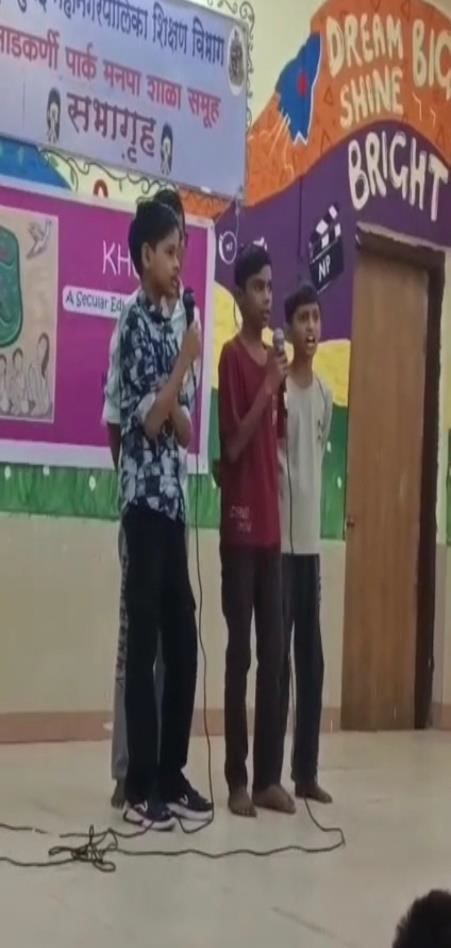
Held across schools in Bandra, Santacruz West, and the Nadkarni Park complex, and involving students from Grades 3 to 8, these events used drama, dance, song, and speech to bring constitutional values to life.
Children who had never heard of Human Rights Day stood on auditorium stages and performed plays about the right to education, gender equality, and civic pride — and walked away understanding not just what those rights are but also who fought for them and why.
Khoj designs such programmes to fill a gap that formal schooling has consistently left open. Children in municipal schools are taught what the Constitution says; they read the Preamble and memorise their fundamental rights. This goes hand in hand with the weekly modular multi-media curriculum that is imparted to the young.
With this year’s batch, as Khoj’s interactions with students and teachers revealed, neither group knew that a day like Human Rights Day even existed. Khoj’s work is aimed precisely at closing that distance — making rights feel real, relevant, and worth celebrating.
Preparation
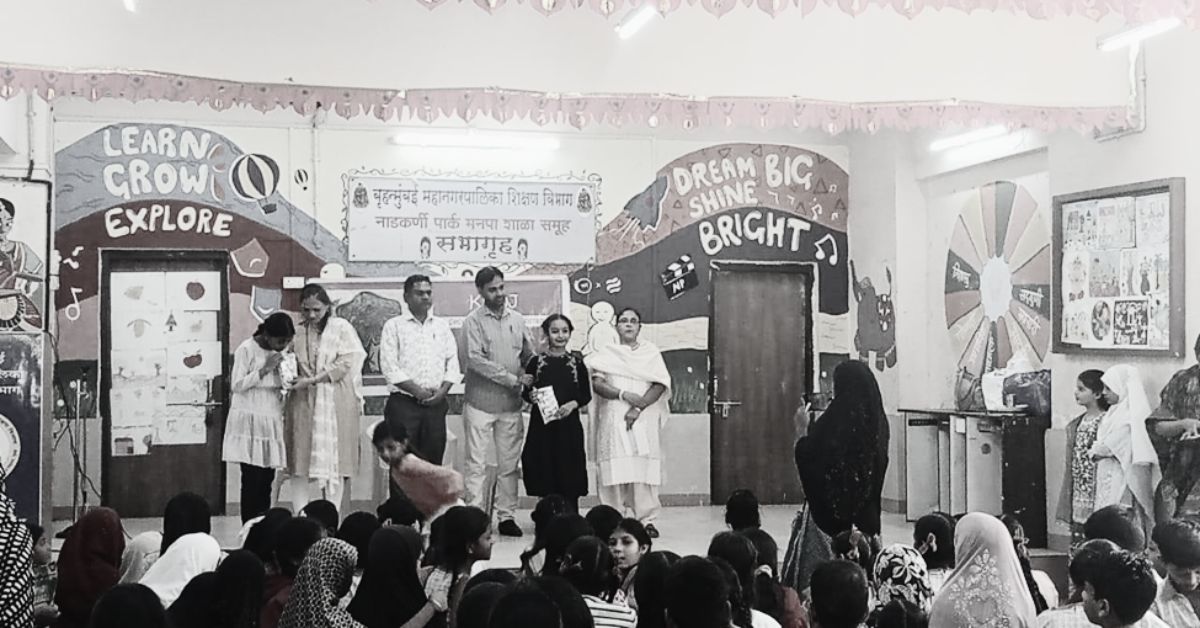
The Nadkarni Park complex alone houses five separate schools — three running morning sessions and two running afternoon sessions — all-operating within a single shared building. To accommodate all five, Khoj organised its Human Rights Day programme on December 11, 2025 across two separate time slots, covering Nadkarni Park Urdu School, Hindi School No. 1 and No. 2, and Marathi School No. 1 and No. 4. Coordinating with several school heads and principals, navigating multiple timetables and multiple student bodies is the kind of logistical commitment that has characterised Khoj’s work for many years.
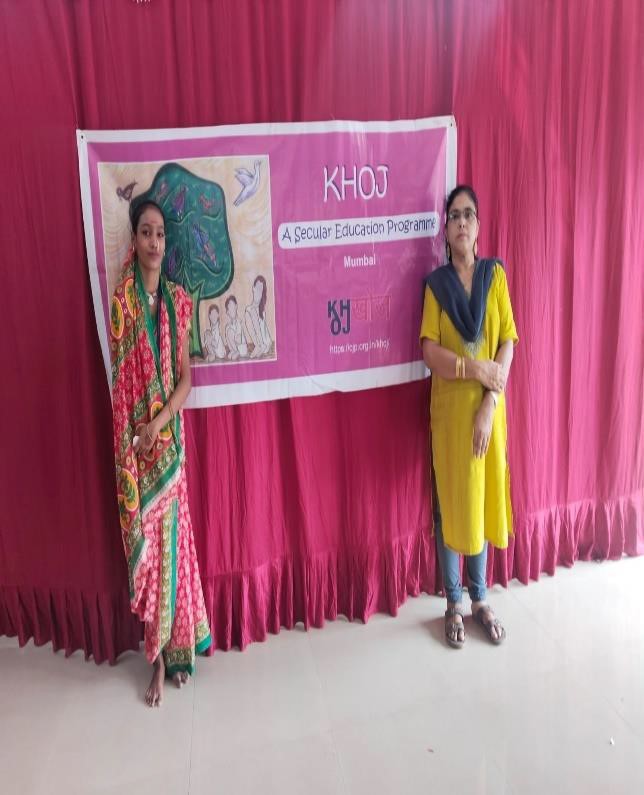
Just two weeks earlier, on November 26, 2025, Khoj had organised Constitutional Day programmes at Bandra Bazar Road Urdu School No. 1 and No. 2. Then, on February 7, 2026, a third programme brought together students from Santacruz West Tank Lane Hindi School, Khotwadi Urdu School, and Khotwadi Hindi School to celebrate Savitribai Phule Jayanti – honouring the 19th-century reformer who pioneered girls’ education in India at a time when such an idea was considered taboo.
Across all three occasions, Khoj’s teacher Noorjahan Sheikh was the driving force behind the preparation. She worked with students in advance to develop their performances, coached them on stage presence and public speaking, coordinated with school principals on space and equipment, and contextualised each programme with information about the significance of the day being marked.
Prizes were arranged, snacks were provided, and each venue — whether an indoor auditorium or an open school courtyard — was carefully set up before the students arrived.
The Events
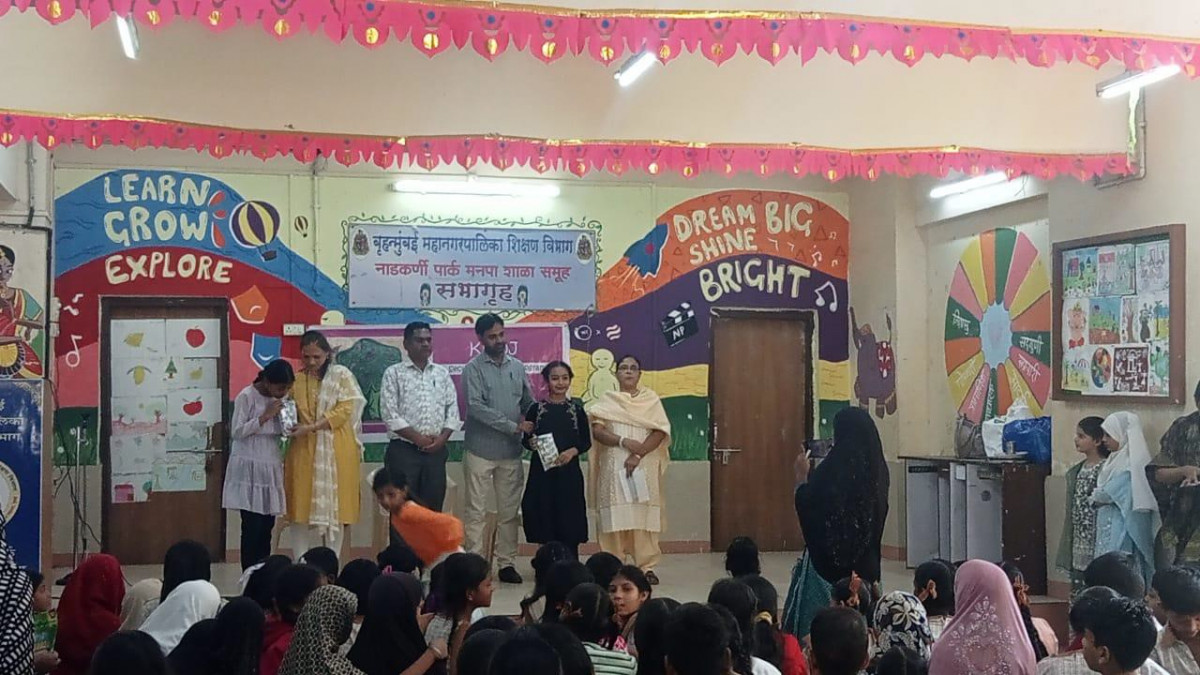
At the Human Rights Day programme in Nadkarni Park, students performed patriotic songs and dances in traditional costumes representing folk traditions from across India — a visual and cultural affirmation of the unity-in-diversity that the Constitution itself upholds. They also delivered speeches on human rights and performed a play on the Beti Baccha Beti Padhao theme.
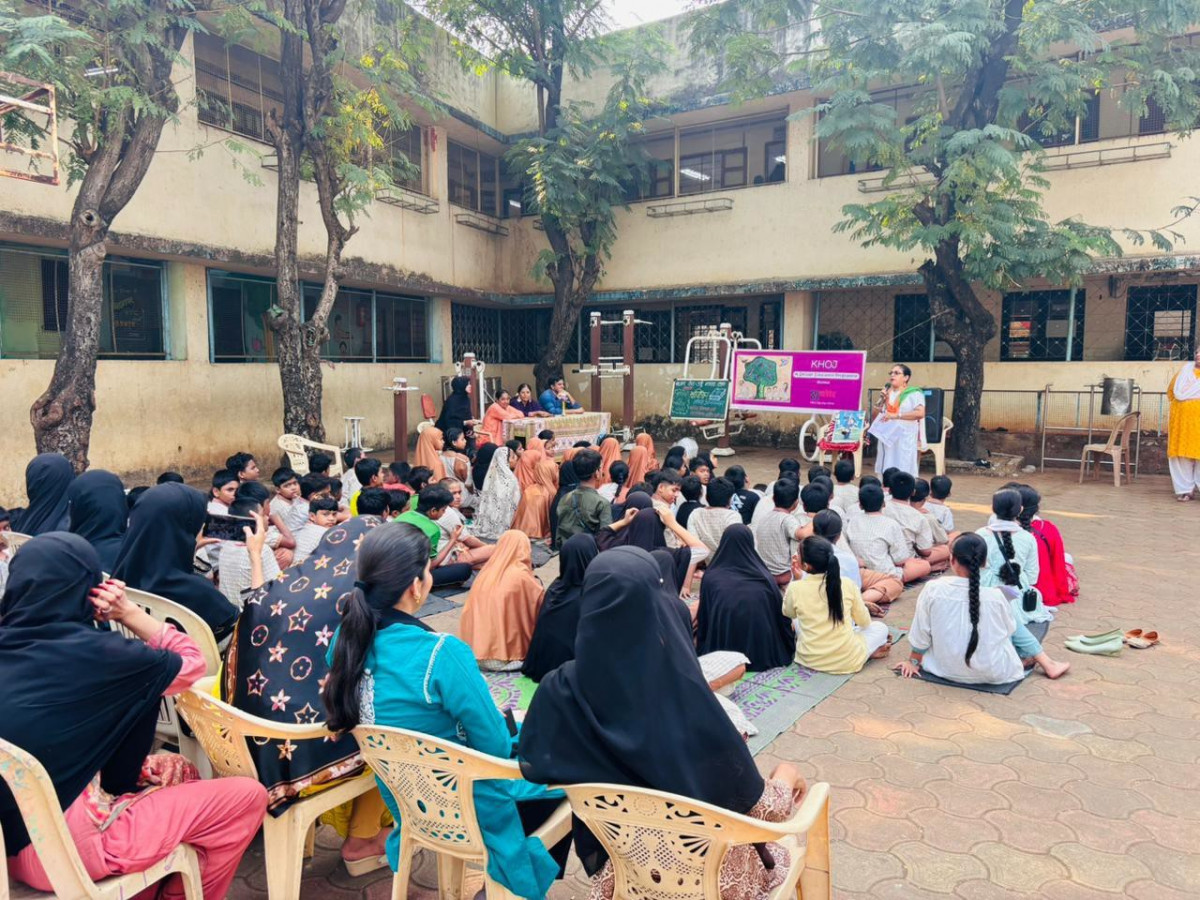
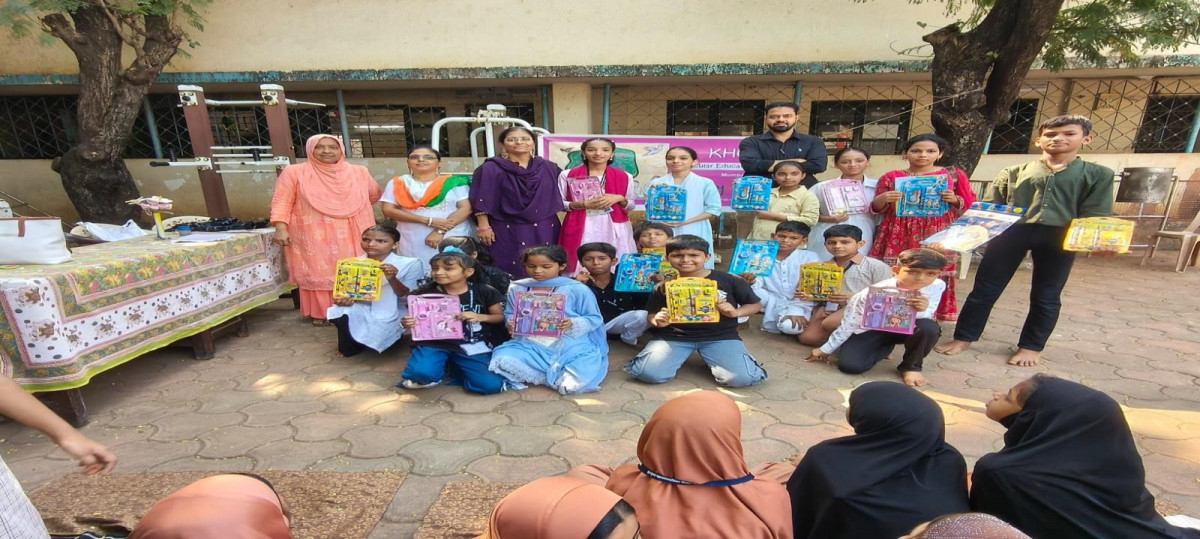
The Constitutional Day programme at Bandra Bazar Road took place outdoors. A banner was erected, the space was cleaned and arranged, and students from different grades performed before their peers.
Noorjahan Sheikh opened by introducing Khoj and explaining both the organisation’s work and the purpose of the day’s programme. Students were then invited to the stage to speak about what the Constitution of India means, followed by a Class 8 student who delivered a self-prepared speech.
A dance on “India Wale” expressed pride in the country, while girl students sang “Beti Hoon Main, Beti Main Taara Banungi” — asserting that daughters are no less than anyone else. A play on Beti Padhao, Beti Bachao conveyed a message of awareness about the importance of giving girls the opportunity to pursue their ambitions.
The programme closed with performances of “Mera Mulk Mera Desh” and “Saare Jahan Se Achha“, together with dances and poems celebrating the hopes and dreams of the country’s daughters.
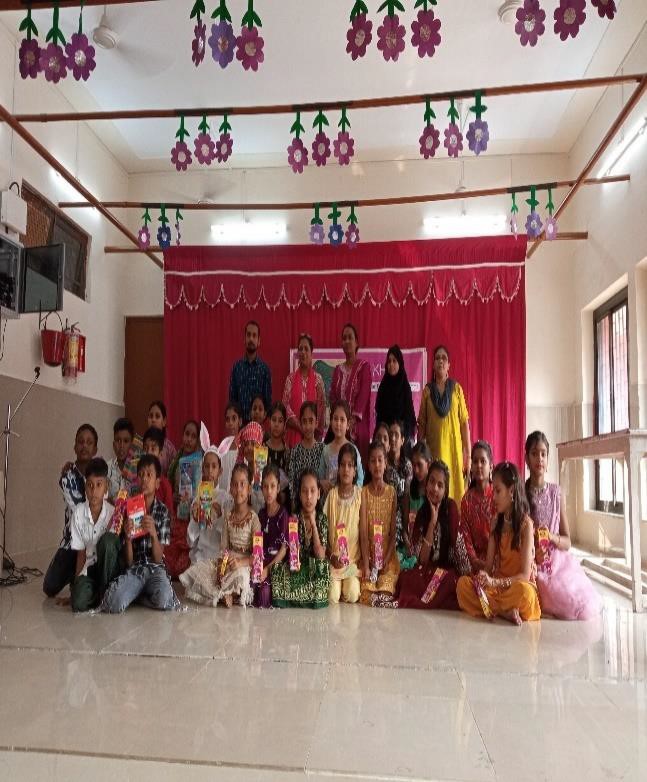
The Savitribai Phule Jayanti programme had a more difficult path to the stage. Originally scheduled for January 3 , 2026, it was postponed three separate times — first due to a departmental circular about Balak Utsav competitions, then because election dates were announced and the Model Code of Conduct came into effect, and finally following the sudden death of Deputy Chief Minister Ajit Pawar and the declaration of a three-day national mourning period. The programme eventually took place on February 7, more than a month behind schedule.
When the day finally arrived, girl students opened with a welcome dance, after which Noorjahan Sheikh introduced the programme and spoke about Khoj’s work. The event’s centre-piece was a solo performance by a girl student from Khotwadi Hindi School, who dressed as Savitribai Phule and portrayed her character, narrating the reformer’s life and struggles through her portrayal.
Two other students gave speeches in Hindi and English, and the programme brought together songs — including “Komal Hai, Kamzor Nahin Tu“, “Waqt Se Pehle Badi Hoti Hain Betiyan“, and “Jin Ko Hain Betiyan” — with dances on “Chhoti Si Asha” and “Ladkon Ki Tarah Ladki Bhi“. A concluding play, “Sapne Kaiy“, turned the audience’s attention to environmental responsibility and the importance of keeping one’s surroundings clean.
Children’s Responses
The students who participated came away with something more than information. One of the sixth-graders at Nadkarni Park put it like this: “There should be no discrimination between boys and girls.” From there, he made the link to how rights like being able to go to school are part of a bigger picture of civic progress.
A classmate from grade 7 took the thought further: “If we know about our rights, no one can say anything to us.” “So, in my opinion, everyone should read the Constitution once.” A third student reflected on social harmony: “We learned that all castes and religions are equal. No religion is superior or inferior. Everyone should live together and respect one another.”
At the Savitribai Phule Jayanti event, an eighth-grade student spoke of gaining “the courage to remain confident even when I feel afraid on stage” – a reminder that these programmes offer not only knowledge but also personal growth. The same student also made a connection that Khoj hopes every child will make: “Today, the girls who are studying in school are able to do so because of Savitribai Bai’s hard work.” In a single sentence, she linked a 19th-century struggle to her own present-day life.
Participation as Pedagogy
What makes Khoj’s approach distinctive is its insistence that students are not an audience but the central participants. From the moment Noorjahan Sheikh arrives at a school ahead of a programme, students are brought into the creative process — asked what they know, trained in drama and dance, coached on how to speak on stage, and given ownership over the content they will perform. The programme is built around them and delivered by them.
This reflects a well-established principle in education: children learn more deeply when they teach, perform, or create than when they simply receive. When a student memorises lines about the right to education for a play, the experience is fundamentally different from underlining those words in a textbook. The act of performing transforms abstract rights into something felt and understood.
Each of the three programmes ended with the same question posed to students: should Khoj continue doing this? The answer, each time, was an enthusiastic yes. One student put it plainly: “You should keep going to every school and tell us about human rights and about our country and help take our country forward, not backward.” Another said simply: “Such programmes should be held because we get to learn many new things from them.”
In the end, Khoj has shown these children that constitutional values and social reform are not some remote notion but part of the fabric of their daily lives. For the kids involved, it was more than a programme they went to. It was an experience that left them with a good deal of confidence and a stronger sense of their rights and duty to the country.
(The programme research team of CJP also consists of interns; this resource has been worked on by Ishan Bhatnagar)
Related:
Civic awareness and social justice education under Khoj Varanasi
Khoj students in Varanasi engage in activities to challenge prejudice