
Another CJP Victory: Barpeta Tribunal declares Alam Khan ‘not a foreigner’ After decades of uncertainty, the Tribunal finds that credible evidence, not documentary imperfections, determines citizenship under the Foreigners Act
20, Jul 2026 | CJP Team
For nearly twenty-six years, Md. Alam Khan lived under the shadow of a citizenship dispute that threatened to strip him of his identity, livelihood and constitutional rights. A marginal farmer, fisherman and daily wage labourer from Katla village in Assam’s Barpeta district, Alam Khan spent decades navigating a legal process complicated not only by a long-pending reference before the Foreigners Tribunal but also by fractured family circumstances and documentary gaps beyond his control. That ordeal has finally come to an end.
 Alam Khan outside his home in Barpeta
In an order delivered on January 6, 2026, the Foreigners Tribunal No. 1, Barpeta, presided over by Member Ms. Anurupa Dey, declared that Alam Khan is not a foreigner, concluding that he had successfully established his Indian citizenship through reliable documentary evidence, credible oral testimony and a consistent chain of records demonstrating that his family had been residing in Assam prior to the statutory cut-off date of March 25, 1971.
The decision represents another important legal victory for Citizens for Justice and Peace (CJP), which provided legal assistance to Alam Khan throughout the proceedings. The matter was argued by Advocate Abhijeet Choudhury, whose legal strategy addressed complex questions of lineage, documentary continuity and evidentiary burden arising under the Foreigners Act, 1946.
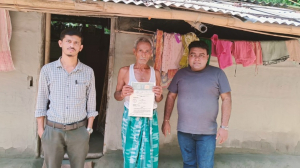 Alam Khan along with CJP Team Assam, outside his home
However, the significance of this decision extends beyond one individual’s relief. The Tribunal’s order is noteworthy for its careful appreciation of evidence, its refusal to allow administrative lapses to prejudice the proceedee, and its recognition that family circumstances such as divorce and remarriage cannot, by themselves, undermine a genuine claim to Indian citizenship.
Every week, CJP’s dedicated team in Assam, comprising community volunteers, district volunteer motivators, and lawyers, provides vital paralegal support, counseling, and legal aid to many affected by the citizenship crisis in over 24 districts in Assam. Through our hands-on approach, 12,00,000 people successfully submitted completed NRC forms (2017-2019). We fight Foreigner Tribunal cases monthly at the district level. Through these concerted efforts, we have achieved an impressive success rate of 20 cases annually, with individuals successfully obtaining their Indian citizenship. This ground level data ensures informed interventions by CJP in our Constitutional Courts. Your support fuels this crucial work. Stand with us for Equal Rights for All #HelpCJPHelpAssam. Donate NOW!
A citizenship dispute dating back more than two decades
Alam Khan’s case originated as IM(D)T Reference Case No. 1371 of 2000, when the Superintendent of Police (Border), Barpeta, referred him as a suspected foreigner. Following the Supreme Court’s order striking down the Illegal Migrants (Determination by Tribunals) Act in Sarbananda Sonowal v. Union of India, pending references under the IM(D)T regime stood transferred to Foreigners Tribunals for adjudication under the Foreigners Act, 1946 and the Foreigners (Tribunals) Order, 1964. Alam Khan’s case was one such transferred proceeding.
Although the reference itself was over two decades old, Alam Khan received a fresh notice from the Tribunal only in October 2024, compelling him once again to defend his citizenship. For a daily wage labourer with limited financial means, this meant returning to prolonged litigation, collecting decades-old documents, tracing family records and proving facts that ordinarily no citizen is ever expected to establish.
The proceedings eventually culminated in January 2026, though the certified copy of the order reached Alam Khan only several months later. On July 16, 2026, CJP’s legal team, represented by Advocate Abhijeet Choudhury and Assam State In-charge Nanda Ghosh, formally handed over the order copy to him, marking the end of a legal battle spanning almost twenty-six years.
A case made difficult by family history rather than law
Unlike many Foreigners Tribunal proceedings where documentary continuity alone becomes the principal issue, Alam Khan’s case presented an additional layer of complexity arising from his family’s personal history. Alam Khan was born to Late Abdul Hakim Khan and Joytan Nessa. During his childhood, however, his parents divorced. Following the separation, his mother returned to her parental home, while Alam Khan continued residing with his father. Subsequently, his father remarried, and his stepmother, Jahura Khatun, became part of the family. These personal circumstances later translated into significant documentary complications.
By the time Alam Khan’s own name began appearing in electoral rolls, his father had already passed away. Consequently, subsequent voter lists reflected his residence alongside his stepmother rather than his biological mother. Since he did not possess a birth certificate, establishing the identity of his biological mother, and distinguishing her from his stepmother, became one of the most difficult factual questions before the Tribunal.
Ordinarily, such inconsistencies are capable of creating serious doubts in citizenship proceedings, particularly because the burden of proof under Section 9 of the Foreigners Act rests upon the proceedee. Had these inconsistencies remained unexplained, they could easily have undermined Alam Khan’s defence despite his genuine claim to citizenship. It was this challenge that shaped CJP’s legal strategy before the Tribunal.
CJP’s Legal Strategy: Addressing documentary gaps through credible evidence
Recognising that the case hinged not merely on producing documents but on explaining the circumstances behind apparent inconsistencies, CJP adopted a legal strategy that combined documentary evidence with carefully structured oral testimony. Representing Alam Khan, Advocate Abhijeet Choudhury sought to establish an unbroken narrative of lineage, residence and citizenship, while simultaneously demonstrating that the deficiencies in the documentary record arose from circumstances entirely beyond the proceedee’s control. The defence first addressed the most fundamental issue in the case—Alam Khan’s parentage.
To resolve the confusion arising from the divorce of his parents and his subsequent residence with his father and stepmother, CJP produced Joytan Nessa, Alam Khan’s biological mother, as Defence Witness No. 2 (DW-2). Through her sworn affidavit and oral testimony, she confirmed that Alam Khan was indeed her son and explained the family’s history, including her separation from Abdul Hakim and her return to her parental home. The Tribunal found that her evidence fully corroborated Alam Khan’s own testimony and expressly recorded that it found no reason to disbelieve her evidence.
This was a crucial intervention. In Foreigners Tribunal proceedings, discrepancies concerning parentage or family relationships often become decisive, particularly where birth certificates or other foundational documents are unavailable. By placing the biological mother in the witness box and allowing her testimony to withstand cross-examination, the defence transformed what appeared to be a documentary weakness into a coherent and credible explanation supported by oral evidence.
Equally significant was CJP’s response to another obstacle that had nothing to do with Alam Khan himself—the absence of certified electoral rolls for 1985 and 1989. The relevant Election Commission office was unable to produce certified copies of these electoral rolls because they had not been preserved. This was an institutional failure entirely attributable to the authorities. During the proceedings, Advocate Abhijeet Choudhury argued that a citizen cannot be expected to suffer adverse consequences because the State failed to preserve public records that were legally required to be maintained. The inability to produce those electoral rolls, therefore, could not be treated as evidence against the proceedee.
Instead of insisting upon documents that no longer existed, the defence invited the Tribunal to examine the continuity of evidence through earlier and subsequent electoral records, legacy documents and witness testimony. The Tribunal accepted this broader evidentiary approach, demonstrating that the absence of a particular document does not necessarily break the chain of proof where surrounding evidence establishes continuity.
Documentary evidence establishing citizenship
To discharge the burden imposed under Section 9 of the Foreigners Act, 1946, the defence produced an extensive body of documentary evidence tracing Alam Khan’s family across multiple decades. The foundation of the case lay in the 1951 National Register of Citizens (NRC). The Tribunal noted that Alam Khan’s grandfather’s name appeared in the 1951 NRC Legacy Data under Legacy Data Code No. 120-0041-8547, establishing that the family was residing in village Katla, Mouza Bhawanipur, long before the citizenship cut-off date prescribed under the Assam Accord. The documentary chain was then strengthened through certified electoral rolls spanning more than five decades.
The 1965 and 1970 voter lists contained the names of Alam Khan’s father, Abdul Hakim Khan, and his mother, Joytan Nessa. The 1970 electoral roll also reflected the presence of his stepmother following his father’s remarriage, a circumstance that aligned with the factual explanation advanced before the Tribunal. Alam Khan’s own name subsequently appeared in the electoral records from 1997 onwards, demonstrating continuity of residence in the same village. Certified copies of the voter list for 1997, 2005, 2010, 2019 and 2021 were produced before the Tribunal.
The defence also produced Alam Khan’s Voter Identity Card, land records (Khatian) and a certificate issued by the Gaonburah of Katla village. Significantly, the Gaonburah himself appeared before the Tribunal and proved the certificate, explaining that it had been issued after verification of the 1965 electoral records relating to Alam Khan’s father. This substantially enhanced the evidentiary value of the certificate, which was no longer merely a supporting document but one whose authenticity stood established through oral testimony.
An equally important aspect of the proceedings was the State’s own conduct. While Alam Khan examined three witnesses, including himself, and produced extensive documentary evidence, the State did not lead any evidence whatsoever to substantiate the allegation that he was a foreigner. The Tribunal specifically recorded that no witness appeared on behalf of the State to adduce evidence.
Tribunal rejects a mechanical approach to citizenship determination
The order is particularly significant because it rejects a narrow or mechanical assessment of documentary evidence in favour of a holistic evaluation of the entire factual record. Foreigners Tribunal proceedings are frequently characterised by intense scrutiny of documentary inconsistencies. Minor discrepancies in names, ages, family relationships or electoral records have often proved fatal to citizenship claims. In Alam Khan’s case, however, the Tribunal recognised that documentary records must be assessed in light of the social realities that produce them.
Rather than treating the absence of a birth certificate or the appearance of a stepmother’s name in later electoral rolls as circumstances adverse to the proceedee, the Tribunal examined whether those circumstances had been satisfactorily explained through credible evidence. Finding that they had, it accepted the explanation offered by the defence.
This approach reflects an important principle in citizenship adjudication: documentary evidence does not exist in isolation. Electoral rolls, family records and legacy documents must be read together with oral testimony and surrounding circumstances. Where the evidence collectively establishes a coherent and credible narrative, isolated inconsistencies cannot automatically justify declaring an individual a foreigner. That reasoning is one of the most significant aspects of the order and reinforces the principle that citizenship determinations must rest on a comprehensive appreciation of evidence rather than on rigid technicalities.
Tribunal finds Alam Khan successfully discharged the burden under Section 9 of the Foreigners Act
One of the most important aspects of the decision lies in the Tribunal’s application of Section 9 of the Foreigners Act, 1946, which places the burden of proving Indian citizenship upon the proceedee once a reference is made against them. While the statutory burden remained upon Alam Khan, the Tribunal emphasised that this burden had to be assessed on the basis of the quality, credibility and cumulative effect of the evidence rather than through a piecemeal examination of individual documents.
After considering the oral testimony and documentary record together, the Tribunal held that Alam Khan had successfully discharged this burden. It observed that the evidence placed on record was trustworthy, internally consistent and sufficiently established that he was born to Indian parents who had been residing in Assam prior to March 25, 1971.
This finding is significant because it reiterates an important evidentiary principle governing Foreigners Tribunal proceeding. Although Section 9 reverses the ordinary burden of proof, it does not authorise a mechanical rejection of citizenship claims merely because every conceivable document is unavailable. Instead, what is required is a credible evidentiary chain capable of establishing ancestry and residence. The Tribunal found that Alam Khan had done precisely that.
Oral evidence receives equal evidentiary weight
The order is equally noteworthy for the importance it accords to oral testimony. Citizenship cases before Foreigners Tribunals often become document-centric, with oral evidence receiving comparatively little attention. In Alam Khan’s case, however, the Tribunal carefully evaluated the testimony of both the proceedee and his witnesses instead of confining itself to documentary records alone.
The evidence of Joytan Nessa (DW-2) proved particularly decisive. Her testimony not only established that she was Alam Khan’s biological mother but also explained the family’s circumstances following her divorce from Abdul Hakim. The Tribunal categorically recorded that her affidavit corroborated Alam Khan’s own evidence and that there was no reason to disbelieve her testimony.
Similarly, the Gaonburah of Katla village, who had issued the hereditary certificate relied upon by the defence, appeared before the Tribunal and proved its contents. The Tribunal specifically noted that the certificate had been issued after verification of the 1965 electoral records relating to Alam Khan’s father, thereby enhancing both its authenticity and evidentiary value.
Together, these witnesses bridged the documentary gaps that arose because of divorce, remarriage and the absence of a birth certificate. Rather than treating oral evidence as secondary, the Tribunal relied upon it to contextualise and reinforce the documentary record.
Administrative negligence cannot defeat citizenship
The proceedings also exposed a troubling administrative lapse. During the course of the case, certified copies of the 1985 and 1989 electoral rolls could not be produced because the Election Commission had failed to preserve those records. This was not a case where Alam Khan had failed to produce documents in his possession; rather, the relevant public authority itself was unable to furnish records that ought to have been maintained.
Recognising the implications of this failure, CJP argued that a citizen cannot be deprived of his legal rights because of omissions committed by the State. The absence of public records attributable to administrative negligence cannot be converted into evidence against the very citizen who seeks to rely upon them.
Although the Tribunal’s written opinion ultimately rested on the strength of the remaining documentary and oral evidence, its acceptance of the defence case effectively recognised that missing public records, when unavailable due to official lapses, cannot by themselves negate an otherwise credible claim of citizenship. The decision therefore reflects a fair and pragmatic approach to evidentiary evaluation in citizenship proceedings.
This aspect of the case is likely to assume wider significance. Across Assam, numerous citizenship proceedings have been complicated by missing electoral rolls, damaged records and administrative deficiencies that are entirely beyond the control of the persons facing proceedings. The reasoning adopted in Alam Khan’s case reinforces the principle that such institutional failures should not become instruments for denying citizenship.
A holistic appreciation of evidence
In this order, rather than isolating each document and asking whether it independently established citizenship, the Tribunal examined the evidence as a connected chain extending across several decades. It considered the 1951 NRC legacy data, the certified electoral rolls from 1965, 1970, 1997, 2005, 2010, 2019 and 2021, the voter identity cards, the land records, the Gaonburah’s certificate and the oral testimony of the proceedee and his witnesses. None of these documents, viewed in isolation, answered every question raised in the proceedings. Taken together, however, they established a consistent narrative regarding Alam Khan’s ancestry, family history and continuous residence in Assam.
The Tribunal expressly recorded that the evidence relied upon by Alam Khan appeared trustworthy, that there was nothing on record to disbelieve his version, and that the documents produced were admissible and duly proved. On that basis, it concluded that he had been born and brought up through genuine Indian parents and, being their descendant, could not be termed a foreigner.
“The evidence of Proceedee, coupled with the above-mentioned documents relied upon by him appears to be trustworthy and there is nothing on record to disbelieve him. I find sufficient proof on record to come to a definite conclusion that the Proceedee was born and brought up through genuine Indian Parents and as such, he being the descendent of his Indian Parents cannot be termed as a foreigner as alleged in the above-mentioned case.” (Para 8)
In doing so, the Tribunal reaffirmed an important legal principle: citizenship adjudication is ultimately an exercise in evaluating the totality of evidence. The law does not require perfection in documentation; it requires credible proof. Where multiple independent pieces of evidence corroborate one another and collectively establish the proceedee’s claim, isolated inconsistencies or documentary gaps cannot outweigh the cumulative force of the record. That is precisely the approach adopted in Alam Khan’s case, making the decision an important example of reasoned and evidence-based adjudication under the Foreigners Act.
The Final Verdict: Tribunal declares Alam Khan ‘not a foreigner’
Having examined the oral testimony, documentary evidence and the submissions advanced by both sides, the Foreigners Tribunal unequivocally held that the allegations made against Alam Khan could not be sustained. The Tribunal observed that the proceedee’s testimony, read together with the evidence of his biological mother and the documentary record produced before it, constituted a credible and reliable chain of evidence. It found no material on record that cast doubt upon the authenticity of the documents or the veracity of the witnesses. On the contrary, the Tribunal held that the evidence consistently established that Alam Khan belonged to a family that had been residing in Assam long before the statutory cut-off date and that he was the descendant of genuine Indian citizens.
Accordingly, by its order dated January 6, 2026, the Tribunal answered the reference in the negative, holding that Md. Alam Khan, son of Late Abdul Hakim Khan of village Katla, Barpeta, is not a foreigner within the meaning of the Foreigners Act, 1946.
The decision finally brought an end to a proceeding that had remained unresolved for over two decades, restoring to Alam Khan what should never have been placed in doubt—his recognition as an Indian citizen.
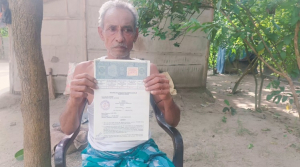 Alam Khan holds up the Foreigners’ Tribunal Order
Why this order matters
While the order grants relief to one individual, its importance lies in the principles it reinforces for citizenship adjudication before Foreigners Tribunals. First, the order demonstrates that family complexities cannot be viewed in isolation from social realities. Divorce, remarriage and blended family structures are lived realities across society. The absence of a birth certificate or the appearance of a step-parent’s name in electoral records cannot automatically negate a person’s citizenship. By accepting oral evidence that satisfactorily explained these circumstances, the Tribunal adopted an approach rooted in evidentiary fairness rather than technical formalism.
Secondly, the case highlights the consequences of administrative negligence. The inability to produce certain electoral records did not arise because Alam Khan had failed to preserve them; rather, the relevant public authority itself had failed to maintain those records. Had the Tribunal adopted an inflexible documentary standard, Alam Khan could have been penalised for omissions committed entirely by the State. Instead, the Tribunal assessed the available evidence in its entirety and declined to allow institutional lapses to determine the outcome of the proceedings.
Thirdly, the decision reiterates that the burden under Section 9 of the Foreigners Act is discharged through credible and cumulative evidence, not through the production of any one document in isolation. Legacy data, electoral rolls spanning several decades, land records, voter identity documents, certificates issued by local authorities and reliable witness testimony together formed an unbroken chain that satisfied the Tribunal. The order therefore reinforces the settled principle that citizenship claims must be evaluated on the basis of the totality of evidence rather than isolated discrepancies.
Finally, the order underscores the importance of effective legal representation in Foreigners Tribunal proceedings. Citizenship litigation often turns upon nuanced questions of evidence, lineage and documentary continuity. Alam Khan’s case demonstrates how careful legal strategy, supported by thorough documentation and credible witness testimony, can overcome seemingly insurmountable evidentiary hurdles.
A victory beyond the courtroom
For Alam Khan, the order marks far more than the conclusion of litigation. For years, the proceedings imposed severe emotional, social and financial burdens on a man whose livelihood depended on daily labour, farming and fishing. Living on the banks of the Dhumarkur River, Alam Khan has long battled forces beyond his control. Every monsoon, floodwaters enter his home, eroding both land and livelihood. Yet, for over two decades, nature was not his only adversary. As he poignantly puts it, “On one side, the floods threaten to wash away my home. On the other, the government sought to take away my citizenship.” His victory before the Foreigners Tribunal has ended one of those battles, even as the other returns with every monsoon.
Like countless individuals facing citizenship proceedings in Assam, he lived with the uncertainty that accompanies every notice, every hearing and every adjournment. The prolonged litigation affected not only his legal status but also his ability to live with dignity and security.
Upon learning of the Tribunal’s decision, Alam Khan broke down in tears. Describing the years of mental distress and financial hardship that accompanied the proceedings, he acknowledged that without the legal support extended by Citizens for Justice and Peace, it would have been extremely difficult for him to establish his citizenship and secure justice.
On July 26 2026, Advocate Abhijeet Choudhury and CJP Assam State In-charge Nanda Ghosh formally handed over the certified copy of the order to Alam Khan, symbolising the end of a legal struggle that had lasted almost twenty-six years.
CJP’s continuing commitment
Alam Khan’s case is another reminder of the indispensable role that sustained legal aid plays in protecting the rights of vulnerable communities facing citizenship proceedings in Assam. Over the years, Citizens for Justice and Peace (CJP) has represented hundreds of economically and socially marginalised individuals before Foreigners Tribunals, assisting them in tracing legacy documents, reconstructing family histories, producing witnesses and navigating a complex legal process that is often inaccessible to those with limited means.
The organisation’s intervention in Alam Khan’s case illustrates that citizenship litigation is not merely about producing documents; it is about reconstructing lives, explaining family histories, addressing administrative failures and ensuring that constitutional guarantees are not defeated by poverty, illiteracy or bureaucratic lapses.
With this order, another individual has been spared the devastating consequences of an erroneous declaration of foreigner status. Yet the case also serves as a broader reminder that citizenship adjudication must remain anchored in fairness, careful appreciation of evidence and the rule of law.
The complete order may be read below:
Related:
When a narrow reading of documents decide citizenship: GHC in Aminul Hoque
‘Fairness & reason ‘: SC rules that due process is a must for citizenship determination
Gauhati High Court upholds foreigner declaration, rejects mental illness plea
When a Spelling Error Can Cost Citizenship: Supreme Court stays deportation of five Assam women