CJP seeks FIR against actor Sharad Ponkshe over Borivali speech, alleges hate speech targeting Muslims The complaint alleges that the speech promotes communal hostility and spreads conspiracy theories against Muslims
03, Jul 2026 | CJP Team
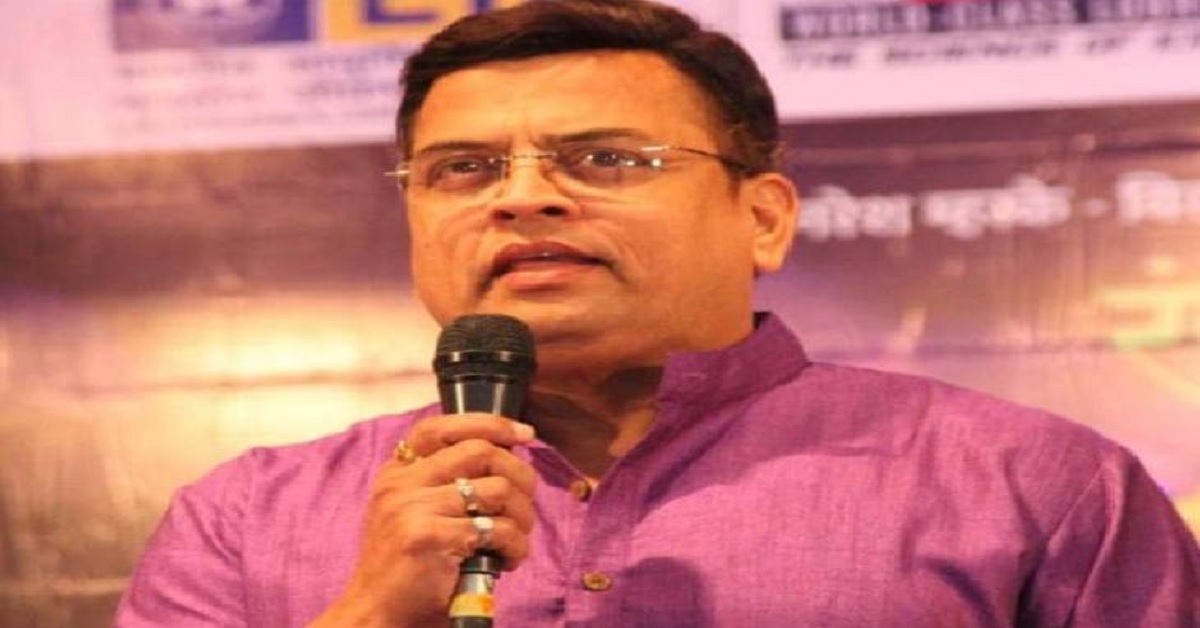
On June 24, 2026, the Citizens for Justice and Peace (CJP) has approached senior Maharashtra Police officials seeking registration of an FIR against actor and writer Sharad Ponkshe over a speech delivered during a ‘Hindu Sammelan’ organised by Sakal Hindu Samaj at Borivali West, Mumbai, on May 17, 2026.
Addressing the Additional Director General (Law and Order), the Deputy Commissioner of Police, West Zone-III, and the Senior Police Inspector of Borivali Police Station, CJP alleged that Ponkshe’s speech contained communal and inflammatory remarks against Muslims, promoted conspiracy theories and was capable of creating hostility between religious communities.
According to the complaint, Ponkshe “made inflammatory statements targeting the Muslim community, propagated false and malicious conspiracy theories regarding Indian Muslims, questioned the educational credentials of Maulana Abul Kalam Azad, blamed Aligarh Muslim University for the Partition of India, alleged that Muslims seek to transform India into an Islamic state, and repeated the conspiracy theory of ‘Love Jihad’.”
CJP is dedicated to finding and bringing to light instances of Hate Speech, so that the persons propagating these venomous ideas can be unmasked and brought to justice. To learn more about our campaign against hate speech, please become a member. To support our initiatives, please donate now!
CJP argued that the remarks were not merely expressions of opinion but were capable of promoting hatred and communal discord. The organisation stated that the speech violated the constitutional principles of equality, fraternity, secularism and dignity embodied in Articles 14, 15 and 21 of the Constitution. It alleged that by portraying an entire religious community as disloyal to the nation and as a demographic threat, the speech fuelled prejudice and suspicion against Muslims.
The complaint further said the speech fell within the definition of hate speech recognised by the Supreme Court in ‘Amish Devgan v. Union of India (2021) 1 SCC 1’, asserting that it repeatedly projected Muslims as a collective threat to the nation and sought immediate criminal investigation under the Bharatiya Nyaya Sanhita, 2023.
Notably, pursuant to the complaint filed by CJP, the Borivali Police Station has taken cognisance of the complaint and initiated an inquiry into the matter. On June 24, 2026, the Borivali Police Station issued a letter to the CJP team requesting that its representatives appear for recording of their statements in connection with the complaint. In compliance with the notice, members of the CJP team visited the police station on June 26, 2026, where their statements were formally recorded. Following the recording of the statements, CJP also submitted a complete copy of the complaint along with the full video recording of the impugned speech to the investigating officers, thereby placing the documentary and audio-visual evidence on record for the purposes of the inquiry.
Speech questioned Maulana Azad, partition and Muslims’ loyalty
The complaint reproduces portions of Ponkshe’s speech delivered at the Borivali event and contends that these statements formed the basis of its allegations.
Among the excerpts quoted is Ponkshe’s reference to India’s first Education Minister, where he said, “Maulana Azad… had never even been to any regular school… He studied in madrasas, and you already know what is taught in madrasas.”
The complaint also reproduces his remarks regarding the events surrounding Partition. Referring to Muslims who remained in India after 1947, the speech states, “They chose to stay behind in the remaining land to turn it into an Islamic state, a Dar-ul-Islam.” He praised the slogan in the speech that ‘Ladh ke liya Pakistan, hans ke lenge Hindustan’. The complaint alleges that this statement collectively attributes anti-national intentions to the Muslim community. The complaint also reproduces Ponkshe’s claim regarding population growth, stating, “How many stayed in ’47? Three crores. And today, 79 years later, how many are they? 30 crores.”
According to CJP, this was used to propagate a demographic conspiracy theory portraying Muslims as an organised threat.
Another portion of the speech highlighted in the complaint links Muslim religious practices with political motives. It quotes Ponkshe as saying, “Every single Muslim home… reads the Quran and performs the Namaz five times a day.” The complaint argues that such statements were intended to communalise ordinary religious practices and generate distrust towards Muslims.
The complaint quotes Ponkshe as saying, “If you are going to deceive them through Love Jihad… then we will have to tell you firmly: Yes, a Chhatrapati Shivaji Maharaj has already been born among us.” CJP alleges that these remarks portray Muslims collectively as aggressors and encourage hostility against an entire religious community.
Complaint explains why it considers the speech hate speech
Following the alleged hate speech, the complaint explains why it considers each part of the speech to amount to hate speech.
It alleges that references to Maulana Abul Kalam Azad and madrasas communalise education and encourage suspicion of Muslims holding public office. It further argues that portraying Muslims who remained in India after Partition as people who stayed to establish an Islamic state depicts them as perpetual outsiders rather than equal citizens.
The complaint also states that references to Muslim population growth promote demographic conspiracy theories, while repeated assertions that Muslims seek to “take Hindustan” or establish “Dar-ul-Islam” amount to collective allegations of disloyalty against an entire religious community. It further argues that invoking the theory of “Love Jihad” portrays ordinary inter-faith relationships as organised acts of religious aggression and contributes to communal hostility.
CJP further contends that the speech depicts Muslims as aggressors seeking to dominate Hindus, destroy temples and undermine Hindu society, thereby creating “an atmosphere of fear and antagonism that is likely to incite hatred and communal disharmony.” It adds that, as a public figure, Ponkshe bears a heightened responsibility because his words carry greater influence in shaping public opinion.
The copy of complaint dated June 24, 2026 can be accessed from here:
Image Courtesy: divyamarathi.bhaskar.com
Related
CJP files 5 hate speech complaints before CEO Maharashtra as violated MCC
CJP files 3 MCC violation complaints with CEO Maharashtra against Suresh Chavhanke for hate speech