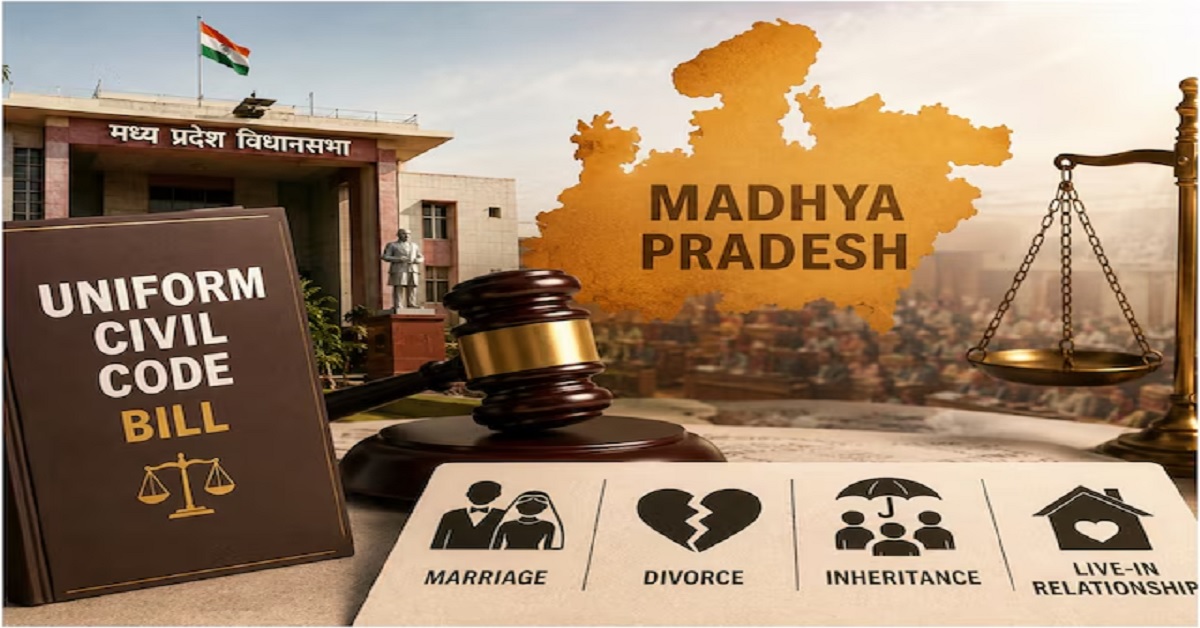
Madhya Pradesh becomes fourth UCC State; three more join the queue As the state-led rollout gathers pace, questions of gender justice, federalism, transparency and constitutional equality have become harder to ignore.
03, Aug 2026 | CJP Team
The Uniform Civil Code is no longer a constitutional aspiration but a state-level reality. Thirty months after Uttarakhand became the first state in independent India to bring a Uniform Civil Code into force, the project has now acquired more momentum with Gujarat passing its own UCC in March 2026. Assam followed in May, becoming the first north-eastern state to do so; and on July 21, 2026, the Madhya Pradesh Assembly passed the Madhya Pradesh Uniform Civil Code Bill, 2026, by voice vote within forty-eight hours of it being tabled, and over sustained Congress protest.
https://datawrapper.dwcdn.net/xmlbf/1/
A tracker of all the States in process of implementing UCC
Three more BJP-run states, Rajasthan, Maharashtra and West Bengal, have since constituted their own committees. Retired Supreme Court judge Justice Ranjana Prakash Desai has now headed the UCC panels of Uttarakhand, Gujarat, Madhya Pradesh, West Bengal, Rajasthan and Maharashtra.
Madhya Pradesh
The Madhya Pradesh Legislative Assembly passed the Uniform Civil Code Bill on July 21, 2026, making MP the fourth state in India to adopt the law, pending formal assent.
Chief Minister Mohan Yadav said that over 1,164 suggestions were collected, and that the Bill received support from 93% of the state’s citizens. According to reports, over 80% of Muslim women and 40% of Muslim men backed the proposal. Congress MLA Arif Masood, however, objected to the Bill and sought referral to a Select Committee.
Before Yadac began speaking on the Bill and its significance, he reportedly raised the slogans, “Jai Shri Ram,” “Jo Hindu Heet Ki Baat Karega Vahi Desh Pe Raaj Karega,” and “Muslim Tushtikaran Band Karo.”
The Bill was passed after a two-hour debate in the Assembly. Despite the passage, a copy of this Bill cannot be accessed as it has not been placed in public domain raising concerns about transparency and public accountability in the legislative process. Further details have been written based on media reports.
The Bill, which excludes Scheduled Tribes like other state UCCs, fixes marriage at a minimum age of 21 for men and 18 for women, makes marriage compulsorily monogamous, and permits divorce only through a court. Triple talaq and nikah halala are criminalised and polygamy is banned outright, with penalties applying regardless of religion. Registration of marriage, divorce and live-in relationships is made compulsory statewide.
Live-in partners must be at least 18 years old, must not already be married, should not fall within prohibited degrees of relationship and must enter the arrangement voluntarily. Failure to register a live-in relationship within a month could attract imprisonment of up to three months or a fine of Rs 10,000, while failing to submit the required statement despite notice from the Registrar could invite up to six months’ imprisonment and a fine of Rs 25,000. The Bill further provides that children born out of live-in relationships will have legal status. A woman abandoned by her male partner in such a relationship will be entitled to seek maintenance through a competent court, similar to the rights available to a legally wedded wife.
On succession, the Bill moves toward a single schedule of heirs under which sons and daughters inherit equally. This has displaced, for Muslims, the fixed-share system of classical Islamic law. Adopted children’s property rights are also brought within the code, and the Bill is expected to make maintenance available to either spouse regardless of community.
The Bill also grants equal legal rights to children regardless of whether they are biological, adopted, born through surrogacy or assisted reproductive technology (ART).
Crucially, Scheduled Tribes, along with Particularly Vulnerable Tribal Groups in protected areas under Articles 342 and 366(25) of the Constitution, are excluded from the Bill entirely.
Consultation or a formality?
Cabinet cleared the draft on July 19; the Bill was tabled the next working day and passed the day after that, once the Congress’s demand made by Leader of the Opposition Umang Singhar and MLA Arif Masood, who specifically invoked Article 29 that it go to a Select Committee was rejected on a voice vote.
Singhar accused the government of using the Bill to “push the RSS agenda” while unemployment, fertiliser shortages and a long-pending 27 percent OBC reservation went unaddressed. Minister Inder Singh Parmar responded by accusing the Congress of decades of “appeasement politics.” Chief Minister Mohan Yadav framed the law as delivering equality “Whether Ram or Rahim.” He invoked B.R. Ambedkar, Sardar Patel and Syama Prasad Mookerjee together. The Bill now awaits assent.
Convergence with Uttarakhand and Assam and new departures
Set beside Uttarakhand and Assam, Madhya Pradesh converges on nearly every contested point CJP has flagged before that the Scheduled Tribe exemption; compulsory, policed registration of live-in relationships; retention of restitution of conjugal rights as a remedy even as its constitutionality remains under challenge before the Supreme Court. Additionally, silence remains on custody, guardianship, and the rights of queer and transgender persons within the family.
None of the specific reformist demands long made by Muslim women’s groups including protection of mehr, recognition of the nikahnama, extension of khula to all communities appear to have been carried into the text.
This is a continuity Sabrang flagged in its analysis of Assam’s Bill which can be read here.
Maharashtra, West Bengal, and Rajasthan
In June, Rajasthan formed a 5-member committee led by Justice Ranjana Prakash Desai to draft the Uniform Civil Code and started public consultations across the state. According to the ucc.rajasthan.gov.in, suggestions for the law are open till August 5, 2026. The other four members of the committee include Shatrughan Singh, Retired IAS (Member); Bansat Singh Chhaba, Additional Advocate General, Rajasthan High Court; Ramswaroop Agarwal, Retired Principal, Government Law College; Shuchi Chauhan, Education and Social Welfare Expert; and Bhaskar A. Sawant, Home Department, Government of Rajasthan.
On July 9, 2026, Chief Minister Devendra Fadnavis informed that a seven-member committee of Justice Desai, former Bombay High Court judges R.C. Chavan and S.G. Mehere, former Chief Secretary D.K. Jain, former Advocate General Birendra Saraf, Padma Shri social activist Ramesh Patange, and educationist Suvarna Rawal would study all legal, social, and administrative aspects of a UCC and report within six months, ahead of the Winter Session in Nagpur.
Deputy Chief Minister Eknath Shinde too invoked Bal Thackeray’s old support for a common code.
Maharashtra has had, since December 2022, a government resolution empanelling officials to ‘monitor’ inter-faith marriages. This is a measure CJP has challenged before the Bombay High Court as unconstitutional surveillance (along with other citizens groups) resting on an unsubstantiated claim of one lakh cases of love jihad in the state. A separate anti-conversion Bill, which CJP has described as manufacturing moral panic rather than responding to evidence, remains pending in the same state. Whatever UCC Maharashtra eventually passes will be read against that backdrop, not apart from it.
West Bengal’s UCC has a different origin story, and it matters because in April 2026, the BJP’s Sankalp Patra for the state election, released by Union Home Minister Amit Shah, promised a UCC within six months of the party forming government. The BJP eventually won in West Bengal after a decade in the backdrop of Special Intensive Revision. The State Cabinet cleared a draft UCC Bill on July 2, 2026 and on July 10, a notification invoking Article 44 constituted a nine-member committee chaired, once again, by Justice Desai, to examine that already-cleared draft and recommend changes ahead of an expected August tabling.
The eight other members of the committee are Tathagata Roy, former Governor of Meghalaya; Dushyant Nariala, IAS and Resident Commissioner; Shatrughna Singh, retired IAS officer; Sanghamitra Ghosh, Principal Secretary, Home Department; Dr Ratna Bhattacharya, retired Associate Professor of Bangabasi College; Gopal Chandra Mishra, former Vice-Chancellor of the University of Gour Banga; Osman Gani Mullick, advocate at the Calcutta High Court; and Nirmalya Bhattacharyya, former Executive Director of Sambhag.
The government says tribal communities, Kurmis and other indigenous groups will be excluded following the model adopted in Uttarakhand and Gujarat. TMC’s Saugata Roy, now in opposition after his party’s rout, restated the position TMC held while it governed the state that a UCC would infringe minority rights and has no place in West Bengal. “The minority communities have followed their personal laws for generations. Removing them will hurt their religious beliefs, which is why we oppose the UCC,” he said.
However, reducing the debate to religious sentiments alone overlooks the broader constitutional objectives that a Uniform Civil Code seeks to advance, including equality, justice, and uniformity in civil laws. Practices such as polygamy or unequal inheritance being defended solely on the ground that they have been followed for generations is an unpersuasive justification as the longevity of a practice does not, by itself, determine its constitutional validity or compatibility with fundamental rights.
At the same time, in a state where Muslims make up more than a quarter of the population, that a UCC is being pursued at all is inseparable from who now holds office in Kolkata.
Is it an executive project keyed to which party governs or an autonomous legal evolution toward Article 44?
Gender justice, or control of intimate choice?
In February 1994, in a cover story for Communalism Combat, Teesta Seetalvad had raised the question Uniform Civil Code or Gender Justice? The central argument was that the debate over the UCC has been communalised by Hindu nationalist forces and attention has been diverted from the real issue of gender justice. While Muslim personal law contains discriminatory provisions, all personal laws in India, including Hindu, Christian, and customary laws, also discriminate against women. This logic also extends to the Special Marriage Act.
For instance, the restitution of conjugal rights provision allows courts to compel an unwilling spouse to resume cohabitation despite concerns that it violates privacy, autonomy, and bodily integrity, particularly for women. The 30-day public notice requirement under the Special Marriage Act which exposes inter-faith and inter-caste couples to harassment and violence persists.
So reframing the debate around gender equality rather than religious identity will benefit the gender justice aspect and reduce communal tensions.
Additionally, Hindus still retain the tax-favoured Hindu Undivided Family. Every state UCC Bill passed so far also exempts Scheduled Tribes. If uniformity across laws is the constitutional logic of Article 44, a carve-out for an entire category of citizens is difficult to reconcile with it. National Family Health Survey data shows polygamy markedly more prevalent among Scheduled Tribes than the national average, and a line of High Court rulings including Gopal Singh Bhumij (1990), Butaki Bai (2005), Ram Dev Ram (2016) in which tribal daughters were denied inheritance under the very customary law the exemption now preserves.
This means whatever protection against unequal inheritance or polygamy these Bills claim to deliver for women stops exactly where, by some measures, women may need it most. Neither the Assam nor the Madhya Pradesh process shows evidence that tribal women themselves were asked which they would prefer.
Placed side by side, the pattern makes the gender-justice framing hard to accept at face value. In Assam, Sarma has linked the UCC to ‘Love Jihad’ on social media; in Maharashtra and MP the interfaith-marriage-monitoring resolution was justified by “love jihad.” The mandatory-registration, third-party-complaint architecture common to all these Bills builds the paper trail that vigilante groups have used to intimidate interfaith couples, as reports in Uttarakhand show.
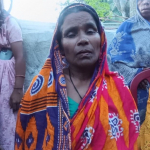
Writing for Sabrang on Uttarakhand’s UCC, Hasina Khan and Mridul Kaintura had argued that the law was not really aimed at Muslim women at all, but was instead “solely aimed at the Hindutva extremists all over India.” For years, Muslim women have called for reform in personal laws while keeping progressive features like mehr, nikah halala intact. According to them, the opportunistic capture by the state never sought their counsel.
Another important consideration in the current context is the federalism dimension of the UCC. With four states having enacted a UCC and three others in the process of doing so, with more BJP-ruled states likely to follow, the objective of achieving national uniformity is itself brought into question. Since marriage, divorce, adoption, succession, and family law fall under Entry 5 of the Concurrent List (List III) of the Seventh Schedule, states are constitutionally empowered to legislate on these subjects. However, state-specific UCCs may produce varying legal regimes across India, undermining the very rationale of a ‘uniform’ civil code by making family law rights contingent on the state of residence.
Whether the state UCC model becomes a blueprint for national reform or a series of parallel legal regimes will depend on whether the laws ultimately fulfil the constitutional ideals of equality, liberty and justice for all citizens.
(The legal research team of CJP consists of lawyers and interns; this resource has been worked on by Tanishka Shah)
Image: dnaindia.com
Related:
Uniform Civil Code or Gender Justice?
Assam, the third state to pass UCC: Gender justice or targeted communalism the aim?
Uttarakhand’s UCC seen through a Muslim women’s political perspective