CJP Impact: Four people released from Tezpur Detention Camp Previously released detainees pay it forward by referring new cases to CJP
03, Jun 2020 | CJP Team
In yet another victory, CJP has been able to secure the release of three men and one woman from an Assam detention camp. The inmates were released on conditional bail in accordance with a Supreme Court order.
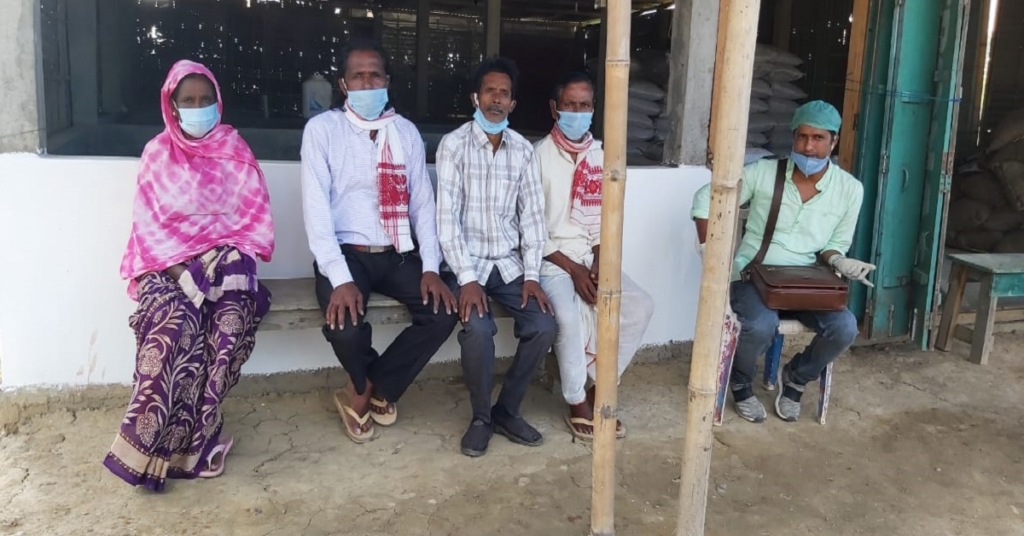
Banesha Khatun, Banamali Das, Rajendra Das and Binod Das, had all been languishing behind bars for over two years at the Tezpur detention camp and were released on Friday, May 29, 2020. Let us take a closer look into their lives.
Now that the final NRC has been published, and 19,06,657 people have been excluded from the final list, CJP’s campaign has become even more focused. Our objective now, is to help these excluded people defend their citizenship before Foreigners’ Tribunals. We are also helping secure the release of detention camp inmates as per the Supreme Court order on their conditional release. For this we have already started conducting a series of workshops to train paralegals to assist people at FTs. We will also be publishing a multi-media training manual containing simplified aspects of legal procedure, evidentiary rules, and judicial precedents that will ensure the appeals filed against the NRC exclusions in the FTs are comprehensive and sound, both in fact and in law. This will assist our paralegals, lawyers and the wider community in Assam to negotiate this tortuous process. For this we need your continued support. Please donate now to help us help Assam.
Banesha Khatun
45-year-old Banesha Khatun is a widow and her only son Miraj Ali has also been detained in detention camp for about 1 year. The family hails from Silbhanga village that falls under the jurisdiction of the Jagiroad police station in Morigaon district. She was declared foreigner in an ex-parte judgment and sent to the Tezpur detention camp on May 24.
CJP Volunteer Motivator Faruk Ahmed explains, “Just before the lockdown we had helped three people of a family get bail. They were the ones who told us about Banesha Khatun. When we went to meet her family, we discovered her daughter-in-law Monuwara Khatun living in extreme poverty as she worked as a daily wage domestic worker to feed her two little sons aged 5 and 6.” CJP had then stepped in to provide them with ration and essential supplies thrice. “We also gave them some clothes during Eid,” says Ahmed. When Monuwara met Banesha at the detention camp, Banesha in-turn told her about three more inmates from nearby villages.
It was challenging to arrange for bailors as most people like to avoid getting involved in such matters. “It took our team 18-20 days to find bailors and convince them to help the detainee. Then we had to have all their documents verified. These include their land patta, voter ID, PAN card and final NRC list.”
Banesha Khatun, who is visually impaired in one eye kept wondering why were complete strangers helping her. On being released she said to the CJP team, “I don’t know who you are. But you helped me. I had lost all hope. I hope you can also help my son.”
Banamali Das and Rajendra Das
Both men are daily wage labourers and hail from Kumarbodi village that falls under the jurisdiction of the Jagiroad police station in Morigaon district. They were both first named D-Voters and then declared foreigners by a local Foreigners’ Tribunal. Both of them hail from extremely impoverished backgrounds. While the family of 53-year-old Banamali Das lives in a 12 feet by 12 feet house with only a thatched leaky roof given by the government to Below Poverty Line (BPL) families, 63 year old Rajendra Das’s family lives in a low lying area, about 1 kilometer from any major road. In fact, the area was inundated during the floods and the CJP team had to take a boat to reach Ranjendra Das’s house.
Banamali’s older son Manoranjan is also lodged in a detention camp. His other two children are a 16-year-old daughter and a 13-year-old son. His wife used to work in a brick kiln before the lockdown and after she lost her job, she found employment in a local tea garden in order to make ends meet.
“I did not expect anyone to help us,” said Banamali after being released recounting he had once been duped before. “We sold whatever meagre land and posessions we had and gave it to a Morigaon based lawyer who ultimately just took our money and did nothing for my case,” he said. Banamali suffers from a nerve disorder and is extremely week. CJP has already started the peocess to secure his son’s release.
Meanwhile, Rajendra Das’s wife, who used to also work at a brick kiln and lost her job during the lockdown, was forced to make and sell puffed rice, a popular snack, in her village. “It was also extremely difficult to get bailors for both Banamali and Rajendra Das. In Banamali’s case, we only managed to get a bailor who lived 50 kilometers from his village. To convince him, I had to travel 90 kilometers each way from my home thrice to convince the bailor. We had to even get the village ‘mukhiya’ involved.”
In the detention camp Rajendra had lost all hope. “I didn’t even bother getting a haircut as I never expected to walk out of that place,” says Rajendra sporting long dark locks of hair.
Binod Das
The case of 54-year-old Binod Das is unique. He hails from the Ulukunbchi village located in a hilly area that falls under the jurisdiction of Jagiroad Police Station in Morigaon District. “After we got his reference from Banesha Khatun, we started working on his case. We went to his village but could not trace his family.”
We had made some contacts in the village during our ration distribution campaign and one of the people who was in the fish business helped us arrange for bailors. “After we had Binod Das released we faced another challenge. The old road to his home no longer existed and a new on had been constructed along a different route. He was thus unable to show us where he lived when we tried to drop him home.”
When we finally found his home with directions from a few locals we discovered something shocking. “We found Binod Das’s home was dilapidated, had developed cracks, was tiling to one side and could crumble at any time. As a result of this his wife had moved and started living in the varandah or a local primary school. Their son had moved to work in the fish market in Guwahati,” says Faruk Ahmed.
When we went to the primary school to look for Das’s wife, we learnt that she was working at a local tea garden manager’s home as a domestic help. When we went there, the reunion of husband and wife was emotional. “Binod is a bit visually impaired so he couldn’t recognize his wife. But as soon as she spotted him, she dropped the utensils she was carrying and ran to him with tears in her eyes,” says Ahmed.
“I didn’t even know where they had taken my husband. So, I couldn’t meet him when he was in the camp. I don’t even know where Tezpur is,” she said her eyes brimming with tears.
Challenges ahead
While CJP organized everything from documentation, to bailors, to release procedure and even vehicles to ferry bailors and then drop the detainees home, our commitment to improving their lives does not end here. We are now looking to help these people rebuild their lives and live financially independent lives with dignity. For this we are trying to help them set up small shops or businesses, or milk cows as desired by a few of them.
A few images may be viewed below.
Related:
CJP helps secure release of Bihari man dubbed Bangladeshi in Assam!
CJP helps reunite man released from Assam Detention Camp with long-lost daughter
CJP helps two more people walk out of Assam’s detention camps
Victory! Three more detention camp inmates released in Assam with CJP’s help