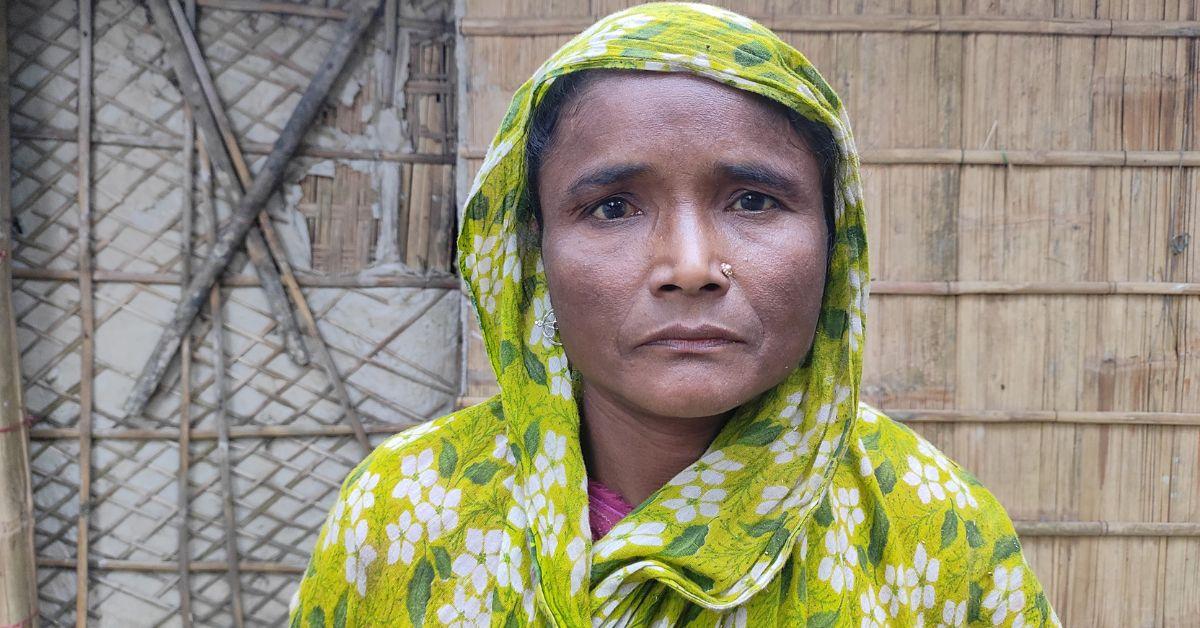
From Voter to “Suspect Foreigner” and Back: Dhubri Tribunal declares Akurbhan Bibi an Indian citizen after CJP’s intervention Born in Assam, voter since 2005, and backed by a 1951 NRC record—Akurbhan Bibi’s case shows how citizenship is questioned, yet justice can prevail
02, Jan 2026 | CJP Team
As the year comes to an end, Citizens for Justice and Peace (CJP) marks yet another crucial victory in Assam—one that reaffirms not only citizenship, but dignity, belonging, and constitutional promise.
In a significant order, the Foreigners Tribunal, Dhubri District, has declared Akurbhan Bibi, a marginalised Muslim woman from Assam, to be an Indian citizen in her own birthplace. The decision brings closure to a process that subjected her and her family to prolonged anxiety, uncertainty, and the constant fear of statelessness.
Every week, CJP’s dedicated team in Assam, comprising community volunteers, district volunteer motivators, and lawyers, provides vital paralegal support, counseling, and legal aid to many affected by the citizenship crisis in over 24 districts in Assam. Through our hands-on approach, 12,00,000 people successfully submitted completed NRC forms (2017-2019). We fight Foreigner Tribunal cases monthly at the district level. Through these concerted efforts, we have achieved an impressive success rate of 20 cases annually, with individuals successfully obtaining their Indian citizenship. This ground level data ensures informed interventions by CJP in our Constitutional Courts. Your support fuels this crucial work. Stand with us for Equal Rights for All #HelpCJPHelpAssam. Donate NOW!
For Akurbhan Bibi, the Tribunal’s declaration is more than a legal outcome—it is the restoration of a life interrupted by suspicion.
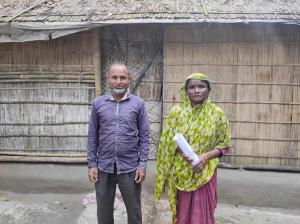
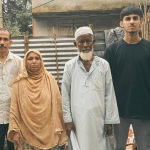
Akurbhan Bibi stands with her husband outside their home
Roots in the Borderlands: Birth, marriage, and belonging
Akurbhan Bibi was born in 1982 at Sonakhuli Part II village, under Golokganj Police Station, in Dhubri district, Assam. She grew up on Indian soil, studied at the local school, and lived an ordinary life shaped by the rhythms of a rural border district.
She later married Nur Mohammed, a resident of Ramraikuti village, under the same police station (now under Agomani). Ramraikuti lies in a highly sensitive border area, where the Indo–Bangladesh international fencing stands just a few metres away from residents’ homes.
This region has endured the aftershocks of the 1971 war and Partition-era displacements, yet families like Akurbhan’s have remained rooted here for generations. Their presence is not accidental or recent. As many residents of the border villages assert, they are not Indian by chance, but Indian by choice.
Citizenship by Participation: A voter turned “suspect”
Akurbhan Bibi’s name was enrolled in the electoral rolls in 2005 at her matrimonial home. From that point onwards, she remained a regular voter, exercising her democratic rights year after year.
During this entire period:
- She was never summoned for verification
- No police officer visited her home
- No doubt was raised about her nationality
This long-standing civic recognition was suddenly overturned when she was served a “Suspected Foreigner” notice issued through the Border Branch of the local police station, summoning her before the Foreigners Tribunal.
The notice demanded that Akurbhan Bibi prove her Indian citizenship, placing the entire burden of proof upon her—a requirement that disproportionately devastates poor and marginalised communities in Assam.
A familiar pattern of targeting
Akurbhan Bibi’s case is not an exception; it reflects a broader pattern. Foreigners Tribunal proceedings in Assam frequently target economically vulnerable, Bengali-speaking Muslim families, many of whom lack easy access to archival records, legal assistance, or bureaucratic support.
In Akurbhan’s case, there was no new evidence, no triggering incident, and no intervening conduct that could justify the suspicion raised against her. The notice emerged solely from institutional suspicion—untethered from her lived reality as a voter, resident, and daughter of the soil.
A family history that predates suspicion
Akurbhan Bibi’s paternal lineage is firmly documented. Her father, Saher Sheikh, son of Sonauddin Sheikh, has records tracing back to 1951, with his name appearing in the 1951 National Register of Citizens (NRC)—a foundational document for determining citizenship in Assam. Despite this, Akurbhan herself was forced to defend her nationality, highlighting the intergenerational insecurity imposed on families even when documentary proof exists.
The Notice Arrives: Fear, Absence, and Urgency
When the notice was served, Nur Mohammed was not at home. Like thousands from Assam’s border districts, he survives as a migrant worker, travelling to other parts of India for employment.
Left alone, Akurbhan Bibi carefully read the notice. Understanding its gravity, she acted immediately. Without delay, she contacted CJP’s community volunteer, Hosen Ali, who belongs to her village and is known for assisting families facing such proceedings.
Fear was palpable. The threat of detention, separation, and statelessness loomed large—particularly for a woman with limited means and support.
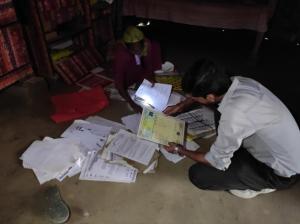
Akurbhan Bibi and CJP Team Assam
CJP Steps In: Legal Counselling and Ground Support
CJP promptly examined Akurbhan Bibi’s documents and counselled her on the Foreigners Tribunal process. The emotional toll was severe. When Nur Mohammed returned home the very next day, he was visibly shaken.
Detailed consultations followed. CJP assured the family of consistent legal and logistical support, and began the painstaking task of document collection and verification.
The Documentary Challenge: Searching for 1966 records
One of the most critical challenges was tracing Akurbhan Bibi’s father’s name in the 1966 electoral rolls. Given that her father was 23 years old at the time of the 1951 NRC, it was reasonable to expect his inclusion in the 1966 voter list. However, repeated searches yielded no result—not even the Election Office in Dhubri could locate his name.
Importantly:
- The names of her paternal uncles (her father’s brothers) were present in the 1966 voter list
- This reinforced the family’s long-standing residence in the area
While pursuing these records, CJP gathered additional crucial documents, including land records, which later became decisive evidence before the Tribunal.
The legal battle before the Foreigners Tribunal
On behalf of CJP, legal team member Ishkander Azad represented Akurbhan Bibi before the Foreigners Tribunal, Dhubri.
The legal strategy focused on:
- Establishing pre-1971 ancestry
- Demonstrating linkage between Akurbhan and her father
- Corroborating residence through multiple independent documents
After evaluating the evidence, the Tribunal passed an order declaring Akurbhan Bibi to be an Indian citizen.
What the Tribunal Order holds
In its order, the Foreigners Tribunal, Dhubri, inter alia:
- Accepted the 1951 NRC entry of Saher Sheikh, father of Akurbhan Bibi, as a valid and credible legacy document
- Accepted the linkage between Akurbhan Bibi and her father, based on documentary evidence placed on record, establishing that she is the daughter of the person whose name appears in the 1951 NRC
- Took note of supporting documents, including land records and collateral family documents, which corroborated continuous residence and ancestry in Assam
- Did not draw any adverse inference from the absence of the father’s name in the 1966 voter list, particularly in light of:
- the presence of close family members in the 1966 rolls, and
- systemic gaps in archival records
- Held that the proceedee had successfully discharged the burden of proof cast upon her under the Foreigners Act and Tribunal procedure
- Declared Akurbhan Bibi to be an Indian citizen, and accordingly dropped the reference against her
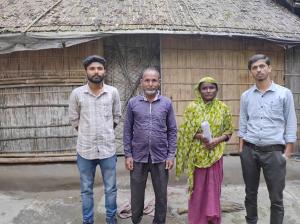
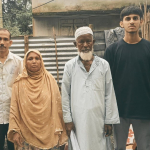
Akurbhan Bibi and her husband with CJP Team Assam
Justice Delivered: A cup of tea and a quiet smile
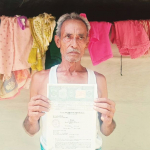
The order copy was personally handed over to Akurbhan Bibi by CJP’s Dhubri district community volunteer, Habibul Bepari, along with Assam State In-charge Nanda Ghosh. Holding the order in her hands, Akurbhan Bibi smiled—a rare, unguarded smile of relief. She requested the team to wait for a while. She wanted to prepare tea.
It was a simple act, but one that spoke volumes.
She thanked CJP repeatedly. Her husband stood beside her, visibly lighter, as though a long-standing fear had finally loosened its grip.
CJP stood with her—when it mattered most.
Why the Tribunal’s order matters
- Burden of proof and structural inequality: Foreigners Tribunal proceedings place the burden of proof entirely on the individual, often ignoring the realities of poverty, displacement, and archival gaps. Akurbhan Bibi’s case demonstrates how this burden disproportionately impacts marginalised women.
- Recognition of legacy documents: The Tribunal correctly acknowledged the probative value of:
- The 1951 NRC entry of her father
- Land records and collateral family documentation
- Linkage evidence, even in the absence of a 1966 voter record for her father
This reflects judicial consistency with established FT and High Court jurisprudence.
- Absence of adverse inference: Importantly, the Tribunal did not draw adverse inference from the non-availability of the 1966 voter list entry—recognising systemic record gaps rather than penalising the proceedee.
- Gendered vulnerability in citizenship proceedings: The case highlights how women—especially migrant workers’ spouses—are uniquely vulnerable when notices are served in the absence of male family members.
- Constitutional significance: The declaration reaffirms:
- Article 14 (Equality before law)
- Article 21 (Right to life and dignity)
- The principle that citizenship cannot be stripped through suspicion alone
The complete order may be read here.
Related:
Humanity over Technicalities: SC ensures return of pregnant woman and child deported in June sweep
“All I Wanted Was Peace”: How 55-year-old widow Aklima Sarkar won back her citizenship
From Despair to Dignity: How CJP helped Elachan Bibi win back her identity, prove her citizenship