CJP Assam: A journey without parallel, evolving & expanding rights jurisprudence In 2025, CJP secured 19 victories—11 confirmed by FT orders and 8 more declaring proceedees as Indian
24, Mar 2026 | CJP Team
Nine years into our concerted interventions around the citizenship crisis in Assam, the robust and multi-pronged humanitarian, para-legal and legal interventions by Citizens for Justice & Peace.
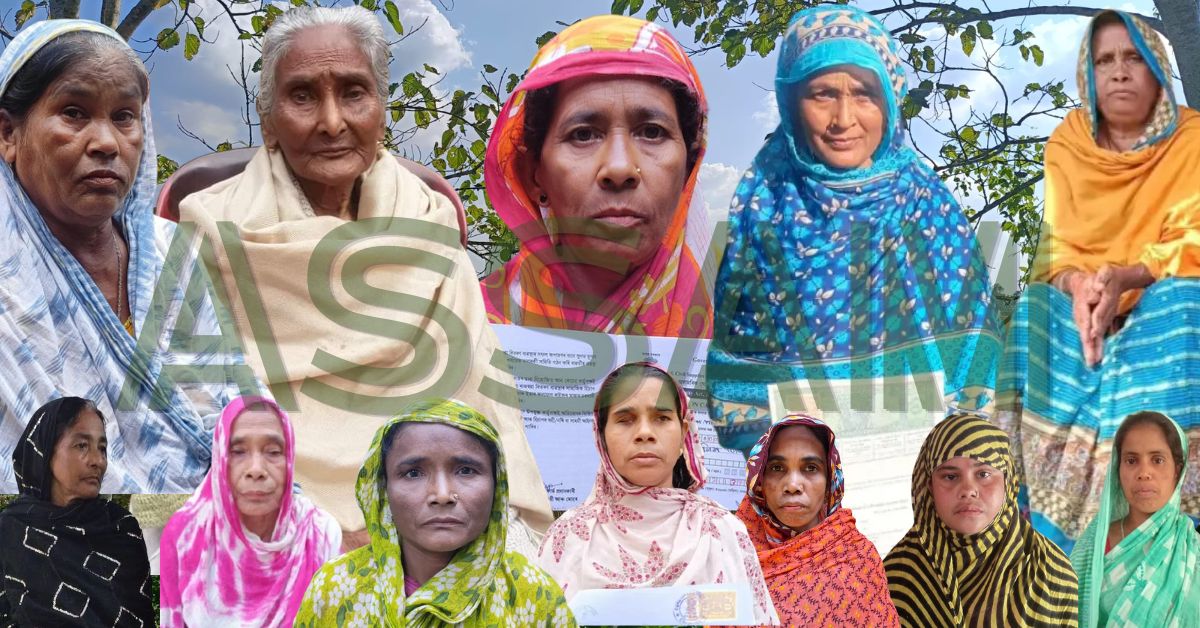
In several districts of the state have evolved as the single most robust and unique effort to ensure the creation and evolution of human rights jurisprudence at the first court stage, in this instance, the notorious Foreigner’s Tribunals (FTs)! In year 2025, Team CJP can rightfully claim that 19 such success stories out of which we have obtained Orders for 11 from the FT and eight more where the proceedee have been declared Indian. This is no mean achievement and the jurisprudential nuances are explored below. The year before, in 2024, CJP had ensured 18 such victories, demonstrating how this has been a consistent achievement. Of the 19 cases for which CJP obtained clear legal victories in 2025, 12 related to women victims. Of the 18 victories notched in 2024, 12 were for women.
This continued intervention at the Foreigners’ Tribunal level, since 2022, was part of a carefully informed and evolved strategy that began with emergency and intense interventions in the process of NRC inclusions (exclusions in 2017-2018). Two state and district level discursive workshops with advocates at the national-state-district levels and release of illegally held detainees during the Covid-19 years 2020 and 2021 in the state. It was these deliberations that led our teams (Assam and Mumbai) to re-calibrate our strategy and include direct interventions at the first adjudicatory stage (first court stage) resulting in the actual legal aid interventions by the CJP district level teams from year 2022 onwards, to ensure that quality arguments were and are made before the state’s notorious Foreigner Tribunals.[1] Each year since, this ground level interventions have meant that hapless individuals and families –who can scant afford legal aid –instead of navigating the justice process at the constitutional courts level (Gauhati High Court and Supreme Court) find their ordeal ending –after years of uncertainty with the judgements of the FT itself.
Every week, CJP’s dedicated team in Assam, comprising community volunteers, district volunteer motivators, and lawyers, provides vital paralegal support, counseling, and legal aid to many affected by the citizenship crisis in over 24 districts in Assam. Through our hands-on approach, 12,00,000 people successfully submitted completed NRC forms (2017-2019). We fight Foreigner Tribunal cases monthly at the district level. Through these concerted efforts, we have achieved an impressive success rate of 20 cases annually, with individuals successfully obtaining their Indian citizenship. This ground level data ensures informed interventions by CJP in our Constitutional Courts. Your support fuels this crucial work. Stand with us for Equal Rights for All #HelpCJPHelpAssam. Donate NOW!
Therefore, it was that in 2022 we began this new extended legal journey with the cases of Halima Bibi, Romila Begum and Samida Bibi. Thereafter in 2023 we reported and analysed 18 such victories that explained how quality evidence and cogently drafted written statements before the tribunals compelled this jurisprudential victory at the first responder stage itself. Details of the 2023 victory may be read here.
Particular challenges in 2025
2025 was dotted with multiple state-inflicted crises while we worked. While our team is happy to report and record the successful adjudication victories of genuine Indians in the FTs through the year –19 individuals have formally been declared Indians in the tribunals itself. We would also like to record how challenging these tasks have been given that post May-June 2025, the state –through a politically motivated drive against a linguistic minority (Bengali speaking persons, mostly Muslims)—and, in complete violation of both national law and jurisprudence and international law and covenants, launched a new assault on hapless citizens of the state. In late night operations, violating established principles of detention and transparency, agents of the state government “picked up” and “pushed out” [2]
Our estimates from the ground, detailed in this exclusive ground report on May 28, 2025, suggested that, Assam police detained 300 persons without any notice; 145 allegedly pushed across Bangladesh border, rights gravely violated. All or most of these belonged to a linguistic minority, Bengali-speaking Muslims. The report, Homeland to No Man’s Land! Assam unlawful crackdown on residents still battling for restoration of citizenship rights may be read here. The ordeal faced by six women detenus, wrongfully dubbed “foreigner” were also documented in detail here.
This new assault by a rapacious state was met with 24 X 7 action by CJP’s Teams in Assam and Mumbai. Based on robust and accurate field reports CJP submitted two memorandums to the National Human Rights Commission (NHRC) with an urgent appeal to intervene in the human rights emergency in Assam. The first was submitted on May 31, 2025 and then on June 4 that urged the statutory body to urgently intervene. Presenting new evidence of a systematic campaign of detentions and cross-border expulsions of Bengali-speaking Muslim persons from Assam, without following due legal process, this supplementary memorandum was based on over a dozen first-person testimonies and verified field documentation, the memorandum alleges that Assam Police and Border Security forces allegedly forcibly deported individuals—including elderly women, children, the chronically ill, and individuals previously granted legal relief—without following any lawful process or judicial sanction. The first may be read here and the supplementary follow-up memorandum with more details may be read here.
CJP’s interventions did not end with this intervention to the memorandum.
From June 2025 right until now, into 2026, the battle to ensure that a few of those wrongfully and forcibly deported are repatriated has traversed from Gauhati High Court up to the Supreme Court and are now pending back at the high court!
The petitions emerging from Assam in May–June 2025 ‘push out’ were triggered by a pattern of sudden re-arrests and disappearances of individuals who had been living on valid COVID-era bail granted under Supreme Court directions. Families, aided by CJP, approached courts not to reopen Foreigners Tribunal findings alone, but to challenge what followed—detention without bail cancellation, unexplained transfers to Border Security Force custody, and claims of “deportation” without any documentary record of nationality verification or lawful handover.
This through and all-round intervention by Citizens for Justice and Peace (CJP) ensured that these cases reached constitutional courts, producing some crucial procedural gains. Courts directed the State to disclose whereabouts, allowed detainees to be accessed by families and lawyers, and, in the case of Samsul Ali, intervention led to his recovery and ensured he remained with his family without further custodial action. In this sense, the courts played an important protective role—opening up otherwise opaque processes and preventing immediate, irreversible harm. Detailed reports may be read here, here, here and here.
Through this process, the limits of judicial scrutiny became equally visible. Their petitions against their detention were first heard and dismissed by the Gauhati High Court, following which the Supreme Court was approached. The Supreme Court granted liberty, and their challenge—particularly to the legality and manner of any attempted deportation—now remains pending. During proceedings, the State introduced a new claim that both men had earlier been “sent back” to Bangladesh and returned—yet no documentary record was produced, and courts did not decisively test this assertion. Across cases, this pattern has persisted: executive claims recorded, but rarely verified.
Doyjan Bibi’s case remains the starkest illustration of procedural breakdown. After her re-arrest in May 2025, the State initially informed the Court that she was in a Kokrajhar holding centre, and permission was granted for her family to meet her. When they arrived, she had already been removed. The State later claimed she was handed over to the BSF and “sent back” on May 27, but produced no contemporaneous record—no deportation order, no handover document, and no acknowledgment from Bangladeshi authorities. Here, the absence of judicial insistence on proof proved decisive. Taken together, these cases reveal a dual judicial role—courts as spaces of access and interim protection, but also as sites where, in the absence of rigorous scrutiny, executive assertions have been allowed to stand in for legality.
While the legal processes above appear to be a responsibility of a legal team of constitutional experts, the challenge at the ground level for CJP’s Team Assam is profound. Providing crucial documentation support and most critically psychological counselling to the families thus targeted by the state remains core to our successes. It is this multi-pronged approach that actually assists individuals, and their families to navigate a complex process while handling personal loss and trauma. Facilitating family visits to the state’s holding and detention centres is also a huge responsibility.
Two of these cases, the matter challenging Abdul Sheikh’s and Mojibur Rehman’s illegal deportation will now come up before the Gauhati HC on March 23, 2026.
CJP Successes at the First Responder Stage, Citizens declared ‘Indian’!
It is in the human rights interventions at the district-level adjudicatory fora, known as the first court stage (otherwise subordinate/trial courts), worldwide that the real-life application of constitutional and international human rights norms becomes realized, a lived reality. For the hapless and marginalized, in Assam it is that notice from the Assam Border Police–based often on just a blank sheet of paper with no prior investigation on the citizenship status of the person proceeded against—the proceedee—and thereafter the dreaded ‘notice’ by the FT that is the source of immesaureable trauma and state-driven harassment. To challenge these notices at the first responder stage, a unique strategy adopted by CJP’s legal team plays a pivotal role in protecting the basic fundamental right to life guaranteed under the Indian Constitution, Article 21.
It was during our intense tours of the state in 2018 and 2019—first examining the base of the NRC exclusions (details below) that our teams developed the expertise and understanding that –given the high human stakes involved and the balance of power against the marginalised and unlettered it is crucial that these tribunals function transparently, following acceptable and standardised processes of allowing appeals and evidence, precluding existing complaints of the sheer arbitrariness in their dealings. Open, fair and judicious trial is the fundamental guarantor of every citizen living under the rule of law, apart from being a fundamental right guaranteed under Article 21 of the Constitution. India’s claim to these fundamentals will, have been time and again put to test in every case before the Foreigners Tribunal given that citizenship is the very basic of rights and to be arbitrarily being declared ‘non-Indian’ is akin to a ‘civil death’.
CJP’s well equipped, sincere team at the district level has provided this informed legal aid to individuals for the past four years. In this task, logistically, each month our district volunteer motivators (DVMS) we visit 25-50 families each month, document information of these ‘notices’ received and then provide pro bono legal aid. All of those assisted are not only among the most marginalised daily wage earners in the state, but are also overwhelmed at the task of facing what it means to navigate the legal process at a Foreigner Tribunal.
Assam: CJP’s 2025 Story at the Foreigners Tribunals
Evidence gathering at the level of the Foreigner Tribunal level often means procuring inaccessible land documents, other ‘proofs of birth’ and legacy connections with parents who are Indian. This difficult task also often means hours of laborious inter-face with administrative offices and police stations before an appropriate Written Statement (WS) can be filed before an FT. It is a pre-requisite and challenge to ensure that this WS contains both date and place of birth of the proceedee apart from family details. A fundamental flaw in the process has been observed by us which is that the ‘reference’ itself is made by the Assam Border Police, without conducting fair investigation and without collecting sufficient documents!
It is through this gritty hard work at the ground level, visiting various offices and working in the field to collect documents, that CJP’s Team Assam achieves these hard-earned successes. These victories, in turn provide hope and succour to the victims of this hapless targeted process while also giving energy to our team to continue this path-breaking work.
Elachan Bibi
September 2025

Here was Elachan Bibi, an elderly Bengali-speaking Muslim woman from Bongaigaon district. It took the CJP months of detailed preparation, thereafter arguments and work to obtain a reasoned order on September 22, 2025. Ensuring that the final finding by the FT is based on detailed findings and conclusions guarantees a lasting relief to the victim.
Elachan Bibi was born around 1960 in Salmara Gaon (Lungjhar) under the then Bijni Police Station (now Manikpur, Bongaigaon district), and she lived a regular rural Assamese existence hit by a sudden natural calamity — devastating floods washed away her family home. The loss of land and livelihood was followed decades later by graver assault — a notice from the Foreigners’ Tribunal alleging that she was a foreigner who had entered Assam from East Pakistan (now Bangladesh) after March 25, 1971.
For Elachan, as with thousands of others those targeted, this unfounded accusation struck at her very identity. She was the daughter of Taleb Ali (also known as Taleb Ali Sheikh/Talef Ali) and Koriman Bibi, both Indian citizens whose names appeared in the 1951 National Register of Citizens (NRC) and in voter lists from 1966 and 1971 — years long before the 1971 cut-off for citizenship determination in Assam. She has been married to Khabaruddin Sk, a cultivator from Barbakhara village, in 1973 but yet this random bureaucratic suspicion would turn her old age into a battle for belonging.
Reconstructing Citizenship, one step at a time, CJP –to whom Elachan had turned to in desperation– stepped in and with the assistance of paralegals and field volunteers, they meticulously reconstructed her documentary trail — a painstaking process that involved retrieving old records, verifying spellings, and establishing the crucial linkage between generations that so often determines the outcome in citizenship cases.
Before the Tribunal, CJP submitted sixteen documents proving Elachan’s Indian lineage and continuous residence in Assam, including:
- 1951 NRC entry of her father, Taleb Ali;
- Voter lists of 1966, 1971, 1985, 1989, 1997, 2006, 2015, 2020, 2022, and 2023, showing her family’s continuous presence in Assam;
- Jamabandi (land records) under Patta No. 63 in her father’s name at Lungjhar;
- Gaon Panchayat certificates establishing her birth and marriage details;
- PAN card, EPIC (Voter ID), and Ration Card, corroborating her civic and residential identity.
Five witnesses deposed in her support, including her brother Kashem Ali, GP Secretary Mrinendra Sarma, a Revenue Circle officer, and her husband. Each testimony consistently reinforced her claim of being the biological daughter of Indian citizens Taleb Ali and Koriman Bibi.
No stone was left unturned to ensure a robust defence for Elachan Bibi.
Order delivered on September 22, 2025. However, Order could be obtained only two months later and was physically delivered to her by our team only in early November, 2025.
Banasha Bibi
June 2025
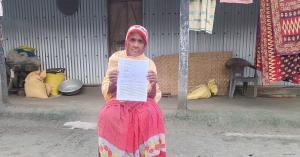
For 56-year-old Banasha Bibi, a Bengali-speaking Muslim woman from Assam’s Bongaigaon district, victim of disability, to be officially declared an Indian citizen by the Foreigners’ Tribunal No. 1, Bongaigaon on June 25, 2025 was a euphoric moment. This decision came after a 22-year-old illegal foreigners’ case, filed in 2002, was finally heard following CJP’s intervention in 2023. For Banasha Bibi, a patient of paralysis who has lived her entire life in Assam, the declaration is more than a legal win.
The Case: A forgotten reference resurfaces
Banasha Bibi was born in 1968 in Barbakhara village, Manikpur police station, Bongaigaon district, to Batalu Sardar (also known as Batasu Sardar) and Ajufa Khatun. She married Rafijal Ali in 1980 and has resided in Assam her entire life, raising thirteen children. Despite possessing valid Indian documents across decades, Banasha Bibi was suddenly served a notice in 2022, twenty years after a reference was made in 2002 (Ref. No. IM(D)T/Case No. 761/2002), accusing her of being an illegal migrant from Bangladesh.
For twenty years, Banasha was unaware that her citizenship had been challenged. The tribunal admitted that the delay itself raised serious concerns, and that the investigation violated basic legal norms. Despite this, she was forced to undergo the legal test to prove her citizenship—an overwhelming task for someone with no legal training, limited mobility, and minimal resources. That’s when CJP stepped in with full legal, paralegal, and logistical support.
A deeply flawed investigation
CJP’s legal team, submitted robust documentation and witness testimony to the Tribunal. The CJP legal team also exposed the severe procedural violations and falsehoods underpinning the reference against her:
- No investigation was conducted: The Investigating Officer (I.O.) submitted a fabricated report. He never visited her home, never issued a notice, and never examined any witnesses. Statements supposedly recorded from Banasha Bibi and others were concocted without interaction.
- No documentary evidence seized: The I.O. failed to seize or produce any document—passport, identification, or otherwise—to substantiate the claim that Banasha Bibi was a foreigner.
- No proof of foreign origin: The inquiry report lacked the name or address of any foreign country, and did not trace any alleged cross-border movement.
- Violation of legal procedure: There was no compliance with the procedure mandated under the Foreigners Act or principles of natural justice. Crucially, the notice reached Banasha only in 2022—20 years after the case was registered, making the very reference barred by limitation.
CJP’s Legal Defence: Documents, testimony, and due process
CJP provided comprehensive legal and paralegal support, filing affidavits, marshalling evidence, and presenting multiple witnesses. CJP placed on record a comprehensive set of documents that proved Banasha Bibi’s deep roots in Assam, including:
- Voter lists:
- Her father, Batalu Sardar, appeared in the 1959, 1966, and 1970 rolls—long before the March 25, 1971 cut-off.
- Banasha herself was listed as a voter in 1989, 1993, 1997, 2006, 2010, 2019, and 2022.
- Identity documents:
- Elector Photo Identity Card (EPIC)
- Aadhaar Card
- PAN Card
- Ration Card
- One from Secretary, Nowapara Gaon Panchayat, affirming her identity and parentage.
- A second confirming her marriage to Rafijal Ali and her family lineage from the same locality.
- Gaon panchayat certificates:
- One from Secretary, Nowapara Gaon Panchayat, affirming her identity and parentage.
- A second confirming her marriage to Rafijal Ali and her family lineage from the same locality.
Oral Testimony:
- DW-2 (GP Secretary Mrinendra Sarma) authenticated the certificates issued from GP records.
- DW-3 (Rajab Ali) testified as her brother, identifying Batalu Sardar as their father and confirming their shared familial history.
- DW-4 (Sahalam Ali), a neighbour, corroborated that Banasha was born and raised in Barbakhara.
These testimonies met the standard under Section 50 of the Indian Evidence Act, proving her parentage and longstanding community recognition.
The Tribunal’s Verdict: Citizenship proven beyond doubt
In his reasoned order, Tribunal Member Dulal Saha accepted the documentary and oral evidence, affirming that Banasha Bibi was born in Assam, had lived there continuously, and had cast votes for decades. On July 25, 2025, CJP’s Assam team formally handed over the tribunal’s certified order to Banasha Bibi’s family at Barbakhara. Her family expressed deep gratitude to CJP for their unwavering support in the face of state negligence and intimidation.
Banasha Bibi’s acquittal is a personal victory, a legal triumph, and a moral indictment of Assam’s discriminatory foreigner detection regime. Her case underscores how citizenship trials have become tools of marginalisation, not justice. It also reveals the essential role of civil society organisations like CJP in safeguarding constitutional rights when the state fails its own people.
Order delivered on June 25, 2025. Order was obtained in late July 2025. The Order may be read here.
Matleb Ali
Order Obtained in May 2025
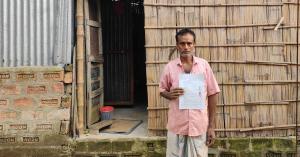
While the order declaring Matleb Ali — a native of Assam’s Dhubri district — an Indian citizen came on December 9, 2024, ending a long battle of asserting his Indian identity that began with a mere suspicion in 1998, CJP was able to obtain the order only on May 17, 2025.
The Origin of the Case: A 1998 reference
Matleb Ali, also recorded in official documents as Matleb Ali or Motleb Ali, was born in 1981 in the remote village of Ramraikuti Part I in Assam’s Dhubri district, about 251 kilometres from Guwahati. He completed his matriculation from Agomani Higher Secondary School, an institution established shortly after India’s independence. His father, Kasem Ali, was a lifelong resident of Ramraikuti, owning land there as early as 1962. His grandparents, Sonaullah Sk and Kosimon Bewa, were registered voters in the 1966 electoral rolls — clear, continuous proof of Indian lineage.
Yet in 1998, the unthinkable happened: a reference was made against Matleb, branding him a suspected foreigner. Despite having all the required documents, he was forced into a legal battle to prove his very identity — a fate shared by thousands of marginalised residents in Assam, particularly those living near the border. The ordeal began when the Superintendent of Police (Border), Dhubri, acting on a report from the Electoral Registration Officer of the 25 No. Golakganj Legislative Assembly Constituency, filed a reference case against Matleb Ali. His name was listed in the 1997 draft electoral roll for his village Ramraikuti Part-I, but doubts were raised about his citizenship during house-to-house enumeration (Jan–Apr 1997). The matter was first referred to the IM(D)T Tribunal, later transferred to Foreigners Tribunal No. 2, and finally to the 10th Foreigners Tribunal. The rest of India is –now through a flawed SIR (Special Intensive Revision) process only now facing what countless hapless citizens of Assam have been facing for decades! Despite being born and raised in India, Matleb was forced to prove he wasn’t an illegal migrant — a fate that disproportionately affects many poor, marginalised people in Assam, particularly in border districts like Dhubri.
In mid-2023, just a day before Eid, Matleb’s world turned upside down. While he was working in Guwahati to earn enough to celebrate the festival with his family — his wife, two children, and elderly mother — police officers in plain clothes came to his home in Ramraikuti and handed a notice to his wife. The document summoned him before the Foreigners Tribunal. In desperation, Matleb turned to a trusted neighbour, who introduced him to Moon Kazi, a community volunteer with Citizens for Justice and Peace (CJP). From that moment on, the tide began to turn. CJP took over the case with full dedication — collecting documents, filing applications, visiting government offices, and providing legal representation. This allowed Matleb to remain home and earn a living while the organization fought the case on his behalf.
The following documents were provided to the Tribunal in order to establish the Indian identity of Matleb:
- HSLC Admit Card (Ext-A) – Verified as genuine by SEBA, establishing both his date of birth and parentage.
- School Certificate (Ext-B) – Issued by Agomani School, confirming his education and village of residence.
- Copy of shifting certificate issued by the Secretary, Satrasal Gaon Panchayat
His family tree was also established:
- Grandparents: Sonaullah Sk and Kosimon Bewa — Voter records from 1966, 1970, 1977, and 1985 show them living in Ramraikuti.
- Father: Kasem Ali — Listed as a voter in 1977.
- Mother: Moslema Bewa — Listed as a voter from 1979 onward, including with Matleb in the 1997 and 2008 rolls.
In addition to electoral records, land deeds were also provided:
- Matleb’s father owned land since 1962, as per Khatian No. 64 (Ext-E), backed by the original land records and verified through the Land Records Officer’s testimony (DW-3).
- Matleb himself co-owns land with his family in Ramraikuti, as shown by Periodic Kheraj Patta (Ext-M).
Additionally, Matleb’s own name consistently appears in voter rolls from 1997, 2008, and 2023, and he holds an Elector Photo Identity Card (Ext-L) issued in 2013.
The Legal Proceedings: Evidence vs suspicion
Team CJP’s lawyers highlighted Matleb’s strong documentary evidence — including voter records of three generations, land documents, and school certificates. We also emphasized the hardship Matleb faced in commuting from distant work locations just to attend hearings, often at great financial and emotional cost. Notably, the Referral Authority presented no witnesses or documentary evidence. In contrast, Matleb submitted:
- 13 documents (Exts A to M), including educational records, land documents, and voter lists from 1966 to 2023.
- Oral evidence from:
- Himself (DW-1)
- His mother, Moslema Bewa (DW-2), who fully corroborated his statements
- A Land Records official (DW-3), who authenticated historical land ownership
The tribunal accepted the entire chain of documentary and oral evidence as genuine and trustworthy.After considering the evidence, the Tribunal delivered a clear verdict:
“From the evidence on record and finding no rebuttal evidence, there is no reason to disbelieve the testimony of the opposite party and documents exhibited by the opposite party in support of his testimony… Moreover, though the State cross examined both DW-1 and DW-2, the State could not demolish the evidences that grandparents of opposite party were not citizens of India and therefore the opposite party cannot be termed as a foreigner as suspected by the referral authority.” (Para 11)
The Tribunal ordered that:
- The lineage from Indian grandparents, consistent voter records, land ownership, and educational credentials are sufficient to establish citizenship.
- There was no rebuttal evidence from the state to challenge the authenticity of any claims or documents.
- Matleb was born in India to Indian parents residing in Assam, and therefore qualifies as a citizen of India by birth under Indian law.
Maziran Bewa
May 2025
She is a widow, Mazirun Bewa, a daily wage worker from Jhapusabari Part III village in Dhubri district, who was wrongfully branded a “foreigner.” After several years of fear and uncertainty, Mazirun Bewa @ Maziran Bewa has finally been declared an Indian citizen by birth by the Dhubri Foreigners’ Tribunal No. 10, in a reasoned order dated May 21, 2025.
Originally from West Bengal (Mazirun Bewa was born in December 16, 1963 in Balabhut village, Tufanganj, Coochbehar from where she was taken to Assam when she was about 2–3 years old and brought up in Jhapusabari. She married Samsul Fakir (of Jhapusabari Part-III) and raised a daughter, Rokeya Khatun. After losing her father and then her husband, she survived on daily wages — often earning only ₹150 per day — and lived alone in a small hut with her grandson on borrowed land while her daughter worked at a brick factory. Until two men in civil clothes handed her a white paper: a foreigner notice! Mazirun’s family history can be traced through various documents and it was CJP’s legal and para-legal team that undertook this task of building her documentary legacy after we took on the case:
- Mazirun’s family’s name appears in electoral rolls going back decades: father in 1960(Mouza: Balabhut), father again in 1977 at Jhapusabari, and Mazirun herself in 1997, 2005 and 2024 at Jhapusabari.
- A registered sale deed (Deed No. 3570 dated March 30, 1962)shows her father and uncles purchased land in Dhubri (covering 6 bigha, Touzi No. 419) — documentary proof of residence in Assam well before 1 January 1966 (the critical cut-off under the Assam Accord).
- She produced identity documents (Voter EPIC, PAN, Aadhaar) and gave sworn testimony (examined as DW-1). Her younger brother (DW-2) corroborated her evidence. The Election Officer of Dhubri authenticated certified copies of the electoral rolls in response to a tribunal summon (report dated January 7, 2025), and the Sub-Registrar’s office authenticated the 1962 deed. These evidences were accepted by the Tribunal as genuine and trustworthy.
The Tribunal’s order (Case No. FT-10/AGM/2341/2020; old F.T. No. 9783/GKJ/11; Reference: F.T. Case No. 148/08) dated May 21, 2025 examined the record, the oral testimony, and documentary evidence. The Tribunal made these key findings:
- Primary legal question:Whether the opposite party is a foreigner within the meaning of the Foreigners Act, 1946.
- On documentary proof:The sale deed of March 30, 1962 (Deed No. 3570) was proved via the Sr. Sub-Registrar (Ext: E) and demonstrates that the father and uncles were resident landholders in Dhubri as early as 1962; this is powerful primary evidence of family residence in India prior to 1966.
- Electoral rolls and authenticated copies (Ext: A–D):The Tribunal accepted certified copies of electoral rolls for 1977, 1997, 2005 and 2024 as genuine and admissible secondary evidence, and the Election Officer’s authenticated report (07/01/2025) strengthened this proof.
- Contradictions and limited documents:The Tribunal noted some contradictions (for example between Ext: E and certain other documents — Ext :I / PAN details) and observed that a certificate issued by the Prodhan (Ext: F) was initially beyond his jurisdiction and not proved in the record; therefore Ext: F was not relied upon in isolation.
- Oral testimony:The opposite party (DW-1) and her brother (DW-2) corroborated the documentary trail; official witnesses (DW-3, DW-4) were examined and assisted the record.
- Overall conclusion:Taken together — the sale deed (1962), electoral records, authenticated reports by the Election Officer, and reliable oral testimony — establish that Mazirun’s father and family resided in India prior to January 1, 1966. Therefore, by descent and birth, the opposite party is a citizen of India and cannot be termed a foreigner. The reference was answered in the negative and the Tribunal directed intimation be sent to the Superintendent of Police (Border), the District Magistrate, and the Election Officer, Dhubri.
The Tribunal concluded that since the father of the opposite party (OP) had been residing in India prior to January 1, 1966 and continuously thereafter, and as her linkage to him is proved through reliable documents and testimony, the opposite party is an Indian citizen by birth. She cannot be termed a foreigner. Mazirun Bewa was finally declared Indian!
Order delivered on May 21. Order was obtained in early June, 2025. The Order may be read here.
Alijon Bibi
April 2025
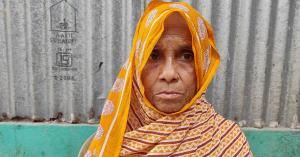
A twenty year old case and two year-long legal battle to declare herself Indian! With CJP’s help!
Alijon Bibi, born on February 25, 1955 in Gopalerkuti village, Coochbehar district, West Bengal, was referred to the Foreigners Tribunal (FT) in Assam in 2004 under the Illegal Migrants (Determination by Tribunals) Act, 1983. She had moved to Assam after marrying Rahman Ali from Boromera village, Dhubri district, approximately 53 years ago. Despite having lived, voted, and raised five children in Assam, she was labelled a “doubtful voter” and suspected of being an illegal Bangladeshi migrant. The reference continued even after the IMDT Act was struck down in 2005 and was re-registered as FT-10/AGM/2297/2020 under the Foreigners Act, 1946.
Alijon Bibi had voted in Assam since 1985, yet the stigma of being suspected as a foreigner was unbearable. For Team CJP that took on her case, again, the legal journey was a meticulous process of documentation, field visits, and advocacy
In her Written Statement (WS) and oral testimony, Alijon asserted that she was a citizen of India by birth. She supported her claim with the following primary legal evidence:
- Voter list of 1966 (Ext A):Proved her father Sekh Alimuddin was a registered voter under Tufanganj constituency, West Bengal. This document was authenticated by the Director of the Directorate of State Archives, Government of West Bengal, who confirmed it was genuine.
- Land records (Ext C):Certified copy of land in her father and uncles’ names—prepared in 1955—proving their residence and landholding before January 1, 1966.
- Multiple voter lists (Ext D, E, M, N):Her name appeared in Assam voter rolls from 1985, 1997, 2010, and 2022 alongside her husband and children, showing continued residence.
- Identity documents (Ext G, H, I):Voter ID, Aadhaar card, PAN card—supporting evidence of Indian identity and address.
- Brother’s testimony (DW-2):Mojammel Hoque corroborated her family background and origin. He submitted his own verified voter ID, Aadhaar, and PAN details as additional linkage evidence.
- Official witnesses:
- DW-3:Head Clerk of Block Land and Land Reforms Officer, Tufanganj, who authenticated Ext C.
- DW-4:Gram Pradhan from Balabhut Gram Panchayat confirmed earlier issuance of linkage certificate (though it was ultimately not relied upon due to documentation gaps).
After reviewing all documents and depositions, the Tribunal noted:
- The 1966 voter list and 1955 land records proved her father’s Indian citizenship.
- Her own presence in voter rolls since 1985 confirmed continuous residence and civic participation.
- No rebuttal evidence was offered by the state; the referral authority itself had noted that she did not appear to be a foreigner.
The Tribunal concluded by holding Alijon Bibi to be a citizen of India.
Order delivered on October 16, 2024. Order was obtained in April 2025. The Order may be read here
Bipul Karmakar
April 2025
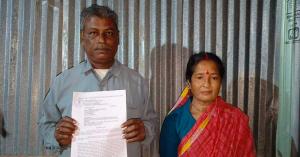
Bipul Karmakar, a daily wage labourer from Patkata village, Bongaigaon district, Assam, despite possessing decades long documents that proved Indian ancestry, he was served a Foreigner’s Tribunal notice! This was despite his possessing a Registered Sale Deed from 1952, which recorded his grandfather’s ownership of land, and a 1966 voter list that included his father’s name, Bipul was still forced to prove that he belonged to the country of his birth. Born on March 14, 1973, Bipul was the third son of Ram Karmakar and Sabala Karmakar. Poverty had prevented him from obtaining a formal education, and he worked as a labourer to support his family. The legal battle, including the requirement of witnesses was hampered by a family dispute. But the psychological counselling by the CJP Team, quiet persistence ensured a win. Finally!
Order dated February 3, 2024, Obtained in April 2025. The Order may be read here.
Jarina Bibi
March 10, 2025.
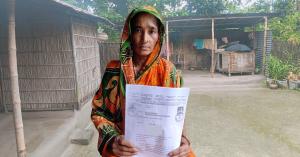
The ‘civil death’ (seizure of legitimate citizenship) in Assam has been achieved by the state in a multi-pronged way. Exclusion from the NRC, served with a ‘Declared Foreigners Notice’ by the Assam Border Police served through the Foreigner Tribuna; and marked a “D-voter” by district level officers of the Election Commission. In Jarina Bibi’s case it was the ‘D’ Voter marking that branded her a suspected foreigner!
Finally after many long years of uncertainty, lived trauma and struggle, ably assisted by CJP’s Team Assam, on March 10, 2025, the Dhubri Foreigners Tribunal (FT) delivered justice to Jarina Bibi, a Muslim woman from Assam who had been wrongly branded a “suspected foreigner.”
From “D-Voter” to Tribunal notice
Born on July 20, 1979 in village Kherbari Pt-IV, Dhubri district, Assam, Jarina Bibi is the daughter of late Jabed Ali and Janmati Bibi. Her family’s roots in Assam stretch back generations: her grandparents Meheddi Munshi (also known as Mohor Uddin Munshi) and Jamiran Bibi were recorded in the 1966 electoral rolls; her father Jabed Ali appeared in the 1970 rolls; and her mother remains a regular voter even today.
Despite this legitimate history and legacy, Jarina’s name was arbitrarily marked with the “D” (doubtful) voter tag. A Suspected Foreigner notice followed—turning her life upside down. For her husband, Mojammal Haque, a migrant worker, challenging the notice in court initially felt it was an uphill task. Until CJP stepped in.
CJP assisted the family in gathering and authenticating documents, many of which were beyond their immediate reach due to poverty and illiteracy. CJP secured:
- Electoral rolls from 1966, 1970, 1989, and 1997 proving the voting history of her grandparents, parents, and even Jarina herself.
- Land and revenue records confirming holdings of her father and grandfather.
- A Gaon Panchayat certificate (2015), later authenticated in court, linking Jarina to her father, Jabed Ali.
- Testimony of her mother, Janmati Bibi, who stood before the Tribunal and confirmed her daughter’s lineage.
Collectively, these efforts were crucial in overcoming the structural hurdles of proving “linkage”—a recurring difficulty for women in Assam who often lack formal education, land in their names, or school records.
Crucial findings from the Foreigner’s Tribunal: The Final Order of March 10, 2025, delivered by FT Member Kirti Kamal Das, demonstrates how strong evidence, when properly marshalled, can withstand scrutiny:
- The Tribunal held that Jarina’s parental linkage with late Jabed Ali was “adequately established”, supported both by her mother’s oral testimony (DW-2) and documentary evidence.
- The Election Officer’s verification report (20 August 2024) confirmed the authenticity of electoral rolls dating back to 1966, validating the family’s continuous presence in Assam.
- Land documents and revenue receipts corroborated long-standing residence.
- The Tribunal emphasized that under Section 9 of the Foreigners Act, 1946, the burden of proof rests on the proceedee. Jarina successfully discharged this burden by producing reliable and trustworthy records. This would have been near impossible without CJP’s para-legal and legal assistance.
The Tribunal thus concluded:
“From the above context, it appears that the pleadings of Proceedee and her exhibited documents are being substantiated each other which demonstrate that Proceedee’s ancestor were genuine Indian nationals and the Proceedee being a descendant of genuine Indian cannot be termed as illegal migrant as alleged.”
“Thus, in consideration of entirety of documents produced, it appears that the Proceedee or her ancestors had not illegally entered into the territory of India or the State of Assam, as suspected.”
“The documents have been found to be reliable, trustworthy and acceptable being in order and having been issued by the proper authorities and as such, proved. The documents have thus got evidentiary value. The Pròceedee from all possible aspects of the matter, cannot be termed or declared to be a foreigner of the stream Post 1971 or any other stream under the law. The Proceedee has been able to discharge the burden cast on her under Section 9 of the Foreigners Act, 1946 to prove the fact that she is not a foreigner under the law.”
Accordingly, the reference was dismissed, and Jarina was declared an Indian citizen.
Order delivered on March 10, 2025. Order was obtained in September 2025. The Order may be read here.
Sukumar Baishya
February 2025
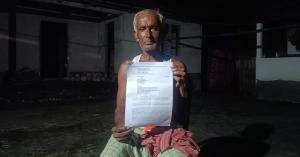
Sukumar Baishya is a 64-year-old Bengali-speaking Hindu from Patkata No. 1, Bongaigaon, who ensured his citizenship (he was declared an Indian by the Foreigners’ Tribunal (FT) No. 1, Bongaigaon). This decision, delivered on February 7, 2025, marks the culmination of a long and traumatic legal battle. Sukumar Baishya was born in 1963 in Patkata No. 1, Sukumar is the son of Lt. Sahadeb Baishya, who migrated from Binnati, East Pakistan (now Bangladesh) to Assam in 1952–53 after facing due to religious persecution. His father obtained a Certificate of Registration as a Citizen of India on December 24, 1956. He was further scarred during the 1983 Assam Movement, when his house was burnt down and all his possessions destroyed. Despite his indisputable roots in India, he found himself accused of being a foreigner who had entered Assam after March 25, 1971.
The case against Sukumar arose from a reference under Rule 2(1) of the Foreigners’ Tribunal Order, 1964. He was alleged to be a “foreigner from a specified territory” who entered Assam post-1971. Sukumar contested this claim vigorously, asserting that:
- He is Indian by birth, with a father who was a registered Indian citizen since 1956.
- The Investigating Officer (IO) never visited his home, never examined him or his witnesses, and filed a false, baseless, and unverified inquiry report.
- The case was registered in 2004 but he received notice only in February 2021 — a delay of 17 years, which he argued should render the case barred by limitation.
Documentary evidence submitted: With CJP’s legal support, Sukumar placed on record ten key documents establishing both his own Indian citizenship and his linkage to his father, including:
- Certificate of Registration (24/12/1956) for his father, issued under Section 5(1)(a)(d) of the Citizenship Act, 1955.
- Voter List of 1966 – Father’s name recorded under 41 No. Bijni L.A.C.
- Voter List of 1971 – Father’s name recorded again before the 1971 cut-off.
- Original Sale Deed (02/07/1956) in his father’s name.
- Jamabandi Records showing land mutation in 1988 in the names of Sukumar and his brothers after their father’s death.
- Voter List of 1997 – Sukumar and his wife Renu Bala Baishya recorded at the same address.
- Voter List of 2005 – Sukumar and both wives (Renu Bala and Anjali Bala) recorded.
- Ration Card with Sukumar’s and his father’s names.
- Link Certificate from the President of Palengbari Gaon Panchayat.
- Additional Jamabandi Records linking the family to the land since the 1950s.
Tribunal’s final legal reasoning and findings The Tribunal framed two key issues:
- Whether Sahadeb Baishya was a citizen of India.
- Whether Sukumar Baishya was his son.
On the paternity (Issue 2):
- Jamabandi records, the 1997 voter list, and testimony from Sukumar’s younger brother Manindra Baishya and the Land Records Assistant (Manikpur Revenue Circle) proved beyond doubt that Sukumar was the son of Sahadeb Baishya.
- The Ration Card was not accepted as it was not formally proved, but other documentary and oral evidence were sufficient.
On father’s citizenship (Issue 1):
- The Certificate of Registration (1956) and pre-1971 voter lists established Sahadeb as a registered Indian citizen residing in Assam since at least 1956.
- The 1956 sale deed and continuous land records corroborated long-standing residence and ownership.
Final conclusion/determination: The Tribunal held that Sukumar had successfully discharged the statutory burden under Section 9 of the Foreigners Act, 1946, proving he was not a foreigner but an Indian citizen by birth. He was absolved of all allegations.
Order delivered on February 7, 2025. Order was obtained in August 2025. The Order may be read here.
Order delivered on December 9, 2024. Order was obtained in May 2025. The Order may be read here.
Micharan Bibi:
February 2025

Micharan Bibi was born around 1950 to Kasem Ali (also known as Kasem or Kasam Ali) and Daliman Bibi (also known as Daliman) in Salmara Gaon, a village that was originally part of Bijni Police Station but now falls under Manikpur Police Station in Bongaigaon District, Assam (formerly part of undivided Goalpara). She spent her childhood and early years in the same village. Her father passed away around 1980, followed by her mother’s death in 1981.
In 1971, Micharan Bibi married Abdul Khalek, son of Mahej Sheikh, from Salmara Gaon. After marriage, she moved in with her husband and his family in the same village, where she continued to reside under Manikpur Police Station, Bongaigaon District, Assam. In 2022, she received the dreaded Foreigner’s Tribunal Notice! This notice came nearly 18 years after the case was registered in 2004, exposing a serious procedural lapse. The notice was also barred by limitation apart from itself being without basis or prior investigation.
Unable to navigate the legal labrynth alone, CJP stepped in. With CJP’s legal aid and assistance, Micharan Bibi presented fourteen crucial documents in support of her claim of being an Indian citizen. These included an extract from the 1951 National Register of Citizens (NRC) listing her grandfather, father, mother, and aunt, as well as certified copies of voter lists from 1966, 1971, 1997, 2006, 2011, 2015, and 2022, documenting her family’s continuous residence in Assam and her own inclusion as a voter.
Additionally, she submitted her Electoral Photo Identity Card (EPIC), a Panchayat Certificate from the Secretary of No. 4 Nowapara Gaon Panchayat confirming her long-standing residency, and a School Certificate dated March 22, 1994, issued by the Head Teacher of Barbakhara L.P. School, which verified she completed her education and also confirmed her father’s identity as Kasem Ali.
The tribunal examined whether Micharan Bibi had successfully proven two key points: that she was the daughter of Kasem Ali and Daliman Bibi and that her parents were Indian citizens residing in Assam before March 25, 1971. The tribunal relied heavily on her School Certificate, which listed her as the daughter of Kasem Ali of Salmara village, a fact corroborated by the school’s admission register from 1956. Furthermore, voter lists from 1966 and 1971 containing her parents’ names solidified her claim of lineage. The 1951 NRC entry, along with the voter lists, established that her father and mother had been residents of Assam well before the cut-off date, making them Indian citizens. Since Micharan Bibi was their daughter, she too was deemed an Indian citizen by birth. The tribunal also noted that she had consistently participated in elections from 1971 onwards, even after the case had been registered against her, further reinforcing her status as a legitimate Indian citizen.
Order dated December 10, 2024, obtained in February 2025. The Order may be read here.
Aklima Sarkar
April 2025
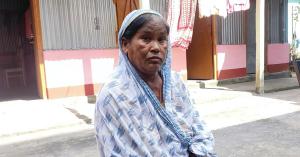
55-year-old widow Aklima Sarkar won back her citizenship in 2025 with CJP’s sustained legal help. Before that for three years, she lived in dread about being picked up and sent to a dreaded detention camp. This despite the fact that her father, Sonauddin Sk, was a registered voter in 1971; her grandfather, Khusulla Sk, had voted in 1958. The family had lived in the region for generations — long before borders hardened imaginations. CJP’s task was challenged by the absence of documentation, what Aklima had in her possession was nowhere near enough. These were an Aadhaar card, Voter ID, Bank passbook and Current voter list entry. To build a strong case, CJP had to reconstruct an entire lineage. They met her brother and village elders, applied for old documents, made visits to government offices, collected legacy documents, and arranged certified copies — all within the strict timelines of the Tribunal.
Key ancestral documentation eventually established
- Grandfather Khusulla Sk: Voter in 1958
- Father Sonauddin Sk: Voter in 1971
- Aklima herself: Voter in 1997 at Shernagar
This chain showed three generations of electoral presence — a critical requirement under Assam’s unique citizenship regime. The final challenge was persuading witnesses. Her elder brother agreed to testify, and CJP volunteers coordinated with local Panchayat and Circle Office officials to support her appearance.
Based on the documents, written statement and overall case presented the Tribunal delivered key findings:
An unbroken lineage inside India- The Tribunal accepted the documentary evidence establishing that Aklima’s grandfather and father were Indian voters long before 1971 — placing the family firmly within Indian territory prior to the cut-off date.
Consistent presence in Assam across decades- Aklima’s migration from her natal village to her matrimonial home was supported by: Electoral rolls, Marriage affiliation, Community certificates and Supporting witness testimony
Meanwhile, there was no evidence of foreign origin- The state could not produce any proof suggesting that she or her ancestors ever migrated from Bangladesh or any foreign territory.As a result, the Tribunal declared that Aklima Sarkar is an Indian citizen and dismissed the reference case.
Order delivered on April 9, 2025 and Order Obtained in November 20, 2025. The Order may be read here.
Hamela Khatun
Eight more Victories in 2025
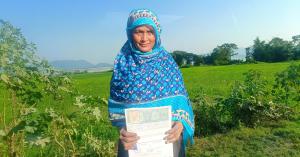
2025 has seen an additional eight victories: genuine Indians being declared so after the suspicion on their citizenship. However, as orders from the FTs take months to obtain, legal analyses will only be possible after we are in possession of these orders.
We shall certainly continue with this analysis –something that is crucial to human rights jurisprudence –as and when we obtain the orders. Among those other genuine Indians, victimized by this citizenship scrutiny that CJP legally intervened for are: Jalil Miah from Bongaigoan district (FT located in Bongaigoan ), Parvati Sutradhar from Bongaigoan district (FT located in Bongaigoan ), Nurbhanu Khatun from Chirang district (FT located in Kajolgoan, Chirang ), Rajani Kanta Sarkar from Bongaigoan district (FT located in Bongaigoan ), Akhorban Bibi from Dhubri district (FT located in Dhuhri), Nasir Uddin Sheikh from Dhuhri district (FT located in Dhubri), Rabindra Ch. Shil from Chirang district (FT located in Kajolgoan, Chirang ) and Hazrat Ali from Dhubri district (FT located in Dhubri)—eight in number.
Significance of these Grassroot Legal Interventions
Significance of this Case:
Analyses of the 2025 first responder battles by CJP, that our team successfully contested along with those victims whose citizenship was wrongfully questioned is a testament to the resilience of marginalized communities when supported with legal aid.
This legal battle underscores:
- The centrality of Section 9 of the Foreigners Act, 1946—which unfairly reverses the burden of proof onto the accused, making legal assistance indispensable.
- The evidentiary value of electoral rolls, land records, and Panchayat certificates, when corroborated by oral testimony.
- The indispensable role of organizations like CJP in bridging the gap between law and access to justice for poor, illiterate, and socially disadvantaged citizens.
Tracing CJP’s journey and experience from 2017-2026, a turbulent nine years!
It was the immediate crisis of mass exclusion from the much discussed, reviled and contested National Register of Citizens (NRC) – particular and specific to Assam—that was the first impulse, in 2017, for Citizens for Justice & Peace to begin a unique, path-breaking journey in Assam. After the first publication of the draft NRC list in the December of 2017, and the looming spectre of mass statelessness hanging over no less than 1 crore genuine Indians in Assam, CJP stepped in. In June 2018, we sent a fact-finding team to Assam to bring you stories of affected people. We met Saken Ali who was forced to spend five years in a detention camp because of a minor discrepancy in how his name was spelt in two different documents. We met Rashminara Begum who was dragged away to a detention camp even though she was three months pregnant, just because of a minor discrepancy in her date of birth. She is today one of CJP’s active district volunteer motivators.
We started developing a network on the ground to monitor and intervene, with legal and para-legal aid first, the tools required to aid this mass NRC exclusion and also – started developing a network on the ground to monitor related issues such as the plight of D-Voters (DV) and Declared Foreigners (DF), people who were forced to defend their citizenship before Foreigners’ Tribunals (FT) and those who were incarcerated in Detention Camps.
Following the publication of the final NRC in August 2019, and 19,06,657 people have been excluded from the final list, CJP’s campaigns and legal interventions have been manifold. From ensuring that no child is ever sent to a Detention camp (CJP obtained this Order in January 2020 from the Supreme Court), to ensuring that intrepid legal aid is compulsorily provided to all those excluded from the NRC (this petition filed in 2021 is still pending before the GHC). CJP has also intervened in the constitutional courts on ensuring that the 27,43,396 lakh or so excluded from access to the AADHAAR card in Assam are ensured restitution of that identity card. This is key for easy access to school admissions, opening bank accounts and also accessing government schemes. Apart from the legal intervention that is pending our on-ground team has been guiding persons to re-access their AADHAR card through correction of details online.
CJP Team Assam’s other tasks:
Detenu weekly appear (2025):
During the two years (almost) of the Covid-19 pandemic, CJP’s Team Assam had assisted in securing the release of over 50 inmates of detention camps, on conditional bail, following Orders and directions of the Supreme Court. However securing the release is not enough; bail conditions mandate that the released detenu must appear before the Border Branch every week to mark his/her attendance. It has been the responsibility of the CJP Team on the ground to accompany the detenu on several occasions overcoming difficulties like health issues and absence of officials etc.
Special Revision (SR) in Assam
For the past two years, representations of the Election Commission of India (ECI) have been conducting programmes for electoral voter list correction and a general awareness campaign around the Special Revision (SR) of electoral rolls. Team CJP has, over the past two years, but especially since November 2025, been assisting people for correction and inclusion of names of genuine voters in the Voter List for 2025 in Assam during the publication of last draft voter list. These interventions have had some impact at the level of the Booth Level Officers (BLOs), ensuring correction, replies to notices etc.
During this process, our team has been documenting closely those hapless individuals whose names are still marked as ‘D’ in the 2025 list, providing support for voter list corrections. This work is crucial, especially considering potential future implications for the conduct of a Special Intensive Revision (SIR) in Assam
Natural Calamity in Assam in 2025)
Each year the flood situation becomes even more acute than previous years in the state and unfortunately it is always the poor and most marginalized who get most adversely affected. Often, floods in Assam, wash away the existence of entire villages! Rivers overflow and people are forced to displace themselves and find temporary space in relief camps. Floods this year also caused landslides in some places, and hampered communication. CJP’s Team has assisted people at such times, storing their documents safely. For example, our team meet some distressed people whose house suddenly inundated with water and keeping documents safe became a serious challenge. Extreme heat or intense floods, our local team tries hard to be available and accessible for the wider community.
Fight over hate: (2024-2025)
Hate Watch is a crucial programme for CJP at the national level. Unfortunately, in the recent past, much hated was spewed by elected officials including powerful politicians in Assam. As in other states, CJP has filed cases with appropriate authorities for the hate speech (es) in Assam. These may be accessed here.
2025, as the previous eight years of CJP’s work in Assam was marked by multiple tasks and even more challenges. As this work enters its tenth year, CJP urges its supporters to continue their generous support!
[1] Jurisprudence
At the heart of the problem is a problematic base.
Despite the passage of seven decades since the independence of the country, the debate on citizenship is far from over. The recent engagement with the construction of the National Register of Citizens (NRC) in the state of Assam, has again opened the flood gates of contestation on the citizenship question. Cardinal to this debate is the invocation of the Foreigners Act, 1946 and the Foreigners (Tribunals) Order, 1964 which are seen as the pillars for both the detection and deportation of immigrants. This analysis intends to examine some provisions of the legislations and in particular, Section 9 of the Act.
The Foreigners Act, 1946, a pre-independence era legislation was enacted for regulating the entry, presence and departure of foreigners into and from India, section 2(a) of the Act defining a ‘foreigner’ to mean a person who is not a citizen. But, it is important to note that the Act, per-se does not prescribe any methodology for detection or any mechanism for identification of foreigners which makes the role of the foreigners’ tribunal cardinal to the understanding of the Act.
The formation of tribunals for the identification of foreigners only finds strength from the Foreigners (Tribunals) Order 1964 issued in exercise of powers under section 3 of the Act. The said order however, primarily leaves the procedure to be adopted for disposal of the proceedings to the discretion of the members. For a long time now, tribunals have been formed for the detection of perceived foreigners in the state of Assam, persons who are charged with illegally living in the state, perhaps for decades.
In actual fact, these ‘so called’ foreigners are mostly faceless human beings, without any apparent record of their “infiltration”. They are “charged” with having infiltrated predominantly from a specified territory, i.e. the present day Bangladesh. This charge is based on their ethnic character and their linguistic back ground even though such a similarity of both language and ethnicity is found from both sides of the border – in Assam/Bengal and Bangladesh. These ‘facts’ makes their ‘detection’ apparently more complex. These people, according to popular perception have entered India crossing the supposedly porous borders and have intermingled with the citizens of the country. We must remember, however that the borders are not entirely open and do not permit free entirely free access.
Section 9 of the Foreigners Act, 1946 has a very important bearing on the determinations made under the Act. In a nutshell, it stipulates that in a case not falling under section 8 of the Act, when there arises a question as to whether a person is a foreigner or not, the onus of proving that the person is not a foreigner is on the person concerned. Section 8 deals with the issue of determination of the nationality of two categories of foreigners (i) those having more than one nationality, (ii) those of uncertain nationality, by the central government. Section 9, therefore, by implication, excludes cases under section 8 and appears to pertain to foreigners, whose specific foreign nationality is attributable with a certain amount of certainty, but where the said foreigner disputes the allegation that he is a foreign national and claims to be citizen.
It is important to note that by definition the term ‘foreigner’ appears in Section 2 (a) of the Act, and means “a person who is not Indian Citizen”. Thus ‘foreigners’ in context of the statute appear to mean foreigners i.e. those who are not Indian citizens –on the face of it — without any requirement of elaborate exercise at identification, which becomes conspicuous by the absence of any detection machinery in the Act. It is also relevant to note that Section 9 does not deal with any question as to whether a person is an Indian Citizen or not, unlike Section 3(8) of the Immigration Act, 1971 which specifically refers to determination of a question as to whether a person is a British Citizen or not. This distinction though very subtle can have wide-ranging ramifications on the scope and manner of application of the Act in question.
Read the entire article by an expert here arguing why Section 9 of the Act needs to be re-visited.
[2] The term “push back used by the state and central government is inappropriate as in all if not most of the cases, those thus violently victimized were and are Indian.