Vigilantism & State Failure: Policing lapses and core constitutional breaches in attacks on Kashmiri vendors 2025–26 vigilante attacks on Kashmiri shawl vendors expose how religious profiling erodes Articles 19(1)(d) & (g), sidesteps 19(6), and usurps state authority
27, Feb 2026 | Aman Khan
During the period encompassing 2025 and early 2026, a systemic and coordinated escalation in targeted vigilantism has fundamentally compromised the physical integrity and economic liberties of seasonal Kashmiri vendors across multiple state jurisdictions. Spanning from egregious physical assaults and highway dacoity in Kapurthala, Punjab, to orchestrated economic disenfranchisement in Himachal Pradesh, alongside coercive majoritarian sloganeering in Uttarakhand and Haryana, these multi-jurisdictional incidents expose a sustained campaign predicated on religious profiling, xenophobia, and hate speech.
This proliferation of violence transcends isolated instances of criminality; rather, it constitutes an orchestrated subversion of secular constitutionalism and a grave abrogation of fundamental human rights.
This legal analytical piece examines these systemic attacks through a rigorous constitutional and statutory framework. The organised marginalisation and physical coercion of these migrant traders strike directly at the Fundamental Rights guaranteed under Part III of the Constitution of India. Specifically, these acts constitute blatant violations of the right to equality before the law and the equal protection of the laws under Article 14. They not only result in severe violations of Fundamental Rights under Articles 14, 15, 19 and 21, the report further evaluates criminal liabilities under the Bharatiya Nyaya Sanhita (BNS), 2023, and the systemic failure of law enforcement to uphold statutory duties under State Police Acts.
CJP is dedicated to finding and bringing to light instances of Hate Speech, so that the persons propagating these venomous ideas can be unmasked and brought to justice. To learn more about our campaign against hate speech, please become a member. To support our initiatives, please donate now!
The targeted hostility and denial of commercial access based strictly on regional and religious identity directly infringe upon the constitutional protections against discrimination enshrined in Article 15(2) (b). The forced displacement, threats of violence, and destruction of inventory fundamentally contravene the freedoms guaranteed to all citizens, explicitly violating the right to move freely throughout the territory of India under Article 19(1)(d), as well as the absolute right to practise any profession, or to carry on any occupation, trade, or business under Article 19(1)(g). Ultimately, the physical assaults, coercion, and the resulting climate of terror strip these individuals of their paramount right to the protection of life and personal liberty as guaranteed by Article 21, executing deprivations entirely without any procedure established by law.
Furthermore, this report meticulously assesses the criminal liabilities of the vigilante perpetrators under the Bharatiya Nyaya Sanhita, 2023 (BNS), mapping their actions to stringent penal offenses including wrongful restraint, voluntarily causing grievous hurt, criminal intimidation, and the deliberate promotion of enmity between groups.
Crucially, this analysis critiques the concerning state failure and institutional apathy that have permitted this targeted violence to persist with relative impunity. By juxtaposing the ground reality against the explicit statutory mandates of the Uttarakhand Police Act, 2007, and the Punjab Police Act, 2007—which legally obligate law enforcement to impartially protect life, uphold human rights, and proactively maintain communal harmony.
To substantiate the scale and systemic nature of these constitutional and statutory violations, the subsequent sections provide a comprehensive, state-wise documentation of the specific incidents of assault, coercion, and economic displacement perpetrated against Kashmiri vendors.
- Punjab
Kapurthala: January 18, 2025
On January 18, 2025, a seasonal Kashmiri shawl seller named Mohammad Shafi Khawaja, originating from Kupwara, was physically attacked and looted by three motorcycle-borne masked miscreants while en route to sell shawls in Shahpur Andreta village within the Sultanpur area of Kapurthala district.
“Three masked assailants came on a motorcycle and looted him of Rs 12,000 in cash and also took away his shawls worth Rs 35,000, the police said”, reported The Print.
Strongly condemning the incident, the Jammu and Kashmir Students Association (JKSA) issued a public statement on X (formerly Twitter), stating that “We have taken up the matter of the assault on a Kashmiri shawl seller in Kapurthala, Punjab, with the Punjab Government. The National Convenor of JKSA, @NasirKhuehami, has spoken to Punjab Chief Secretary KAP Sinha, who said that instructions have been issued to the DGP of Punjab to ensure swift action. He directed DGP Punjab, Gaurav Yadav, to identify the criminals and take strict action against those responsible for such a criminal act. He further stated that the culprits will face the consequences they deserve. The safety and security of Kashmiri students and shawl sellers remain our utmost priority.”
We have taken up the matter of the assault on a Kashmiri shawl seller in Kapurthala, Punjab, with the Punjab Government. The National Convenor of JKSA, @NasirKhuehami, has spoken to Punjab Chief Secretary KAP Sinha, who said that instructions have been issued to the DGP of Punjab… https://t.co/eXAM7LGYBf
— J&K Students Association (@JKSTUDENTSASSO) January 19, 2025
Another attack in Kapurthala against Kashmiri shawl seller from Kupwara
By February 11, 2025, in a continuation of violence against migrant traders, Fareed Ahmad Bajad, a Kashmiri shawl seller from Kupwara, was physically assaulted and robbed of his merchandise and cash by unidentified assailants in Kapurthala, Punjab. This incident marks the third such attack on Kashmiri vendors in the state within a 45-day period.
According to the Observer Post, Nasir Khuehami, the national convenor of the J&K Students Association, publicly condemned the recurring assaults as a targeted trend of intimidation threatening the community’s livelihood, local law enforcement provided a different assessment. Kapurthala Senior Superintendent of Police (SSP) Gaurav Toora confirmed the registration of an FIR at the City Police Station but dismissed allegations of communal intent or hate crimes.
Attributing the assaults to petty criminals and drug addicts targeting high-value merchandise, SSP Toora noted that four individuals had been arrested in connection with the previous cases and advised the vendors to travel in groups for their safety, as reported
- Uttarakhand
Two Kashmiri vendors allegedly assaulted by Bajrang Dal members in Mussoorie
On April 29, 2025, two Kashmiri shawl vendors were assaulted by local youths (allegedly by Bajrang Dal members) on Mall Road in Mussoorie as claimed “retribution” for a terror attack. A video purportedly showed the vendors being slapped and harassed despite presenting their Aadhaar cards. Consequently, members of the community said “16 have left the town for safety.” Trader Shabir Ahmed Dar reported leaving goods worth Rs 12 lakh.
JKSA intervention, allegations of Police complicity, and subsequent arrests in Mussoorie
Highlighting the severity of the incident, Nasir Khuehami, National Convenor, initially posted on X that two Kashmiri shawl sellers were “brutally assaulted by members of the Bajrang Dal” in Mussoorie and that around 16 other traders from Kupwara district were “threatened, harassed, and forcibly evicted from their rented accommodations.”
Pointing to a severe lapse in civic policing, he noted that instead of receiving state protection, the vendors “were reportedly asked by the Mussoorie Police themselves to vacate the area and leave the state immediately.” Illustrating the economic devastation faced by the seasonal workers, Khuehami shared a statement from an affected trader that “All our goods, worth at least ₹30 lakh, are still lying there. We had no choice but to flee back to Kashmir, leaving everything behind.”
We received deeply disturbing and chilling reports from Mussoorie, Uttarakhand, where two Kashmiri shawl sellers were brutally assaulted by members of the Bajrang Dal. Also, Around 16 other Kashmiri traders, mostly from the Kupwara district, have been threatened, harassed, and… pic.twitter.com/rneqVF8jOR
— Nasir Khuehami (ناصر کہویہامی) (@NasirKhuehami) April 29, 2025
Following appeals to state and national officials, Khuehami later posted an update on X that, “Upon raising the matter, DGP Uttarakhand, Deepam Seth Sahab informed me that the Uttarakhand Police had taken cognizance of the incident involving the assault on Kashmiri shawl vendors by three youths on Mall Road.” He confirmed the arrests of Suraj Singh, Pradeep Singh, and Abhishek Uniyal, noting that “legal proceedings are being initiated against them under the Police Act.” The update concluded by stating that the culprits “apologized for their actions and assured that they would not repeat such behavior,” while confirming the mass exodus that “Around 16 Kashmiri shawl vendors from Mussoorie have now returned to the Kashmir Valley.”
Update from Mussoorie Uttrakhand:
Upon raising the matter, DGP Uttarakhand, Deepam Seth Sahab informed me that the Uttarakhand Police had taken cognizance of the incident involving the assault on Kashmiri shawl vendors by three youths on Mall Road. The incident happened two days… https://t.co/UsfWbKoKOR pic.twitter.com/LpmDEOMz44
— Nasir Khuehami (ناصر کہویہامی) (@NasirKhuehami) April 29, 2025
According to the Times of India, Police arrested three men under section 81 of the Uttarakhand Police Act, who were later fined and released after issuing written apologies. Dehradun SSP Ajay Singh stated, “We identified the assaulters and arrested them… I called them and assured them that they were free to come to Mussoorie and carry out their business.” Contrasting the exodus, local Kashmiri shopkeeper Muhammed Aslam Malik stated, “I am running my shop here since 2019 and have not faced any harassment here,” while Mussoorie Traders Association president Rajat Aggarwal added, “The society of Mussoorie is not aggressive or vindictive” as reported
Kashipur, Udham Singh Nagar
On December 22, 2025, a Kashmiri vendor named Bilal Ahmad Ganie, who had been operating his trade in the region for nine years, was intercepted in Kashipur by a mob of Bajrang Dal members led by local leader Ankur Singh.
According to report, the mob brutally assaulted the vendor, physically twisted his limbs, and coercively forced him to chant “Bharat Mata ki Jai.”
A #Kashmiri man was attacked and threatened in the #UdhamSinghNagar district of #Uttarakhand.
Bilal Ahmad, a shawl seller who has lived and worked in Kashipur for nearly a decade, was reportedly assaulted by a group linked to the #BajrangDal, allegedly led by a local man named… pic.twitter.com/7wTPzIovau
— Hate Detector 🔍 (@HateDetectors) December 26, 2025
The physical violence was accompanied by xenophobic slurs explicitly questioning his nationality.
Following the circulation of the assault video on December 26, the Home Ministry announced a zero-tolerance directive, which subsequently led to the official arrest of the Bajrang Dal leader on December 27.
17-year-old Kashmiri shawl seller brutally attacked with rods in Vikasnagar, Dehradun
On January 28, 2026, the systemic violence culminated in a near-fatal mob attack in the Vikasnagar area of Dehradun district. A 17-year-old Kashmiri shawl vendor named Tabish Ahmed, along with his younger brother, was intercepted by a local shopkeeper and subsequently attacked by right-wing extremists armed with iron rods. The perpetrators subjected the youths to severe regional profiling, baselessly accusing them of complicity in the Pulwama attacks, before inflicting grievous bodily harm.
The assault left the 17-year-old with a fractured arm and severe head injuries that necessitated intensive medical treatment at Doon Hospital.
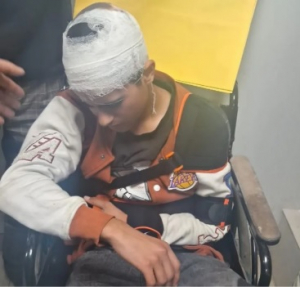
Image Courtesy: Greater Kashmir
J&K CM Omar Abdulla urged Uttarakhand CM to take strict action against the perpetrators
Following the assault on a young Kashmiri shawl seller in Uttarakhand, Jammu and Kashmir Chief Minister Omar Abdullah took up the matter directly with Uttarakhand CM Pushkar Singh Dhami.
According to a X post from the J&K Chief Minister’s Office, stating that “Chief Minister spoke with the Hon’ble Chief Minister of Uttarakhand, @pushkardhami, regarding the incident of assault on a young Kashmiri shawl seller in Uttarakhand and urged him to take strict action against the perpetrators. @pushkardhami assured that strict action, including registration of an FIR, would be taken in the matter and safety of J&K residents will be ensured.”
Chief Minister spoke with the Hon’ble Chief Minister of Uttarakhand, @pushkardhami, regarding the incident of assault on a young Kashmiri shawl seller in Uttarakhand and urged him to take strict action against the perpetrators.@pushkardhami assured that strict action, including…
— Office of Chief Minister, J&K (@CM_JnK) January 29, 2026
However, Waheed Ur Rehman Para, Member of the Legislative Assembly (MLA) from Pulwama representing the J&K Peoples Democratic Party (JKPDP) condemned the targeted attacks against Kashmiri student and traders. He posted on X that, “Amid rising hate crimes against Kashmiri students and traders, @jkpdp moved an adjournment motion today in the J&K Assembly, seeking an end to targeted attacks and discrimination.”
Amid rising hate crimes against Kashmiri students and traders, @jkpdp moved an adjournment motion today in the J&K Assembly, seeking an end to targeted attacks and discrimination. pic.twitter.com/r7zOKuItgW
— Waheed Ur Rehman Para (@parawahid) February 3, 2026
- Himachal Pradesh
Dehra, Kangra
In November 2025, in the Dehra area of Kangra, a local resident named Naresh Sharma assumed vigilante authority by intercepting two Kashmiri hawkers who had been peacefully residing in Naiharan Pukhra for five to six years. Sharma illegally demanded to see their police verification, arbitrarily searched their commercial bags, and baselessly accused them of suspicious movement, carrying weapons, and child abduction. Despite the hawkers providing their Aadhaar identification, Sharma rejected their legal documents, ordered them to leave the village immediately, and threatened to invoke state authority against them.
Further on December 27, 2025, when a Kashmiri shawl seller was brutally assaulted by local vigilantes in the same Dehra region. The mob inflicted bone fractures and multiple physical injuries upon the vendor, completely vandalised his trade goods, and deliberately smashed his mobile phone to destroy evidentiary material, culminating in threats commanding him to leave the state entirely.
- Shimla
On December 13, 2025, the hostility against the vendors was heavily institutionalised during a public gathering in Shimla organised by the Dev Bhoomi Sangharsh Samiti and VHP-Bajrang Dal concerning a local mosque dispute. During the assembly, a speaker openly propagated hate speech and called for an economic boycott of non-Hindus. The speaker specifically targeted Kashmiri hawkers with conspiracy theories, alleging they conduct surveillance on households when women are alone, referred to non-Hindus as modern-day demons, and circulated fabricated stories of hawkers stealing and consuming cattle to incite communal animosity and violence. This violence is illustrative of how this hill state, once peaceful, has been sought to be converted into a communal battlefield.
FIR registered following assault on Kashmiri Shawl seller in Ghumarwin, Bilaspur
An FIR has been registered by the Bilaspur police after a Kashmiri shawl seller was allegedly assaulted and his merchandise destroyed in the Ghumarwin area of the district. The complaint was filed by Abdul Ahad Khan, a resident of Kupwara, who reported being attacked on December 27, 2025 near Kuthera village by three masked individuals. According to Khan, the assailants assaulted him without provocation and destroyed shawls worth Rs. 20,000 before he managed to flee.
Himachal Pradesh has the same problem as Uttarakhand. Hate.
And both proclaim themselves as ‘Devbhoomi’. https://t.co/af0lBhWypI— Man Aman Singh Chhina (@manaman_chhina) December 29, 2025
Bilaspur Superintendent of Police Sandeep Dhawal confirmed that an FIR has been filed under Sections 126(2), 115(2), and 324(4) of the Bharatiya Nyaya Sanhita (BNS) at the Ghumarwin police station, and efforts are underway to trace the suspects involved, as the Hindustan Times reported
- Haryana
Kashmiri shawl seller forced to chant “Bharat Mata Ki Jai” and “Vande Mataram” in Fatehabad
On December 28, 2025, Kashmiri shawl sellers and traders in the Fatehabad area were subjected to severe public intimidation and physical assault based on their religious and regional identities. A widely circulated video documented a local resident physically assaulting a Kashmiri vendor by violently grabbing his collar and subjecting him to degrading treatment.
The perpetrator aggressively forced the youth to chant “Bharat Mata Ki Jai” and “Vande Mataram” in a threatening tone, using public humiliation and the imminent threat of further violence as punishment for the vendor’s initial refusal to participate in the forced majoritarian sloganeering.
View this post on Instagram
Police lodge suo motu FIR for ‘hate speech’ in Kaithal for heckling with Kashmiri vendor
On December 29, 2025, in a separate incident in the Kalayat area of Kaithal district, a viral video showed a local man confronting a Kashmiri vendor who was sitting on a concrete bench. The man demanded the vendor chant “Vande Mataram,” a request the vendor declined while citing his Islamic faith. In response, the assailant referenced violence against Hindus in Bangladesh, forced the vendor to pack up and leave, and threatened to burn him alive while explicitly warning that Muslims should not enter the village.
Taking suo moto cognizance of the video, the Kaithal police registered a First Information Report (FIR) on December 27 under Sections 196(1), 299, and 353(1) of the Bharatiya Nyaya Sanhita (BNS) against unidentified persons.
The incidents drew immediate public condemnation, including from Iltija Mufti, who shared the footage on X (formerly Twitter) and tagged Haryana Chief Minister Nayab Singh Saini and the Director General of Police to demand accountability.
A Kashmiri shawl vendor is yet again harassed, abused & heckled in Haryana. You abuse & misbehave with Kashmiris & then conveniently dub them as ‘anti nationals’ all in the same breath. Are we sub human? Request @NayabSainiBJP @cmohry @DGPHaryana to take cognisance of this… pic.twitter.com/t3aOqCtHww
— Iltija Mufti (@IltijaMufti_) December 27, 2025
- Uttar Pradesh
Lucknow
On January 17, 2026, organised vigilante groups extended their campaign of intimidation against Kashmiri street vendors in Lucknow. Deepak Shukla, identified as a VHP-Bajrang Dal leader originating from Uttam Nagar in Delhi, along with his local associates, systematically intercepted and harassed seasonal Kashmiri traders.
Shukla and his group subjected the vendors to religious profiling, coercively forced them to chant “Vande Mataram,” and issued direct ultimatums threatening violence if the vendors did not immediately pack their goods and permanently vacate the geographical area.
Kashmiri artists face housing discrimination ahead of Kanpur Exhibition
On October 24, after a gruelling two-day search for accommodation in Kanpur, a group of young Kashmiri artists operating under the banner “Glance Kashmir” were abruptly evicted from a newly rented flat upon revealing their identity. The group had originally arrived in the city on October 22 to participate in an upcoming art exhibition and sought a modest space where they could cook their own meals.
During their initial search, they encountered blatant prejudice, with one local explicitly stating that rental properties would not even be shown to Muslims and Ahirs. On their third day, the artists finally secured a flat for Rs. 15,000 a month and paid a Rs. 5,000 advance, as reported the Observer Post.
However, when they returned that evening with groceries after setting up their exhibition stall, the landlady inquired about their background and immediately ordered them to leave. Despite the group’s desperate pleas that they were exhausted, hungry, and had nowhere else to stay for the night, she refunded their money and forced them out.
- Arunachal Pradesh
Naharlagun, Itanagar
On December 17, 2025, in Naharlagun, Itanagar, the targeting of Kashmiri vendors manifested through regional exclusivity and vigilantism concerning municipal trade licenses. Taro Sonam Liyak, the president of the Arunachal Pradesh Indigenous Youth Organisation (APIYO), personally confronted Kashmiri vendors and unlawfully assumed administrative authority by accusing them of operating illegally.
Liyak propagated xenophobic conspiracies, alleging the vendors were illegally settling family members to demographically capture the region.
The vendors maintained they had complied with legal procedures and applied for licenses, which were administratively delayed due to local elections, yet they still faced extra-legal vigilantism overriding municipal law enforcement.
- Subversion of Constitutional Guarantees: the annihilation of fundamental rights
The targeted marginalisation and physical coercion of these migrant traders strike directly at the core of the Fundamental Rights guaranteed under Part III of the Constitution of India. This phenomenon goes far beyond isolated criminality, mutating into a systemic subversion of secular constitutionalism where the State’s monopoly on law and order is unlawfully usurped by majoritarian mobs.
Article 14 (Right to Equality and Equal Protection)
Article 14 establishes a dual mandate that the State shall not deny “equality before the law” nor the “equal protection of the laws.” The systematic failure of the state machinery to impartially protect Kashmiri vendors constitutes a severe breach of this foundational guarantee. When law enforcement categorises targeted, identity-based hate crimes as mere “petty theft” (as seen in Kapurthala), or advises victims to flee rather than arresting their attackers (as in Mussoorie), it demonstrates arbitrary state inaction.
The Constitution demands a positive obligation from the State to protect its vulnerable minorities. By allowing vigilantes to operate with relative impunity based solely on the victims’ regional and religious identity, the state apparatus implicitly endorses an unconstitutional, arbitrary classification, effectively creating a sub-class of citizens denied the equal protection of the criminal justice system.
Article 15(2)(b) (Horizontal Prohibition of Discrimination)
While many fundamental rights are enforceable only against the State, Article 15(2)(b) has a horizontal application—it explicitly bars citizens from subjecting other citizens to any disability, liability, or restriction concerning the use of roads and places of public resort on grounds only of religion, race, caste, or place of birth. The systematic interception of vendors on public highways in Punjab, the forced denial of commercial access to bustling public spaces like Mussoorie’s Mall Road, and the blatant, identity-driven housing discrimination faced in Kanpur are textbook violations.
The Constitution envisions public spaces as egalitarian zones; when vigilante mobs construct invisible, exclusionary borders within these spaces, and the State fails to dismantle them, the absolute protection against identity-based public exclusion is shattered.
Article 19 (1) (d) & 19 (1) (g) (Freedom of Movement and Profession)
The “bedrock of India’s economic integration” is cemented by the twin pillars of movement and livelihood. Under Article 19(1)(d), which mandates that all citizens shall have the right “to move freely throughout the territory of India,” the Constitution envisions a borderless nation where geography does not limit a citizen’s presence.
Complementing this is Article 19(1)(g), which grants the right “to practise any profession, or to carry on any occupation, trade or business.” Together, these rights ensure that an Indian citizen’s identity is not tied to their state of origin, but to their contribution to the national economy.
However, this integration is increasingly under siege. While Article 19(6) clarifies that “nothing in sub-clause (g)… shall affect the operation of any existing law… insofar as such law imposes… reasonable restrictions in the interests of the general public,” it is crucial to note that this power is reserved exclusively for the State.
When vigilante groups in Lucknow and Arunachal Pradesh issue “extra-legal territorial ultimatums,” they are not acting under the colour of law; they are engaging in a hostile takeover of state authority. The forced mass exodus of traders from Uttarakhand and the targeted destruction of commercial inventory in Himachal Pradesh are not “reasonable restrictions”—they are violent disruptions of the social contract. These actions bypass the judicial scrutiny required by Article 19(6), replacing the Rule of Law with the Rule of the Mob, and effectively dismantling the economic unity the Constitution seeks to preserve.
Article 21 (Protection of Life and Personal Liberty)
The paramount right of Article 21 ensures that no person shall be deprived of their life or personal liberty except according to procedure established by law. The Supreme Court has repeatedly expanded this to include the right to live with human dignity and the right to livelihood. The brutal physical assaults, the near-fatal iron rod attack on a minor in Dehradun, and the ensuing, pervasive climate of terror entirely strip these individuals of their physical security.
Forcing a citizen to choose between their economic survival and their bodily integrity is the ultimate deprivation of personal liberty, executed entirely outside any lawful procedure.
Penal culpability: application of the Bharatiya Nyaya Sanhita, 2023 (BNS)
The actions of the vigilante perpetrators are not spontaneous skirmishes; they map directly onto stringent penal offenses under the Bharatiya Nyaya Sanhita, 2023. These acts demand rigorous, uncompromising prosecution beyond the mere issuance of written warnings or preventive detention.
Offences of physical violence and restraint
The highway interceptions and physical beatings invoke Section 126(1) (Wrongful restraint). Vigilantes exhibit clear mens rea (criminal intent) by voluntarily obstructing vendors from proceeding in geographic directions they have a lawful, constitutional right to access. Furthermore, the grievous physical injuries inflicted—including shattered bone fractures in Himachal Pradesh and severe head trauma sustained by the 17-year-old in Vikasnagar—strictly attract Section 117(2) (Voluntarily causing grievous hurt). This section mandates severe punitive measures for endangering life and cannot be legally diluted into minor assault charges by investigating officers.
Offences of hate speech, enmity, and religious outrage
The forced majoritarian sloganeering, coercively extracted under the imminent threat of violence, coupled with xenophobic slurs referencing terrorism, transcend mere heckling. These calculated acts attracts Section 302 (Uttering words with deliberate intent to wound religious feelings).
Most critically, the organised assemblies in Shimla calling for widespread economic boycotts, paired with the propagation of fabricated conspiracy theories about Kashmiri vendors, directly violate Section 196 (Promoting enmity between different groups on ground of religion, race, place of birth, residence, language, etc., and doing acts prejudicial to maintenance of harmony). This section explicitly criminalises the promotion of enmity between different groups on grounds of religion, race, or place of birth, and penalises any acts prejudicial to the maintenance of communal harmony.
Offences of intimidation and public humiliation
The public parading, violent grabbing of collars, and explicit threats of being burned alive recorded in Haryana represent acute violations of Section 351 (Criminal intimidation) and Section 352 (Intentional insult with intent to provoke a breach of peace). Extorting verbal compliance through mob terror is an assault on personal autonomy. Additionally, the widespread, defamatory conspiracies spread by local leaders regarding the vendors’ motives (e.g., alleging they are demographic invaders or spies) attract immediate liabilities under Section 356(3) and (4) (Defamation).
Institutional apathy: dereliction of statutory Police duties
The most critical and concerning legal failure underpinning this crisis is the institutional apathy and outright abdication of statutory mandates by state police forces. Law enforcement agencies are not merely reactive bodies; they are legally bound by their respective state acts to prevent such vigilantism proactively.
The Uttarakhand Police Act, 2007
Under Section 39 (1), the mandate of the police is unambiguous. They are legally bound to “uphold and enforce the law impartially, and to protect life, liberty, property, human rights, and dignity” (clause a), and must proactively “prevent and control… breaches of communal harmony” (clause c). When Mussoorie police reportedly instructed victimised vendors to vacate the jurisdiction rather than providing a protective state shield against Bajrang Dal mobs, they committed a gross dereliction of their duty to “create and maintain a feeling of security in the community and… prevent conflicts and promote amity” (clause h).
Furthermore, identifying perpetrators of cognizable hate crimes only to release them with mere written apologies fundamentally violates the mandate to accurately register complaints, conduct lawful investigations, and apprehend offenders (clause g). This approach effectively decriminalises mob violence.
The Punjab Police Act, 2007
Similarly, Section 40 of the Punjab Police Act, 2007 strictly mandates the police to uphold human rights impartially, maintain internal security, and proactively collect intelligence regarding threats to social harmony (clause i). By dismissing the repeated Kapurthala hate crimes against a specific demographic as the isolated, uncoordinated acts of “petty criminals” or drug addicts, the police entirely failed their investigative and intelligence-gathering duties, ignoring a glaring pattern of regional profiling.
Moreover, Section 41 legally enforces the “Social responsibilities of the police,” demanding that officers “guide and assist people especially those, needing help and protection” (clause b) and “be impartial and respectful for human rights, with special attention to weaker sections” (clause d). Advising vulnerable, targeted migrant vendors that they must “travel in groups” to avoid being attacked is a profound abdication of sovereign responsibility. It shifts the statutory burden of public safety entirely from the State onto the marginalised victims themselves, constituting a severe and actionable dereliction of statutory duty.
Why judicial intervention and law enforcement is imperative?
The crisis confronting Kashmiri seasonal vendors is a stark indicator of a broader institutional malaise that threatens the foundational integrity of the Indian Republic. The documented incidents reveal that the issue is no longer confined to isolated episodes of mob violence; rather, it has mutated into the dangerous privatisation of law enforcement. When local vigilantes are permitted to unilaterally dictate the terms of commerce, residency, and physical safety—while the state apparatus either acquiesces, re-categorises hate crimes as petty offenses, or advises victims to flee their lawful jurisdictions—the rule of law is effectively outsourced to majoritarian mobs.
Restoring constitutional order requires moving beyond reactive condemnations. It necessitates immediate, suo motu intervention by constitutional courts (Supreme Court and High Courts) to address the glaring gaps in police accountability. To halt the normalisation of identity-based economic displacement, law enforcement officers must face strict departmental and legal consequences for the dereliction of their statutory duties.
Concurrently, the applicable provisions of the Bharatiya Nyaya Sanhita must be unequivocally enforced against perpetrators, entirely stripping away the impunity currently afforded to vigilante networks. Only through uncompromising institutional accountability can the promise of secular constitutionalism and equal protection be salvaged.
While FIRs have been lodged in many of these communally charged assaults the real measure of the deterrence enforced by this act will be visible only if the respective state police are pro-active and visible about the follow-up and prosecutions of these criminal complaints. Typically, while the FIR is the first response after the social media outrage, police rarely follow up with robust prosecutions.
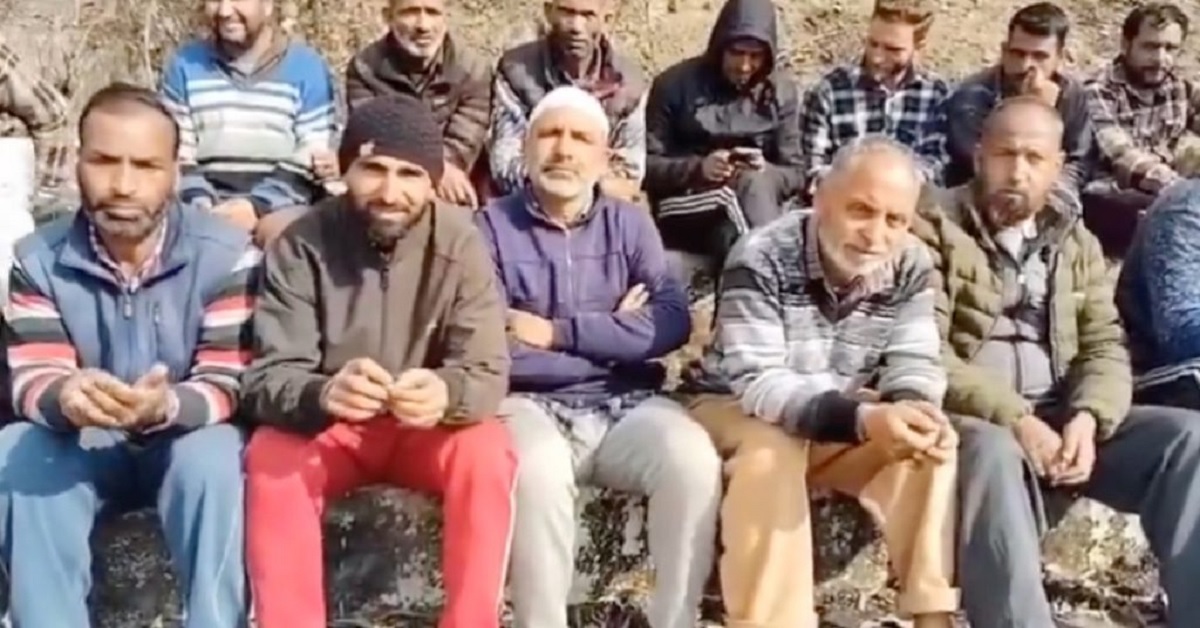
Image Courtesy: freepresskashmir.news
Related
Himachal Haryana, racial harassment and attacks on Kashmiri shawl sellers rage on
Mob lynching: Three separate incidents surface, even minors and partially disabled Muslims not safe