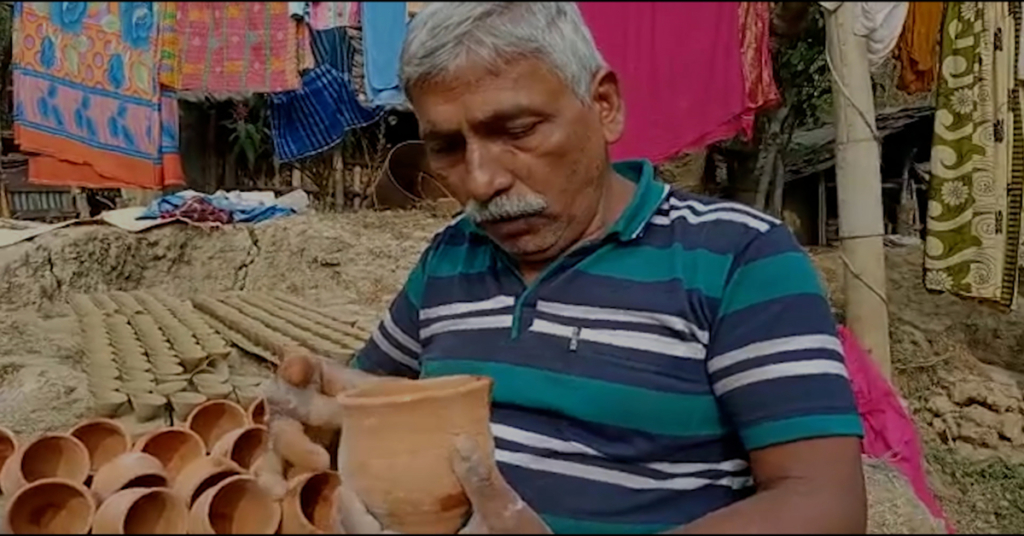
Terracotta tales: When earth, water and fire meet, a story is born Potters are eco warriors, creating biodegradable functional utensils, but the industry is declining
30, Dec 2020 | Mohammed Ripon Sheikh
Potters are the original eco warriors. For generations, potters have kneaded clay and water, and their deft fingers have mounded this earthy dough into every kind of utensil imaginable. Their skill is passed down generations, a heritage, that is not merely learned, it is lived. But one cannot live on heritage status alone. Daily bread and water cost money, as does the fuel to fire the kilns that turn moist fragile pots into sturdy terracotta.
Things were always hard for the potter community, as people moved to consuming even desi chai in plastic cups, however, the sudden covid-19 lockdown has been worse than any natural calamity for the potters of rural Bengal.
CJP’s Grassroots Fellowship Program aims at empowering young men and women, from the communities we work closely with, including migrant workers, Dalits, Adivasis, forest workers among other disadvantaged people, to report on issues closest to their hearts and home. Please Donate Now to empower our grassroots fellows.
We met a family hailing from the traditional community of potters from Baliara, in Bankura. Mahesh and Nandita Pandit live in Palsha village, which falls under the jurisdiction of the Murarai police station. They are skilled potters who make terracotta toys as well as sturdy utensils. Both items are now hard to find outside their regions of origin. Most of these products are gradually getting lost and are now featured more in stories than on shops’ shelves. The industry is gasping for survival, all because there is a lack of patronage. Even then, many of the potter families still want to continue the tradition. They ask, “What else will we do?”
For Mahesh Pandit it is also important that they carry on practicing their traditional skill. “We still hold onto the memories of learning pottery from our forefathers. There was a huge demand for pottery in the surrounding area at one time, but now the pottery industry is in crisis. Apart from the lack of patronage, we have another ongoing crisis, as rivers and canals have flooded due to climate change. A lot of money has to be spent on collecting good soil. We also have to bear the brunt of ever increasing price of fuel,” he says, counting the constant losses the community incurs.
The potters, or Kumors as they are called in Bangla, buy the raw clay from different fields, and soak it in water for two days. Then the clay is carefully kneaded to the right consistency for making vessels and toys. The products are glazed red and baked in the kiln. After each piece is checked for quality it is sent off to the market.
They recall a time, when people would come from across the state to their villages to buy the specialised high quality pottery. “Now we have hardly any patronage, nor do we have a favorable wholesale market, and our industry is on the verge of extinction today,” they say, adding, “if the government makes a strict no-plastic policy, then our clay industry will revive.”
According to Nandita Pandit, as metal and plastic utensils have taken over the marketplace, there is hardly any demand for earthenware anymore. “As a result, sellers are not taking the same interest in our pottery as they did before. Their demand depends on the buyers, now the earthenware is no longer visible,” she says. This is also the reason the terracotta artists are being forced to change their professions, “It has become very difficult for those who are involved in this profession and whose only source of livelihood is pottery”.
However, some remain optimists, and despite spending their days in misery, the potters of Bankura still dream of a better future. “One day the value of earthen products will increase again. On that day, happiness and peace may return to our family,” says Pandit, as she continues working hard in the hope that people will long to sip their hot tea from a terracotta cup.
This report is part of CJP’s Grassroots Fellowship Program, and has been written by researcher Ripon Sheikh, who is travelling around rural Bengal, tracking and documenting social and cultural movements of indigenous people. For this report, he travelled to village Palsha in Bengal to listen to the stories of artisans working in the pottery industry. Sheikh spent time with the family of Mahesh and Nandita Pandit who are fighting hard to keep the pottery industry alive. Even though they had to borrow money to survive the lockdown, they continue to spin their pottery wheel and create functional, eco friendly utensils and hope that the Government pays some attention to their plight.
Meet CJP Grassroot Fellow Mohammed Ripon Sheikh
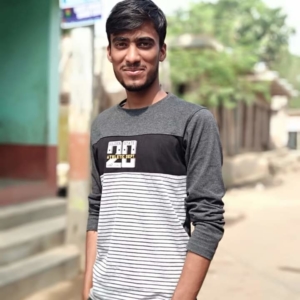
This young man, who has graduated with a B.Sc degree from the Burdwan University, loves trivia. Sheikh’s passion to research and seek “unknown information about World History” has earned him many medals and trophies at various University and state-level Quiz championships, and youth festivals. Sheikh is a born orator and a natural community leader. He has the potential to represent his community, state and country at a global level one day. His immediate goal, however, is to find a job so he can support his parents.
Related:
CJP Grassroots Fellowship: Meet Ripon Sheikh who documents rural Bengal
Meet Ameer Hamza, a CJP fellow
Adivasi youth Mamta Pared is CJP’s newest grassroots fellow
Will the 125-year old Bolpur Poush Mela be held this year?