CJP seeks FIRs over alleged communal hate speeches in Maharashtra and Bengal Multiple complaints before police authorities in Maharashtra and West Bengal seeking FIRs for alleged hate speeches
13, May 2026 | CJP Team
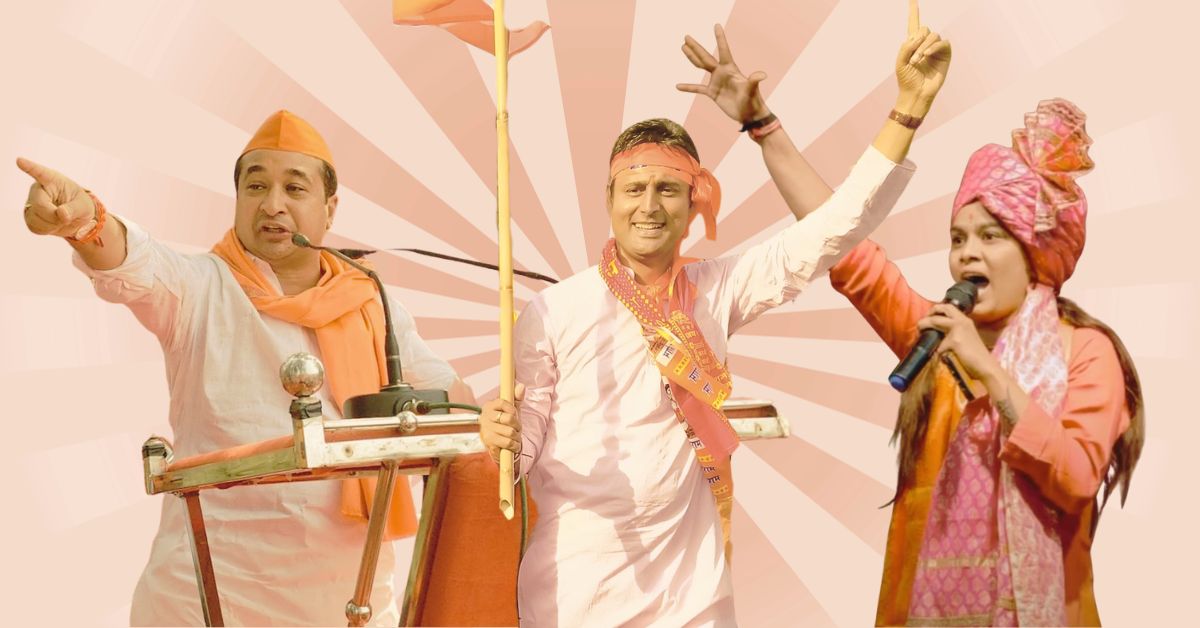
Citizens for Justice and Peace (CJP) has filed multiple complaints before senior police officials in Maharashtra and West Bengal seeking registration of FIRs against BJP MLA and Maharashtra Cabinet Minister Nitesh Narayan Rane, BJP leader Hari Mishra, and far-right influencer Harshu Thakur over speeches alleged to contain communal hate speech, inflammatory rhetoric, threats, conspiracy theories, and calls for social and economic exclusion of Muslims.
CJP stated in the complaints that the alleged hate speeches violated constitutional guarantees under Articles 14, 15 and 21 and attracted offences under provisions relating to promotion of enmity between groups, criminal intimidation, statements conducing to public mischief, deliberate acts intended to outrage religious feelings, and incitement to violence.
The complaints concern speeches delivered in Chandivali and Malad Malvani in Mumbai, Kalyani in Nadia district of West Bengal, and Junnar in Pune district.
CJP is dedicated to finding and bringing to light instances of Hate Speech, so that the persons propagating these venomous ideas can be unmasked and brought to justice. To learn more about our campaign against hate speech, please become a member. To support our initiatives, please donate now!
Complaint against Nitesh Narayan Rane over Chandivali speech: May 12, 2026
In a complaint dated May 12, 2026, addressed to Shri Nikhil Gupta, Additional Director General (Law & Order), Maharashtra, Addl. Commissioner of Police, West Region, Mumbai, and Senior Police Inspector, Sakinaka Police Station, Mumbai, CJP sought registration of an FIR against BJP MLA and Maharashtra Cabinet Minister Nitesh Narayan Rane for allegedly delivering a divisive communal speech during a Hindu convention held in Chandivali, Mumbai on May 3, 2026.
CJP stated in the complaint that Rane utilised dehumanising language against Muslims, spread conspiracy theories regarding “Love Jihad,” “Land Jihad,” “Corporate Jihad,” and “Ghazwa-e-Hind,” and openly encouraged social and economic boycott of Muslims. The complaint alleged that the speech attempted to create fear and hostility by portraying Muslims as an existential threat to Hindus and India.
According to CJP, Rane repeatedly referred to Muslims as “green snakes” and urged the audience to confront them. The complaint reproduces the speech transcript, including the following statements:
“[They] should come to Maharashtra. This writhing of green snakes (referring to Muslims) must stop. That is why the saffron flag has been unfurled in Maharashtra, remember this.”
“And therefore, while moving around as a Hindu, do so with self-confidence. Move with courage. If any green snake is writhing here, take guidance from Tai and then give me a call.”
The complaint further stated that Rane repeatedly described India as a “Hindu Rashtra” and suggested that Muslims were attempting to convert India into an Islamic nation through organised conspiracies.
CJP also stated in the complaint that Rane attempted to create fear among Hindus by claiming that Muslims would prevent Hindu religious practices if their population increased.
The complaint reproduces the following statements:
“You won’t be able to perform puja in your home. This saffron flag won’t be able to fly here. You won’t be able to apply the Tilak on your forehead.”
“Mothers and sisters won’t be able to apply vermilion (Sindoor) on their heads.”
According to CJP, the speech also included references to alleged communal incidents in Palghar and Virar to reinforce hostility against Muslims. The complaint additionally highlighted Rane’s remarks calling for economic boycott of Muslims:
“So, when we are dealing with them, buying from them, or giving them jobs—first, if someone is sitting at a shop, even if the shop’s signboard says ‘Jay Shri Ram,’ sometimes Abdul is sitting inside.”
“First tell him, ‘Recite the Hanuman Chalisa for me first.’ If you recite the Hanuman Chalisa only then will I buy from you, otherwise I won’t.”
“Therefore, if jobs are to be given or purchases are to be made, it should only be for Hindus—this should be the stance of all of us.”
CJP stated in the complaint that these remarks amounted to explicit encouragement of discrimination and exclusion of citizens based on religion and constituted a direct appeal for economic boycott of Muslims.
A copy of complaint dated May 12, 2026 can be accessed here
Complaint against Nitesh Rane over Malad Malvani speech during Ram Navami Yatra
In another complaint dated April 28, 2026, addressed to Maharashtra Police authorities, CJP sought registration of an FIR against Nitesh Narayan Rane over a speech delivered during the Ram Navami Yatra held in Malad Malvani, Mumbai, on March 26, 2026.
According to CJP, the speech promoted communal hostility, issued direct threats of violence, and attempted to alienate Muslims by declaring India a “Hindu Rashtra” and describing the locality as belonging exclusively to “saffron-clad” Hindus.
CJP stated in the complaint that Rane used references to “Pakistan” as a dog-whistle against Muslims and openly threatened those opposing Hindutva ideology.
The complaint reproduces the following portions of the speech:
“Perhaps some people here in Malvani have forgotten that this is our Hindu Rashtra, this is not someone’s Pakistan. If anyone tries to remove that saffron flag, we will not let their cylinder come up again. If anyone again looks at our saffron flag with dirty eyes, then their eyes will be taken out and played with like marbles.”
CJP alleged that these remarks amounted to open threats of violence and intimidation. The complaint further stated that Rane specifically directed slogans toward a mosque in the locality, thereby attempting to provoke confrontation and disturb communal harmony. The reproduced statement reads:
“That voice must reach the big mosque.”
According to CJP, such statements sought to intimidate the Muslim community and portray them as outsiders within the constitutional framework of India. The complaint also alleged that Rane invoked the authority of a “government with a Hindutva ideology” to suggest political backing for aggressive communal mobilisation.
A copy of complaint dated April 28, 2026 can be accessed here
Complaint against Hari Mishra in West Bengal over hate speech during election campaign in Nadia
In a complaint dated May 6, 2026 addressed to the District Magistrate and Superintendent of Police in Nadia district, West Bengal, CJP sought registration of an FIR under Sections 196, 197, 299, 302, 352 and 353 of the Bharatiya Nyaya Sanhita, 2023 against BJP leader Hari Mishra for a speech delivered during an election campaign in Kalyani, Nadia district, on April 23, 2026. CJP stated in the complaint that Mishra spread anti-Muslim conspiracy theories and falsely claimed that Hindu festivals could not be celebrated in Muslim-majority areas.
The complaint reproduces portions of the speech including:
“In any area where the Muslim population is above 30-35%, Saraswati Puja will not happen. In places like Malda and Murshidabad… you first have to take permission from the nearest mosque. A situation worse than Bangladesh is going to happen on the soil of West Bengal.”
CJP further alleged that Mishra falsely claimed that the Constitution of India did not function in parts of West Bengal. The reproduced transcript includes:
“The Constitution of India does not work in many parts of Malda and Murshidabad. In about 25-30% of the areas in Malda and Murshidabad, the Constitution, rules, laws, and regulations of India do not apply.”
The complaint also referred to statements linking demographic change with political exclusion: “The day Muslims reach above 40-45%, not a single Hindu MP, MLA, counselor, or chairman will remain in West Bengal.”
According to CJP, these remarks sought to portray Muslims as a threat to democratic institutions and communal coexistence and were intended to create fear and polarisation during the election period.
A copy of complaint dated May 6, 2026 can be accessed here
Complaint against Harshu Thakur in Junnar, Pune over speech delivered at Virat Hindu Sammelan
In a separate complaint dated May 6, 2026, addressed to the Additional Director General (Law & Order), Maharashtra, the Superintendent of Police, Pune Rural, and the Deputy Superintendent of Police, Junnar Division, CJP sought registration of an FIR against Harshu Thakur over a speech delivered at the Virat Hindu Sammelan held in Junnar, Pune district, on April 19, 2026. CJP stated in the complaint that Thakur spread anti-Muslim rhetoric through references to “Forest Jihad,” “Love Jihad,” and “Land Jihad,” while also making statements encouraging militarised responses and targeting Islamic institutions and burial practices.
The complaint reproduces the following statements:
“Wherever there is open land, there are graves. If you start funding madrasas, then only terrorists will be produced there. Mulla-Maulvis give them training on how to trap girls in ‘Love Jihad’ and how to carry out ‘Land Jihad’. They are taught how to make bombs.”
CJP further highlighted remarks targeting Muslim men and encouraging women to arm themselves:
“All these ‘Abduls’ are the same. Every Hindu woman just needs to be given a weapon.”
The complaint also alleged that Thakur attempted to frame Muslims as inherently violent while encouraging religious segregation and hostility.
A copy of complaint dated May 6, 2026 can be accessed here
Judicial precedents on which CJP relied upon
In the complaints submitted before police authorities in Maharashtra and West Bengal, CJP also relied upon multiple judicial precedents of the Supreme Court concerning hate speech, communal targeting, and the constitutional obligation of authorities to act against inflammatory rhetoric. Referring to the Supreme Court judgment in Firoz Iqbal Khan vs Union of India [W.P. (Civ.) No. 956 of 2020], CJP highlighted the Court’s observations that “the edifice of a democratic society committed to the rule of law under a regime of constitutional rights, values and duties is founded on the co-existence of communities. India is a melting pot of civilisations, cultures, religions and languages. Any attempt to vilify a religious community must be viewed with grave disfavour by this Court as the custodian of constitutional values.”
CJP stated that the speeches delivered by Nitesh Rane, Hari Mishra, and Harshu Thakur collectively portrayed Muslims as conspirators, outsiders, extremists, and demographic threats, thereby directly undermining constitutional values of equality, fraternity, and peaceful coexistence. The complaints further referred to Pravasi Bhalai Sangathan v. Union of India [AIR 2014 SC 1591], where the Supreme Court observed that “hate speech is an effort to marginalise individuals based on their membership to a group,” and warned that such speech can lay the groundwork for discrimination, ostracism, violence, and even genocide. CJP stated that the repeated references to “Love Jihad,” “Land Jihad,” “Forest Jihad,” “Corporate Jihad,” alleged demographic conspiracies, and calls for economic boycott sought to institutionalise fear and hostility against Muslims and therefore warranted immediate criminal action.
The complaints additionally cited the Supreme Court’s order dated April 28, 2023 in Ashwini Kumar Upadhyay v. Union of India [W.P. (C) No. 943 of 2021], wherein all States and Union Territories were directed to register suo moto FIRs against hate speech irrespective of religion whenever offences under Sections 153A, 153B, 295A, 505 IPC and related provisions are attracted.
Provisions related to hate speech under BNS, 2023
CJP further stated that the speeches attract multiple provisions of the Bharatiya Nyaya Sanhita, 2023, particularly Sections 196, 197, 299, 302, 352 and 353. According to the complaints, the repeated targeting of Muslim religious institutions, educational spaces, and social identity through references such as “green snakes,” “Forest Jihad,” “Land Jihad,” and allegations that madrasas produce “only terrorists” amounted to promoting enmity between religious groups and acts prejudicial to communal harmony under Section 196 BNS.
CJP stated that the speeches also made imputations against the constitutional allegiance of an entire community by portraying Muslims and Islamic institutions as threats to the State, thereby attracting Section 197 BNS. The complaints further alleged that mocking Dargahs, Mazars, burial practices, Islamic scholars, and Muslim religious practices constituted deliberate insults to religion and religious beliefs under Sections 299 and 302 BNS.
CJP additionally argued that the repeated calls for mobilisation, warnings regarding demographic change, threats of violence, references to arming civilians, and calls for economic boycott amounted to intentional provocation intended to breach public peace under Section 352 BNS and dissemination of false information likely to create fear and communal unrest under Section 353 BNS.
The complaints maintained that the speeches delivered across Mumbai, Pune, and Nadia reflected a continuing pattern of inflammatory communal rhetoric aimed at deepening religious polarisation and normalising hostility against Muslims, thereby necessitating immediate registration of FIRs and preventive intervention by the concerned police authorities in compliance with constitutional obligations and Supreme Court directives.
Maharashtra DGP circulars cited by CJP
CJP also referred to circulars issued by the Director General of Police, Maharashtra, in February and April 2023 concerning preventive and penal action against hate speech.
According to the complaint, Circular No. DGP 20/Petition No.940/2022/54.2023 dated February 2, 2023 highlighted the Supreme Court’s order dated January 13, 2023 directing police authorities to take suo motu action whenever speeches attract offences under Sections 153A, 153B, 295A and 505 IPC.
The circular had directed all Unit Commanders to follow the Supreme Court order and entails “measures to be taken to maintain law and order due to agitations, morchas, speeches etc.”
It gives detailed instructions on what steps are to be taken when any morchas are to be held:
“2. All the Unit Commanders should hold a meeting with the concerned organisers before such a morcha and fix the route of the morcha with appropriate terms and condition. A combined meeting of all social groups should be taken to convey clearly to all that they should maintain peace and keep law and order during the morcha. Preventive action against Anti-social elements should be taken. Those elements who help in maintaining peace and harmony should be encouraged. Audio Video recording of the morcha should be done. Police Head Quarters should ensure adequate supply of equipment’s, like Lathi, Helmets, etc. to police men deployed for morcha bandobast. If any law-and-order situation arises, offences should be registered immediately and arrest should be made. Intelligence machinery should be activated to collect advance information about morcha, agitation and efforts should be made to pre-empt any communal incidents.”
Supreme Court directions on preventing/prosecuting hate speakers
CJP further referred to multiple Supreme Court orders concerning hate speech and preventive policing. According to the complaints, on February 3, 2023, the Supreme Court issued directions regarding a proposed event by Sakal Hindu Samaj in Mumbai and directed that if permission was granted for the event, it would be subject to the condition that no hate speech would be delivered.
The court also outlined directives with respect to taking preventive action in such cases:
“We also direct that the Officer(s), in case, permission is granted and, in case, the occasion arises for invoking the power under Section 151 of Cr.P.C. as aforesaid, it shall be the duty of the Officer(s) concerned to invoke the said power and to act as per the mandate of Section 151 of the Cr.P.C.”
Even in 2024 itself, while on January 17, the Supreme Court bench of Justices Sanjiv Khanna and Dipankar Datta had expressed their anguish at the petitioners being forced to approach the Supreme Court multiple times against individuals and organisations even after there being guidelines for tacking and taking action against hate speeches. During the said hearing, the Supreme Court issued an order directing the District Magistrate and Superintendent of Police at Yavatmal, Maharashtra and Raipur, Chhattisgarh to take ‘appropriate steps’ to ensure that no incitement to hate speech occurs at the rallies scheduled in the said districts in the coming few days of January.
The said order was passed following the concerns raised by the petitioners over delivery of potential hate speeches at rallies planned by Hindu Janjagruti Samiti and Bharatiya Janata Party Legislator T Raja Singh in the month of January.
CJP stated that the court had outlined directives with respect to taking preventive action in such cases:
“We would require the authorities to be conscious that no incitement to violence and hate speech are permissible. The concerned District Magistrates and Superintendent of Police of Yavatmal, Maharashtra and Raipur, Chhattisgarh will take necessary steps, as may be required. If necessary and deemed appropriate, police/administration will install CCTV Cameras having recording facility, so as to ensure identification of the perpetrators in the event of any violence/hate speech.”
Background: Profile of Nitesh Rane and previous complaints filed by CJP
CJP stated in its complaints that the speeches delivered in Chandivali and Malad Malvani were not isolated incidents but formed part of a continuing pattern of inflammatory speeches allegedly delivered by Nitesh Rane across Maharashtra. According to CJP, the organisation had previously filed complaints dated March 7, March 18, and March 28, 2025 concerning speeches delivered by Rane in Sindhudurg, Pune, and Ratnagiri districts.
The complaints related to events including:
- “Hindu Rashtra Adhiveshan” in Kundal on February 8, 2025
- “Shivjanmostav” event in Sawantwadi on February 19, 2025
- Public felicitation programme at Nanijdham, Ratnagiri on February 20, 2025
- Religious gathering in Wagholi, Pune on February 5, 2025
CJP stated that across these events, Rane repeatedly invoked terms such as “Love Jihad” and “Land Jihad,” portrayed Muslims as a collective threat, and made statements capable of inciting hostility, fear, and social boycott against the Muslim community. The complaints further stated that such rhetoric, particularly when delivered by a sitting Cabinet Minister, was inflammatory, unsupported by evidence, and violative of constitutional protections.
FIRs and ongoing legal scrutiny against Nitesh Rane
Under the judicial oversight of the Bombay High Court in Aftab Siddique & Ors. v. The State of Maharashtra (2024), multiple FIRs have already been registered against Nitesh Rane in connection with alleged hate speech cases. CJP reproduced details of these FIRs in its complaints and stated that they reflected a continuing pattern of communal speeches delivered by Rane in different parts of Maharashtra.
Mankhurd Police Station (C.R. No. 152/2024)
Registered against Nitesh Rane under Sections 153A, 503, 504 and 505 IPC. According to the complaint, this case originated from speeches perceived as threatening to the Muslim community and capable of inciting public disorder.
Ghatkopar Police Station (C.R. No. 521/2024)
Registered against Nitesh Rane and Subhash Ahir under Sections 153A, 504, 506 and 188 IPC in connection with inflammatory speeches delivered in Mumbai suburbs.
Kashimira Police Station (C.R. No. 259/2024)
Registered against Nitesh Rane and Geeta Jain in relation to the Mira-Bhayander incidents under Sections 153A, 153B, 143, 504 and 506 IPC along with Section 37(1) read with Section 135 of the Maharashtra Police Act.
Malwani Police Station (C.R. No. 298/2024)
Originally registered against Bhagwan Thakur, with Nitesh Rane later added as an accused under Sections 153A, 504 and 506 IPC in relation to speeches targeting specific religious communities.
CJP further pointed out that Nitesh Rane’s October 2024 election affidavit reportedly disclosed 38 FIRs registered against him, including 20 cases relating specifically to allegations of hate speech.
Related
Free and Fair Elections: CJP’s 2025 fight against hate and voter intimidation
Law as Resistance: A year of CJP’s interventions against a rising tide of hate