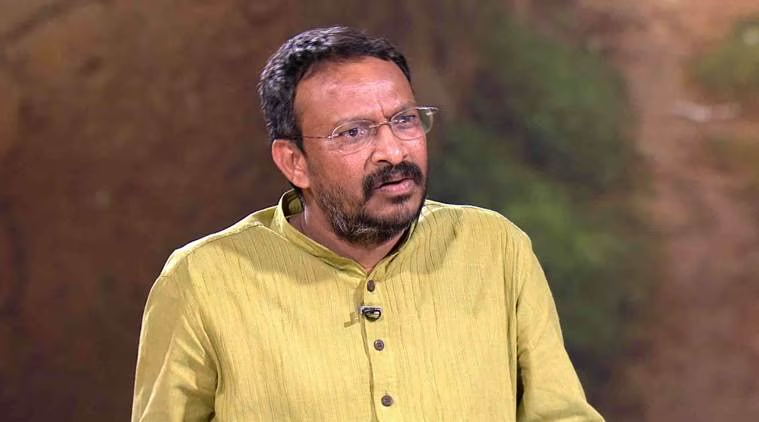
2016
Bezwada was awarded the Ramon Magsasay Award for his efforts in abolishing manual scavenging. He was recognised for his "moral energy and prodigious skill" in leading the Safai Karmachari Andolan (SKA) to liberate thousands of Dalits from this dehumanising practice.
2009
SKA filled a petition in the Supreme Court compiling photographic evidence of the existence of manual scavenging and dry latrines in Punjab, Delhi, etc. The State governments, after repeatedly denying the existence of this practice, finally agreed to carry out independent surveys with the SKA to locate dry latrines. Following the survey, the State governments sought another six months to rehabilitate the scavengers. The Supreme Court gave them six weeks instead on the grounds that the State governments had had more than six years to destroy dry latrines in their States (the court’s 6 years reference was to the first petition filed in 2003).
2007
The organisation held a dharna in New Delhi, following which; it launched an intensive, three-year campaign to eradicate the practice of manual scavenging in India by December 2010. As the commonwealth games were going to be conducted in New Delhi in December 2010, a weeklong Awareness Yatra in all the States was organised that converged in New Delhi.
2003-2004
Wilson and his team file a PIL in the Supreme Court of India where all the States in India alongside government departments of Railways, Defence, Judiciary and Education were alleged to be violators of Manual Scavenging Prohibition Act. This PIL pressurised State governments to act and address the issue of manual scavenging. The case was finally decided in 2014 where the court held the practise to violate Article 17 of the Indian Constitution (prohibition of untouchability). The Court further held that District Collectors would be held accountable for any existence of manual scavenging (a practise that is banned).
1994
Bezwada found the Safai Karmachari Andolan with the aim to end the practise of manual scavenging and find people engaged in it better, dignified jobs. For almost a decade, Bezwada worked on grassroots work helping people engaged in manual scavenging.