UK Citizen Detained in India: A Legal Analysis of the Detention of Dr Sangram Patil A UK based British-Indian consultant in Anasthetics Detained and Interrogated in India for nearly 20 days
28, Jan 2026 | CJP Team
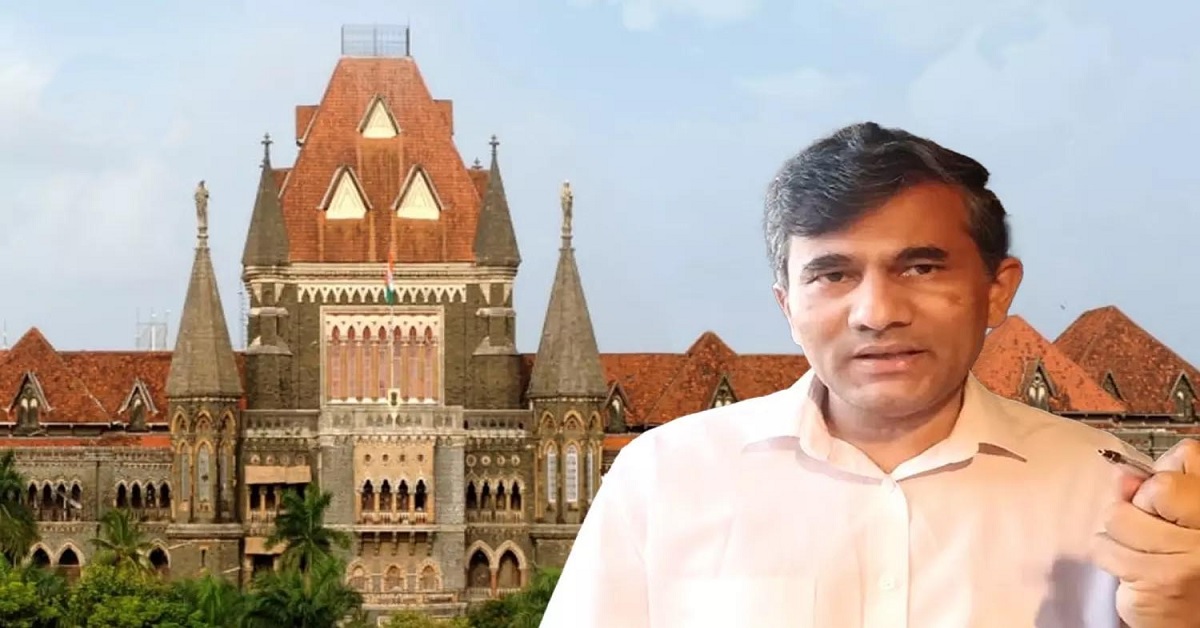
The Bombay High Court on Thursday, January 22, issued a notice to the State Government, seeking its response on the petition filed by London Based YouTuber and Doctor – Dr Sangram Patil, in connection with the criminal case registered against him in response to a post he shared criticizing Prime minister Modi. Dr Patil has alleged that he “faced inconvenience, mental agony, harassment and defamation because of the illegal and unnecessary issuance of the LOC.”
Dr Patil was questioned on January 21, 2026 for six hours and this was the third time that he was being interrogated by the authorities after being suddenly and summarily detained on his arrival from the United Kingdom (UK) on January 10, 2026 while on a visit to his family in Erandol, Maharashtra.
He had first been summoned for interrogation on January 16. He participated in the questioning and while, on the same day, he formally requested and appealed for the withdrawal of the LOC, as he was scheduled to return to the United Kingdom on 19 January there was no clear response from the authorities. Thereafter when he arrived at the airport on the scheduled date of departure, he was informed that the LOC had not been quashed. Notably, no prior intimation regarding the continuation of the LOC was provided to him. Dr Patil was accompanied by his wife on his trip to India.
Besides Dr Patil has stated that he has incurred financial loss as he missed his flight and the opportunity cost of working at his destination workplace. The continuation of LOC is a continuation of harassment by way of using the procedure as punishment. In any case, the FIR that has sought to be quashed, the Petition states, “an instance of misuse of criminal law to achieve a political vendetta and suppress any kind of different political view or opinion.[Read more about this on our page]
Single Judge Bench Justice Ashwin Bhobe is hearing Patil’s petition which sought to quash the FIR and cancel the LOC. The next hearing is posted on February 4. Senior Adv Sudeep Pasbola is appearing for the petitioner while Adv general Milind Sathe is appearing for the state.
Details of his detention and the FIR against him including his petition in the High Court challenging both the LOC and FIR may be read here.
Legal Analysis of the case
Section 353(2) of the Bharatiya Nyay Sanhita under which the FIR has been registered provides that:
“Whoever makes, publishes or circulates any statement or report containing false information, rumour or alarming news, including through electronic means, with intent to create or promote, or which is likely to create or promote, on grounds of religion, race, place of birth, residence, language, caste or community or any other ground whatsoever, feelings of enmity, hatred or ill will between different religious, racial, language or regional groups or castes or communities, shall be punished with imprisonment which may extend to three years, or with fine, or with both.”
For the offence under Section 353(2) to be made out, the following elements must be established:
A] Publication or circulation of false or alarming information
B] Intent or likelihood to promote enmity or hatred;
C] Such enmity must be between identifiable groups based on religion, caste, language, race, or community
Since the original social media post is presently inaccessible, it is not possible to make definitive contentions regarding its contents. The actions taken appear arbitrary and unjust.
This raises a crucial legal question: whether criticism of the existing government, in and of itself, can amount to the circulation of false information within the meaning of the applicable penal provision.
The FIR lodged against Dr. Sangram Patil alleges that his social media post had the potential to generate hatred and friction between individuals who support the BJP and those who do not. It is contended that the post was intended to promote enmity between persons holding differing political ideologies.
Such an allegation, however, raises a serious constitutional concern. Mere expression of political opinion, even if sharply critical, does not by itself amount to the promotion of enmity between legally recognisable groups as contemplated under the penal law. The expression of one’s opinion is protected as an essential facet of personal liberty and freedom of expression under Articles 19(1) (a) and 21 of the Constitution of India.
The FIR alleges that Dr Patil made statements against current BJP leaders and attempted to create political friction through his Facebook post. It also vaguely alleges derogatory remarks against an unknown woman, though the content of such statements remains unavailable.
In the words of justice K Subba Rao himself in the judgement in the Satwant Singh case [Satwant Singh Sawhney vs Ramarathnam Assistant Passport Officer, Government Of India 1967 SCR (2)] case, “ personal liberty’ within the meaning of Article 21 includes within its ambit the right to go abroad and consequently no person can be deprived of this right except according to procedure prescribed by law.” [excerpt from Priya Parameshwaran Pillai vs Union Of India And Ors. on March 12, 2015]
The Constitution of India extends the protection of Article 21, the right to life and personal liberty, to foreign nationals as well.
As affirmed in the landmark judgment of Maneka Gandhi v. Union of India,1978 SCR [2]621, the guarantee of personal liberty under Article 21 is not confined to citizens alone but applies to all persons, subject only to a fair, just, and reasonable procedure established by law. “Freedom to go abroad incorporates the important function of an ultimum refunium liberatis when other basic freedoms are refused. Freedom to go abroad has much social value and represents a basic human right of great significance. It is in fact incorporated as inalienable human right in Article 13 of the Universal Declaration of Human Rights.
The Spirit of Man is at the root of Art. 21 Absent liberty, other freedoms are frozen. Procedure which deals with the modalities of regulating, restricting or even rejecting a fundamental right falling within Article 21 has to be fair, not foolish, carefully designed to effectuate, not to subvert, the substantive right itself. Thus, understood, ‘procedure’ must rule out anything arbitrary, freakish or bizarre.’ (Para D, Page 336). What is fundamental is life and liberty. What is procedural is the manner of its exercise Fairness.
Dr. Sangram Patil’s prevention from returning to his home country amounts not only to a violation of his right to life and personal liberty under Article 21 of the Constitution of India, but also to a breach of Article 13 of the Universal Declaration of Human Rights (UDHR), to which India is a signatory. India has supported the UDHR since its drafting and played a significant role in shaping its framework. The principles embodied in the UDHR are also reflected in, and have informed the interpretation of, the Constitution of India.
LOC stands for Lookout circular, it’s a document issued by the government as directive to immigration authorities to restrict and regulate physical movement of a person. This oft-used restrictive step in present times is not governed by any statutes but certain office memorandums which are released from time to time to lay down the rules concerning the same. The latest LOC Consolidated Guidelines were released in the 2021 Office Memorandum by the Ministry of Home Affairs, Foreign Division.
According to the Guidelines the recourse of LOC’s can be taken by investigating agencies in any cognizable offence under BNS or any other Penal Laws when the accused was deliberately evading arrest or may not be appearing in the trial court despite Non Bailable Warant(NWB) and other coercive measures and there was a likelihood that the accused leaving the country to evade arrest. LOC can be withdrawn by the authority that issued it or can be rescinded by the trial court. The request for issuing an LOC must be invariably issued with the approval of Originating Agency of an officer not below the rank of –
- Deputy Secretary to the Government of India; or
- Joint Secretary in the State Government;or
- District Magistrate of the Concerned District;or
- Superitendent of Police of the District concerned;or
- SP in CBI; or
- Zonal Director of NCB;or
- Deputy Commissioner;or
- Assistant Director of Intelligence Bureau;or
- Deputy Secretary of Research;or
- SP of NIA;or
- Chairman/ Managing Director / Chief Executive of PSU’s;or
- Designated Officer of Interpol;or
- Assistant Director of Enforcement Directorate;or
Several judgements, for instance(Kavalappara Kottarathil Kochuni and vs The State Of Madras And Others 1960 AIR 1080) have laid down that any provisions which restraint upon on the liberty of locomotion must take into account processual provisions which accord with fair norms, free from extraneous pressure and, by and large, complying with natural justice. Unilateral arbitrariness, police dossiers, faceless affiants, behind-the-back materials oblique motives and the inscrutable face of an official sphinx do not fill the ‘fairness,’ bill.
The evaluation of fairness of the restrictions applied upon locomotion of a person are extremely important. The curbing of the right to travel which comes under right to life should not be arbitrary in the words of Justice PN Bhagwati in Maneka Gandhi vs UOI 1978 SCR [2]621
“Hearing is obligatory-meaningful hearing, flexible and realistic, according to circumstances’ but not ritualistic and wooden. In exceptional cases and emergency situations, interim measures may be taken, to avoid the mischief of the passportee becoming an. escape before the hearing begins. “Bolt the stables after the horse has been stolen” is not a command of natural justice. But soon after the provisional seizure, a reasonable hearing must follow, to minimise procedural prejudice. And when a prompt final order is made against the applicant or passport holder the reasons must be disclosed to him almost invariably save in those dangerous cases, where irreparable injury will ensue to the State. A government which revels in secrecy in the field of people’s liberty not only acts against democratic decency but busies itself with its own burial. That is the writing on the wall if history were a teacher, memory our mentor and decline of liberty not our unwitting endeavour. Public power must rarely hide its heart in an open society and system. – maneka gandhi Like stated in miss pillai judgement ‘Espousing a cause of a particular section of people could not be considered as anti-national or creating disaffection amongst people at large.” (Para- B, Page 637).
Similarly, the Court, in Priya Parameshwaran Pillai vs Union Of India And Ors. on 12 March, 2015 states that,
“Espousing a cause of a particular section of people could not be considered as anti
national or creating disaffection amongst people at large.”
Likewise, speaking against a particular ideology or leaders of a particular party cannot be the sole cause to detain anyone let alone detaining a foreign national, it can in no way be considered to be inciting hatred amongst people of different ideologies.”
The court in the Maneka Gandhi vs UOI-, 1978 SCR [2]621 case has observed that it was only exceptional cases that required the issuance of an LOC.
“Spies, traitors, smugglers, saboteurs of the health, wealth and survival or sovereignty of the nation shall not be passported into hostile soil to work their vicious plan fruitfully. But when applying the Passports Act, Over-breadth, hyper-anxiety, regimentation complex, and political mistrust shall not sub-consciously exaggerate, into morbid or neurotic refusal or unlimited imponding or final revocation of passport, facts which, objectively assessed, may prove tremendous trifles. That is why the provisions have to be read down into constitutionality, tailored to fit the reasonableness test and humanised by natural justice. Whether the holder of the passport was heard ? A passport may be impounded without notice but before any final order is passed, the rule of audi alteram partem, would apply and the holder of the passport will have to be heard.
Maneka Gandhi vs UOI, 1978 SCR [2]621, Purtabpur v. Cane Commissioner, Bihar [1969] 2 SCR 807 and Schmidt v. Secretary of State, Home Affairs [1969] 2 Ch. 149 referred to in that case.
Recently Justice N Seshasayee of Madras High Court observed that Look Out Circulars should not end up violating a person’s fundamental right to grow and prosper.
Conclusion
The detention of Dr. Sangram Patil raises grave and interlinked legal concerns, including the questionable invocation of Section 353(2) of the Bharatiya Nyay Sanhita, the curtailment of his right to travel abroad/or back to his home country, serious procedural irregularities, violations of the principles of natural justice, and non-compliance with India’s international consular obligations toward a foreign national. Taken together, these actions point to a disturbing departure from constitutionally mandated standards of fairness, proportionality, and due process.
At its core, this case exemplifies a troubling trend of criminal law and executive mechanisms being deployed in response to political expression, rather than to address any demonstrable threat to public order or national security. The continued restraint on Dr. Patil’s liberty, despite cooperation with the authorities and the absence of transparent justification,underscores the urgent need for strict judicial scrutiny. In a constitutional democracy governed by the rule of law, the exercise of state power, particularly where personal liberty is at stake, must remain accountable, reasoned, and firmly tethered to constitutional principles.
As stated by judges in the Maneka Gandhi vs UOI-, 1978 SCR [2]621
“In Many countries the passport and visa system has been used as a potent paper curtain to inhibit illustrious writers, outstanding statesmen, humanist churchmen and renowned scientists, if they are dissenters, from leaving their national frontiers. Things have changed, global awareness has dawned. The European Convention on Human Rights and bilateral understandings have made headway to widen freedom of travel abroad as integral to liberty of the person. And the universal Declaration of Human Rights has proclaimed in Article 13,”that every one has the right to leave any country including his own, and to return to his country.” (Para D, Page 717)
Lord Denning, on the theme of liberty, observed in [Schmidt v. Secretary of State, Home Affairs [1969] 2 Ch. 149 referred to]”
“Where a public officer has power to deprive a person of his liberty or his property, the general principle is that it is not to be done without hearing.
It is a mark of interpretative respect for the higher norms our founding fathers held dear in affecting the dearest rights of life and liberty so to read Art. 21 as to result in a human order lined with human justice. And running right through Arts. 19 and 14 present this principle of reasonable procedure in different shades. A certain normative harmony among the articles is thus attained, and holds Art. 21 bears in its bosom the construction of fair procedure legislatively sanctioned. No Passport Officer shall be mini-Caesar nor Minister incarnate Caesar in a system where the rule of law reigns supreme.”
“Establishment and passport legislation must take processual provisions which accord with fair norms, free from extraneous pressure and, by and large, complying with natural justice. Unilateral arbitrariness, police dossiers, faceless affiants, behind-the-back materials, oblique motives and the inscrutable face of an official sphinx do not fill the ‘fairness’ bill-subject, of course, to just exceptions and critical contexts. This minimum once abandoned, the Police State slowly builds up which saps the finer substance of our constitutional jurisprudence. Not party but principle and policy are the key-stone of our Republic.”
(Maneka Gandhi vs UOI-, 1978 SCR [2]621) (Para B, Page 726)
Freedom to air one’s views is the lifeline of any democracy and any attempt to stifle, suffocate or gag this right would sound a death-knell to its fundamentals. It cannot be gainsaid that modern communication media advance public interest by informing the public of events and developments that take place. Free and critical expression educates citizens, a crucial component of a functional democracy. A citizen who enjoys the fundamentals of free expression also enjoys the right for the free and open propagation of his or her ideas, a right to publicise these in periodicals, magazines and journals or through the electronic media. Any such attempt to thwart or deny the same gravely offends Article 19 (1) (a).
(The legal research team of CJP consists of lawyers and interns; this resource has been worked on by Natasha Darade)
Related
Dr Sangram Patil detained by Mumbai Crime Branch, move sharply condemned | SabrangIndia
Priya Parameswaran Pillai v. Union of India and Others | CJP