


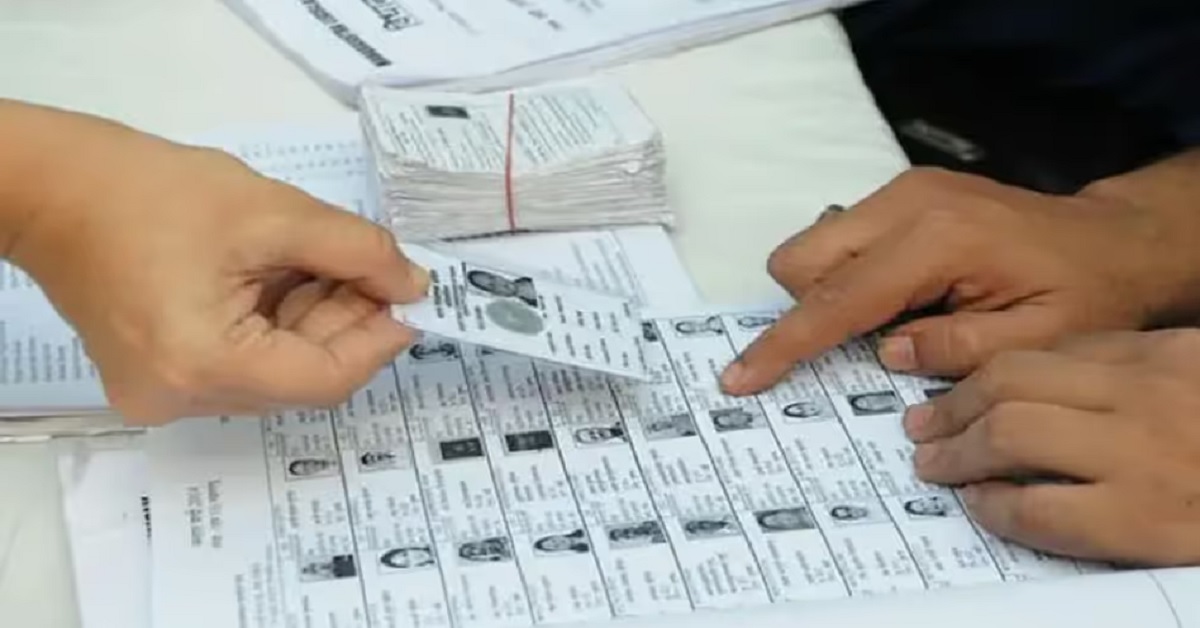
On February 1, a coalition of civil society organisations led by Citizens for Justice and Peace (CJP) has submitted a detailed memorandum to the Election Commission of India (ECI) alleging widespread and systematic irregularities in the ongoing Summary Revision (SR) of Assam’s electoral rolls, raising serious concerns about voter disenfranchisement, procedural abuse, and political interference.
Addressed to the Chief Election Commissioner and copied to the Chief Electoral Officer, Assam, the memorandum documents a disturbing pattern of unauthorised deletions, fabricated objections, false declarations of death, and misuse of statutory forms, allegedly targeting legitimate voters across multiple districts of the State. Along with CJP, Assam Majuri Sramik Union, Banchana Birdodhi Mancha and Forum for Social Harmony are also the signatories to this memorandum.
Dead voters filing objections, living voters declared dead
Among the most alarming allegations are instances where “dead persons” are shown as having filed objections against living voters, as well as complaints branding living electors as deceased. The memorandum flags this as a grave subversion of electoral procedures, calling for immediate scrutiny of how such objections were accepted during the SR process.
In several cases, voters who never changed residence were issued objections falsely claiming that they had shifted addresses. A separate annexure, the groups state, lists such affected voters.
A single woman, 64 objections — all denied
The memorandum details a striking case from Goalpara town, where a woman named Naba Bala Ray from Jyotinagar, Krishnai, was shown to have filed 64 objections against voters. When the affected voters approached her, she categorically denied filing any objections. While she later withdrew some complaints in Assamese, the memorandum notes a glaring inconsistency: her signatures also appeared on Form 7 complaints in English, which she claimed she could not write or understand.
CJP annexed these complaints as evidence of forgery and fabrication within the objection process.
Man objects to himself — and 133 others
In another extraordinary instance from Shribhumi district (formerly Karimganj), a man named Salim Ahmed was shown as having filed objections against himself and 133 other voters, alleging they were not genuine electors. According to the memorandum, Ahmed told the Booth Level Officer that he never filed any such objection, pointing to what the groups describe as a “fully fabricated” complaint attributed to him without consent or knowledge.
BJP leaders accused of unauthorised access to election data
Beyond individual cases, the memorandum raises grave institutional concerns. It alleges that office-bearers of the Bharatiya Janata Party, including district-level leaders and ST Morcha functionaries, unauthorisedly entered the office of the Co-District Commissioner, Boko-Chhaygaon, and accessed official documents and the Election Commission’s electronic database.
Such actions, if proven, would amount to a serious breach of electoral neutrality and administrative safeguards, the groups warn.
Migrant workers disproportionately affected
The memorandum also flags how migrant labourers from Assam were particularly vulnerable during the SR process. Voters who had temporarily left the State for work during verification reportedly returned to find fresh objections raised against their names, effectively penalising economic migration and seasonal labour mobility.
Allegations of partisan signalling from political executive
Calling for institutional impartiality, CJP and other groups cite alleged interference in the Boko-Chhaygaon constituency and refer to statements attributed to Assam Chief Minister Himanta Biswa Sarma, which they characterise as “blatantly partisan” and inconsistent with the constitutional requirement of a neutral electoral process.
Demands to the Election Commission
The memorandum places eight specific demands before the ECI, including:
- Withdrawal of objections where the original complainant is absent during hearings
- Investigation and penal action for false Form 7 complaints
- Action under Section 31 of the Representation of the People Act, 1950 against false declarants
- Compensation for victims subjected to mental, physical, or financial harassment
- Extension of timelines for claims and publication of the final electoral roll
At its core, the memorandum urges the Election Commission to restore procedural integrity and ensure that Assam’s electoral rolls are prepared “free and fair, in the interests of democracy”.
Why was this memorandum submitted?
Coming amid heightened national scrutiny of electoral processes, the allegations — if substantiated — point not merely to clerical lapses but to a structural vulnerability in voter list revision mechanisms, particularly in politically sensitive regions. The memorandum underscores that electoral rolls are not administrative lists but constitutional instruments, foundational to the exercise of universal adult franchise.
The Election Commission has not yet responded to the memorandum.
The complete memorandum may be read below.
Detailed report may be read here.
Related:
CJP flags Zee News broadcast ‘Kalicharan Maharaj vs 4 Maulanas’ for communal framing before NBDSA
The case of “pushback” of Doyjan Bibi and the quiet normalisation of undocumented deportations