


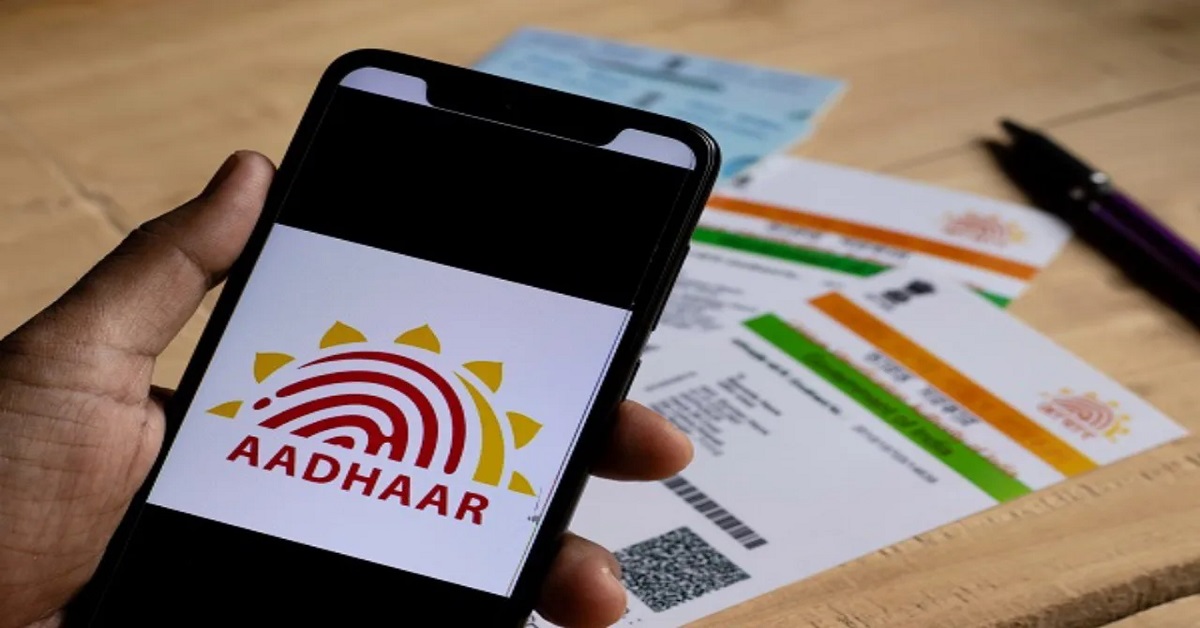
Over the last year, the Supreme Court’s view of online “obscenity” has morphed from a case concerning a single YouTuber’s material to defining the basis for a far-reaching combined regulatory system for all content on the digital sphere. The process began with concerns raised regarding Ranveer Allahabadia, but has now transitioned into a recent oral recommendation from the Court that suggested that age verification via the Aadhaar system could become a requirement in order to gain access to any materials termed “obscene” on the internet. This drastic development is outlined well in a report by Bar & Bench summarising the Court’s views on the issue; the Court now considers the issue not simply a question for individual creators but a reflection of a larger problem regarding the lack of regulation related to the executive branch having been created for online materials.
The Court’s perspective on this issue brings to bear a number of important constitutional issues that need to be addressed immediately. Firstly, having access to content related to “obscenity” linked to the Aadhaar number will also mean that all online anonymity will cease to be protected and, in effect, this will increase the amount of control given to the government regarding what individuals are allowed to view and/or post online. Secondly, since the meaning of “obscenity” has always been subject to personal opinion and moral bias, if the Court continues to follow a technological enforcement of this concept, it will result in an enormous increase in the amount of government control over online spaces such as YouTube and other OTT platforms and, ultimately, over independent creators.
From the Ranveer Allahabadia Matter to Systemic Control
The Court’s changing view can be traced back to a case involving Ranveer Allahabadia, a YouTuber accused of producing “obscene” and “immoral” video content. This case raised the question of whether the legal rules and regulations currently in effect were sufficient to govern such content. As stated in the Supreme Court Observer respectfully, it appeared as though the Court was more concerned with the potential risks posed by unregulated digital content than with determining whether the petitioner was harmed by the defendant’s content. A similar finding was reported in the Global Freedom of Expression case report from Columbia University, which stated that the petitioner did not present evidence of legal harm, but instead framed the issues through the lens of moral panic.
Following this, the positions taken by the Supreme Court became increasingly broad, culminating in a March 2025 request by the Court to the Union government to think about enacting a law creating a national standard for “online obscenity”. In doing so, the Court transitioned from addressing the content grievance in a singular context to calling for a systematic legislative approach to achieve the same. The Court stated that India lacked a neutral, independent regulatory authority to oversee online content.
In late 2025, the ongoing confusion within the legal framework surrounding Aadhaar culminated in the formulation of a very specific concept regarding how Aadhaar should be used as the basis for age verification for the purposes of preventing minors from accessing pornographic materials. This was not simply a passing comment or procedural matter but was rather a comprehensive strategy of linking an individual’s access to online material directly to an individual’s biometric identity through Aadhaar’s use as an age verification mechanism.
The March 2025 Direction and the Government’s Parallel Initiatives
The Supreme Court’s March 2025 directive to the Executive branch of the Union Government came at a time when the Executive branch had been assessing the types of control that it might use to regulate digital content. Witnesses described that the Ministry of Information and Broadcasting was looking into creating regulations that would provide new rules for the regulation of “perverse user-generated content,” which was echoed by Solicitor General Tushar Mehta, who had testified to the Supreme Court.
At the same time, there was an effort on behalf of the Central Government to push out an Influencer Code, resulting in concern over the lack of public consultation. The Internet Freedom Foundation recorded those concerns in its report and called for a consultation on the matter. The report can be read here.
Many parties were warning that the Supreme Court’s strong push for new legislative enactments could have a chilling effect on legitimate online speech, with reports in The Hindu explaining this matter and how it combined with the earlier actions by the Executive branch indicating an increasing amount of judicial interest in the regulation of social media, and the ability of the Supreme Court to regulate online speech.
Therefore, what once appeared to be one case of litigation has been seen to be braided into a more significant regulatory push. The Supreme Court and the Executive branch are seen to mutually reinforce each other’s concerns regarding digital content.
Obscenity as a Legal Category: Colonial Morality in Digital Form
India’s obscenity doctrine has its origins in the pre-constitutional era. The Interpretation of Section 292 in the IPC has been based on the moral standards of Victorian England, in how sexual expression was viewed as corruptive. Although the Supreme Court has attempted to modernize the definition of “obscene” in Aveek Sarkar v. State of West Bengal by moving from the Hicklin test to current community standards, the concept of obscenity remains the most unclear and controversial definition in Indian Law.
Traditionally, the word “obscene” has been a means to censor the expression of LGBTQ+ individuals, feminists, those providing information about reproductive health, those who produce artistic works and literature, and people who provide sex education. By using the same definition of obscenity to create and regulate content within the digital space, these definitions will encompass many types of legitimate speech, i.e., queer content, experimental art, sex education content being made on YouTube, and narratives of survivors.
Because spaces for digital creators, i.e., YouTube and OTT platforms, are some of the only ways that individuals can currently communicate with large audiences that are not already censored within the media through either governmental control or the NBDSA, independent creators possess the unique ability to produce their content on these platforms without any type of government interference. By establishing obscenity regulations, the autonomy that independent creators currently possess would be lessened, allowing the government to indirectly suppress dissent, satire, and criticisms of the established cultural/ethical norms of society, under the guise of “protecting” minors.
Aadhaar-Based Age Verification: The Constitutional Faultlines
The Court’s finding that the Aadhaar system could be used as an age gate for virtual media raises significant constitutional issues.
Article 19 (1) (a) grants individuals a right to receive information as well as to express themselves. Using Aadhaar to authenticate access to digital content destroys the ability to remain anonymous and connects people’s viewing patterns with their biometric identity. Because of this linkage, individuals may feel deterred from viewing and/or interacting with material that is sensitive in nature, including material related to political criticism, mental health, LGBTQ resource issues, and sexual education.
Article 21 requires that any encroachment upon an individual’s right to privacy must meet the proportionality tests outlined in Justice K.S. Puttaswamy v. Union of India. Aadhaar-based verification of an individual’s age does not meet these criteria as it is neither required nor proportionate. Alternative methods of age verification that do not require individuals to disclose their identities, such as anti-fraud age verification or token-based confirmation of age, may serve as less invasive methods.
Article 14 addresses the issue of classification. Because obscenity is a subjective classification and is inconsistently applied across jurisdictions, an identity-linked filtering system allows arbitrary and disparate restriction of content. Thus, material labelled as “immoral” or “perverse” can disproportionately affect marginalized producers of content, as well as LGBTQ related materials, political satire, or criticisms of majority morality.
Globally, similar types of legislation have been challenged and have been ruled unconstitutional in court. In the U.S., age-verification laws in Utah, Arkansas, and Texas were found to violate an individual’s right to privacy by imposing a chill on lawful speech. Additionally, the Digital Economy Act in the U.K. abandoned the use of age verification due to privacy concerns and the difficulty of implementing that scheme. The General Data Protection Regulation (GDPR) of the EU presumes large-scale identity verification in order to access content as a violation of existing privacy law. Finally, Aadhaar-based filtering is significantly more intrusive than any other methodology described above and places India outside the realm of established international norms based on rights.
Who Classifies Obscenity?
In what is likely the most important question raised by the Court’s recent remarks, the issue of determining what constitutes obscenity remains unresolved. While the Court has suggested that a neutral and independent body should make this determination, the historical patterns of regulatory bodies in India indicate that there will be an ongoing struggle for executive supremacy over regulatory bodies. Even self-regulatory agencies are often placed under significant amounts of state pressure, as evidenced by SCObserver’s analysis of takedown jurisprudence found in Wikimedia Foundation v. ANI and pointing to the inherent risk that any regime to classify material as obscene will be manipulated by the political elite in a country where the lines between nationalism and morality have become increasingly unclear. Therefore, it is highly probable that any form of content that has been deemed ‘anti-national’, ‘anti-authority’, or ‘anti-Indian’ will likely be categorized with what is generally regarded as immoral.
The Political and Practical Risks: Can Balance Exist?
Although it is almost impossible to find a balanced approach to controlling minors from unlawful exposure to cyberspace content while at the same time protecting individuals’ right to free speech, the current regulatory developments within India indicate that finding a true balance is aspirational at best. Increasing pressure from the governing body and the continual expansion of the IT Rules, as well as significant interest in ensuring traceability of cyber content, lack of information regarding reasons for user information withdrawal, and draft regulations for influencer(s) will only serve to establish an overwhelming level of executive control over the speech and behaviour of individuals within cyberspace.
In this context, obscene content provides an excellent opportunity for state intervention by way of protecting children but ultimately provides an opening for vague state regulation of all forms of expression. Such an increase in state authority will rarely decrease, as has been pointed out by many authorities in constitutional law who cautioned against the expansion of state power.
Safeguards against a Moral-Political Regime
The Supreme Court’s development of a new anti-obscenity regime should include critical safeguards, including:
- a transition from ‘moral’ definitions to ‘harm’ based definitions;
- an independent and accountable regulatory authority not influenced or dominated by the Executive;
- a requirement for all regulations to be developed with transparency and public consultations;
- a strong commitment to continuing judicial review over takedown requests; and
- a prohibition on access to content via Aadhar-based identity links.
If these safeguards are not implemented, India risks creating a system where the use of morality as a justification for censorship, identity as a currency for realizing one’s right to access information, and a re-definition of digital public spaces under the control of State powers occur.
The judgment in Aveek Sarkar v. State of West Bengal can be read here:
The judgment in Justice K.S. Puttaswamy v. Union of India can be read here:
The judgment in Wikimedia Foundation v. ANI can be read here:
(The legal research team of CJP consists of lawyers and interns; this resource has been worked on by Preksha Bothara)
Related
The Sentinel and the Shift: Free speech in the Supreme Court
Ranveer Allahbadia: A “victim” of selective outrage?
Don’t cross the line: Courts on media trials and erring conduct of anchors
Free Speech Upheld: Bombay HC strikes down IT (Amendment) Rules, 2023 as unconstitutional