


For the past 30 years and kicking, Khoj empowers Maharashtra’s government school students through secular education, constitutional values, creative learning, and dialogue-driven classrooms designed to challenge all kinds of prejudice and discrimination.
What is Khoj?
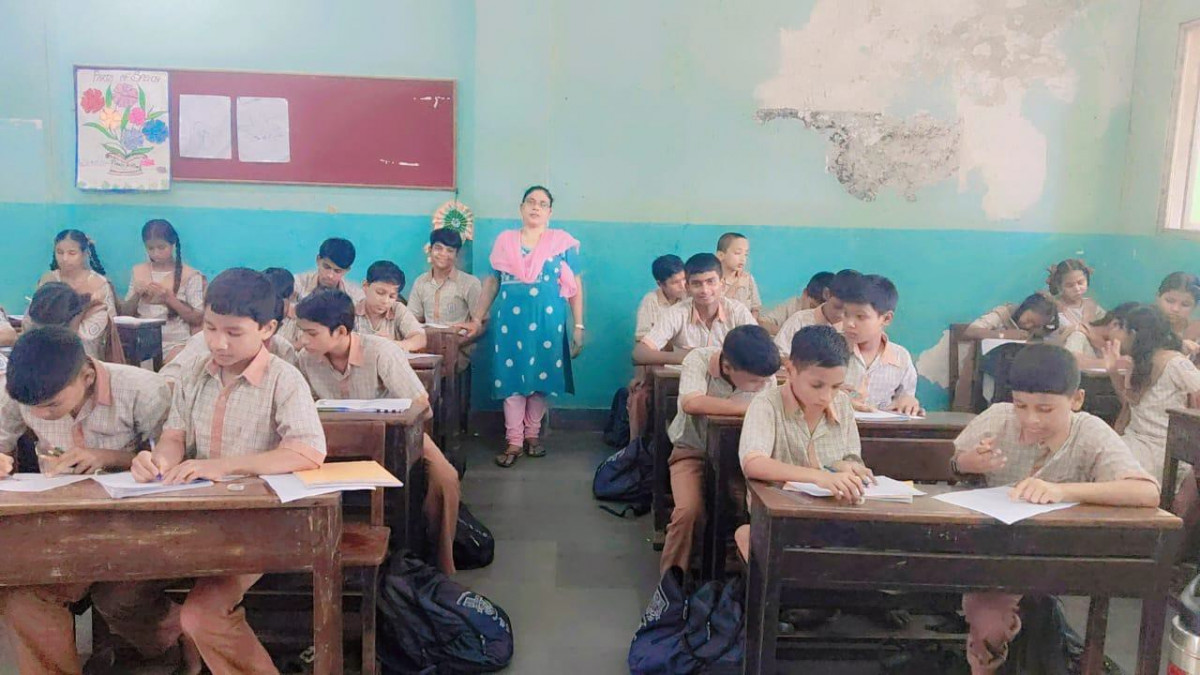
The Khoj project is an initiative driven by a commitment to pluralist, constitutional values that has been operating in several government schools in Maharashtra, running weekly classes for students from grade 5 to grade 8. The project is guided by a curriculum designed by a collective of educators, initially led by author and educationist (Khoj director), Teesta Setalvad, making it firmly grounded in constitutional values, human rights, and the principles of citizenship.
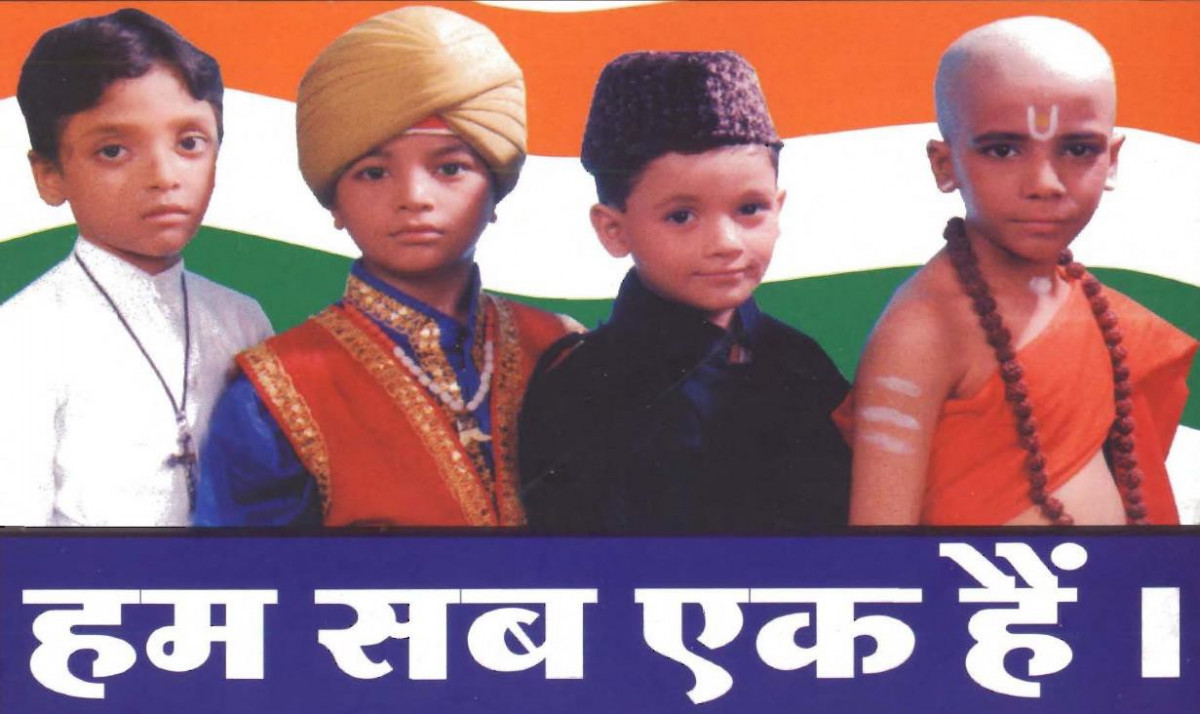

At a time when polarisation and societal divisions are being fostered and festered by the powerful, casting long shadows over public and discourse in India, Khoj has positioned itself as one of the few structured efforts to reach provide the young with a buffer. Efforts with stake-holders and the Parent Teacher Associations ensures that it is a well-rounded effort that also draws in the educator and parent.
The project’s founding logic is as urgent as it is straightforward: to direct the attention of children toward social diversity and economic issues so that they do not fall victim to hatred, discrimination, or harmful thinking as they are the citizens of tomorrow. Khoj’s conflict education cum peace education thrust is also premised on the understanding that dealing with conflict –personal and societal –is as key and crucial to the life of the young as they emerge into adulthood.
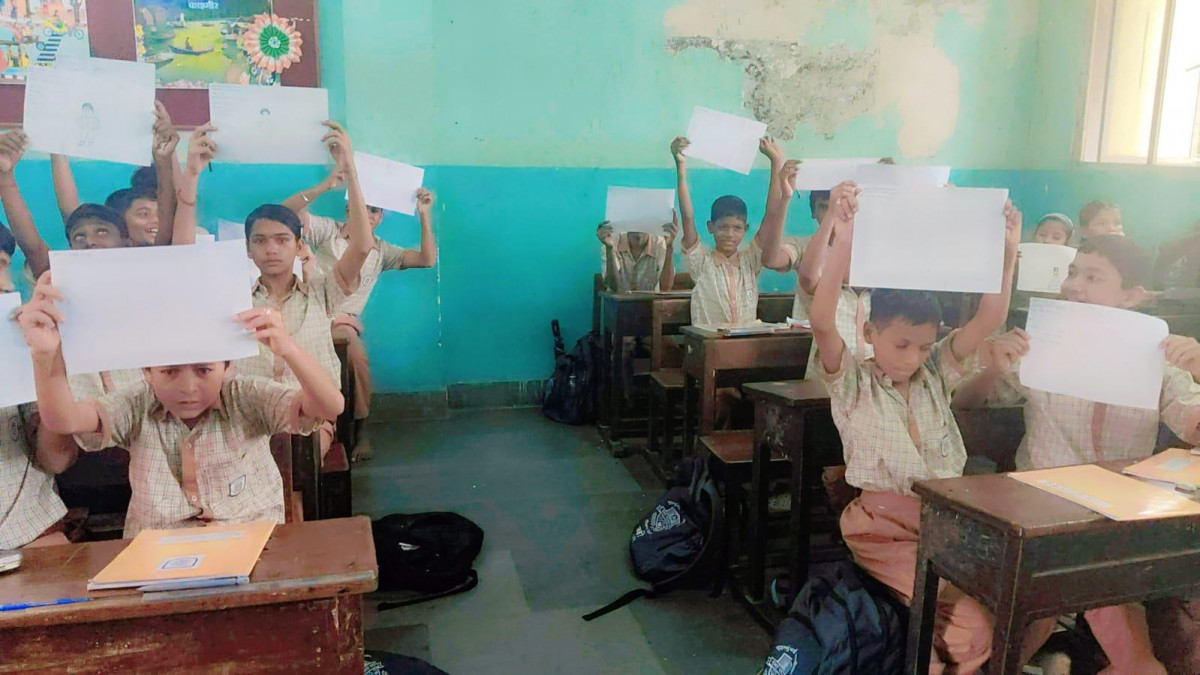

Khoj believes the answer lies not in moralising lectures but in creating a space, perhaps the only such space many of these children encounter in a week, where their inner lives are taken seriously, their questions are welcomed, and their creative expression is treated as a window into their developing worldview.
Every Khoj session is built around this philosophy of emotional entry. Teachers do not simply deliver content; they observe, listen, and respond to what their thoughts and feelings reflect, through artwork, letters, and searching conversations.
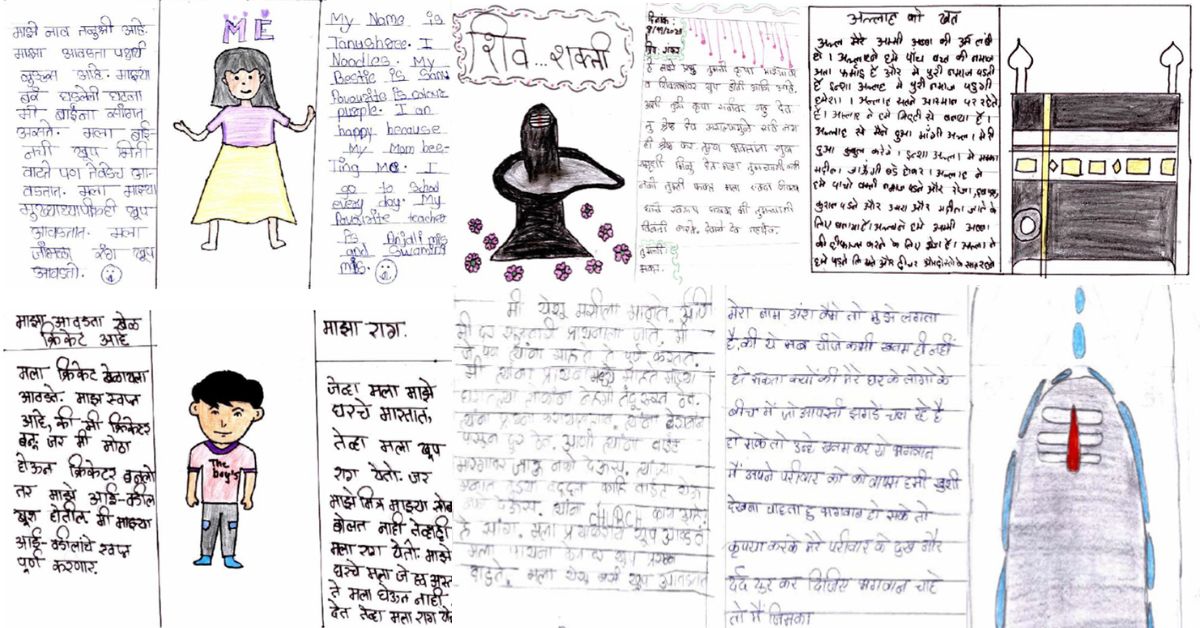
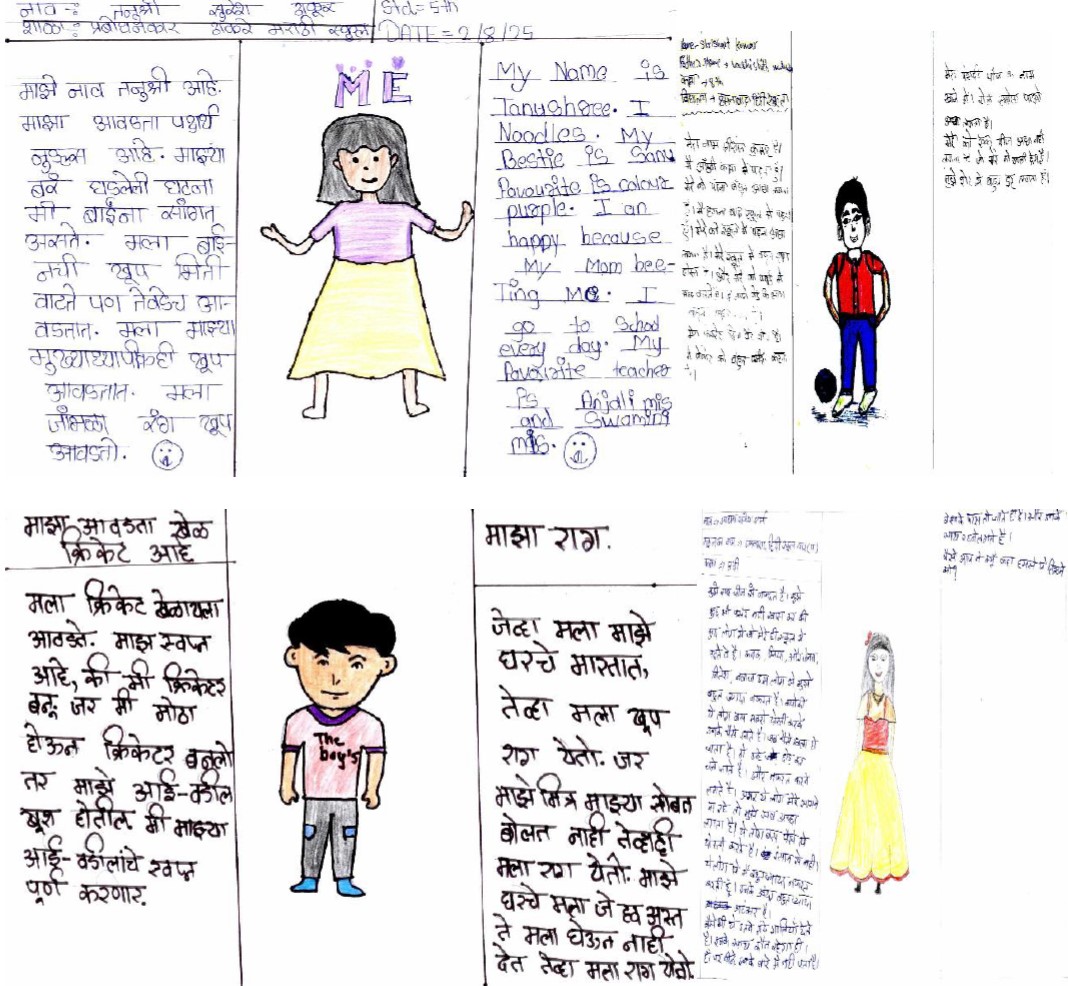
Exercises such as personal drawing, writing a letter to God, exploring family’s history, and a session called “My Identity” are some of the many carefully designed instruments by Khoj for understanding the emotional world of the child and what he or she believes, fears, and hopes for.
“My Identity”:

“Letter to God”:
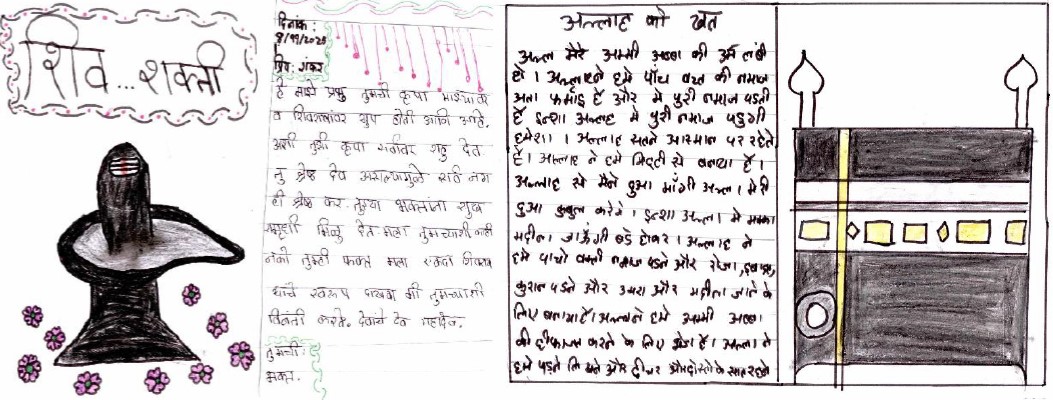

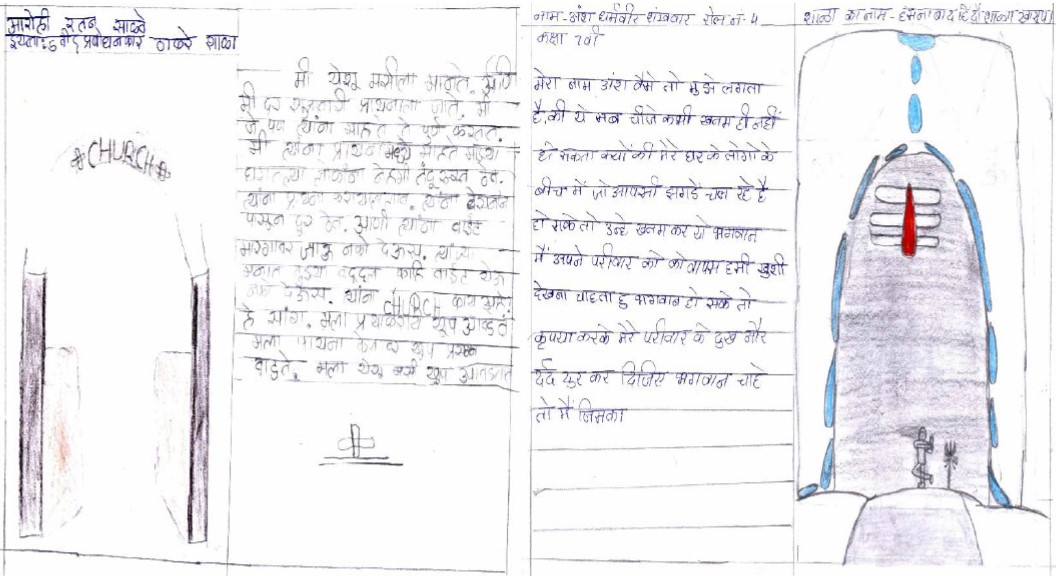

Once a Khoj teacher explores and understands where a child’s thinking and emotion stands, the work of gently broadening that thinking can begin. If a child carries a misunderstanding about another community, another religion, or another way of life, the session becomes the place where that confusion is met with curiosity rather than correction, and new ideas are introduced with care.
The curriculum spans a wide range of subjects and formats such as music, art, and skills sessions alongside structured discussions of mass media, history, and religion. Students learn about different faiths practiced across the world, not to compare or rank them, but to build familiarity with the idea that the world is large, varied, and worth understanding on its own terms.
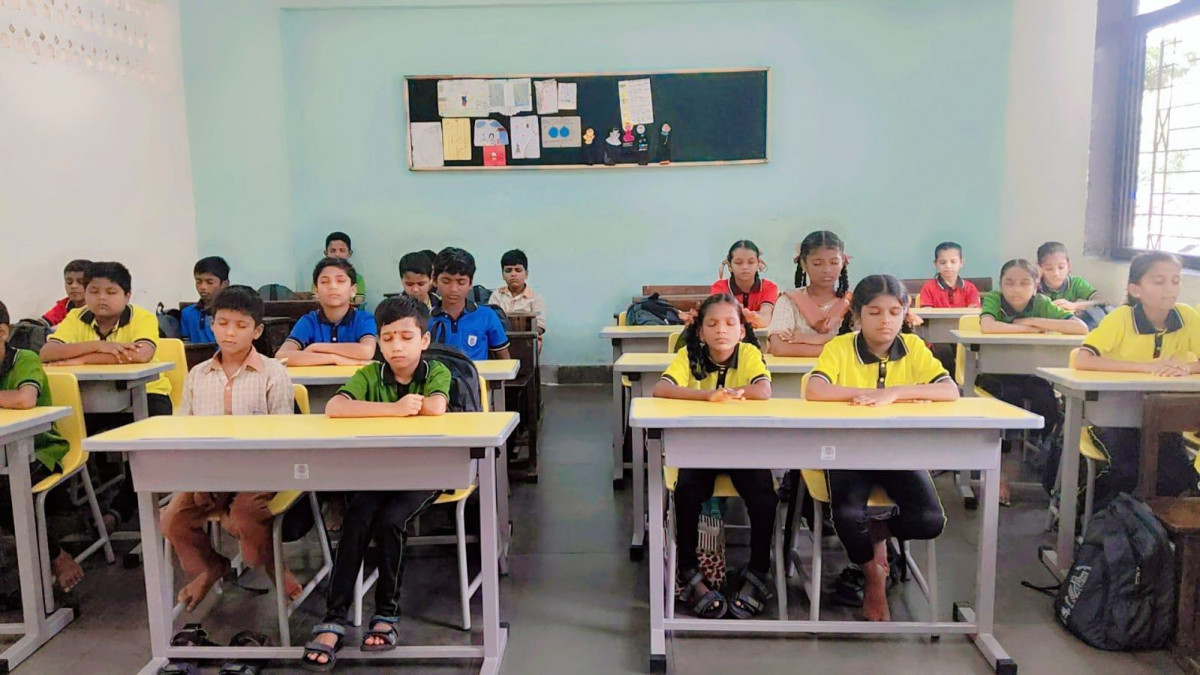

Debate sessions encourage children to articulate and defend positions, building the rhetorical confidence that is essential for any citizen who wishes to speak out against injustice. The practice of meditation is also included into the schedule, recognising that an agitated mind is not a mind ready to learn or to reflect.
School teachers who work alongside Khoj instructors have noted measurable changes in the children who participate regularly. Their testimony consistently points to a growth in confidence — a willingness to speak, to perform, to ask questions in settings that once intimidated them.
Teachers have also observed improvements in reading and writing skills, suggesting that the intellectual stimulation of Khoj sessions carries over into academic engagement more broadly influencing the student’s understanding and enthusiasm for other, regular curricula. This is perhaps because significantly, the relationship between the Khoj teacher and the students appears to be qualitatively different from the standard teacher-student dynamic.
Children openly share their problems with their Khoj teacher. They eagerly await each weekly session, and it has become common for students to greet their arriving Khoj teacher by excitedly asking: “What are we going to do today?” That anticipation, so different from the resigned acceptance with which children often approach conventional classes, speaks to something the project has clearly got right about the emotional aspect of learning.
Events at Khoj
The Khoj project supplements its weekly curriculum with special programmes organised around important national and historical occasions. Two such programmes, held in September and October of 2025, shows how this approach works in practice.
Teacher’s Day
On September 11, 2025, this academic year, Khoj organised a Teacher’s Day programme with the Hasanabad Hindi, Urdu, and Gujarati medium schools — an event that brought together students from all three language streams under one roof.
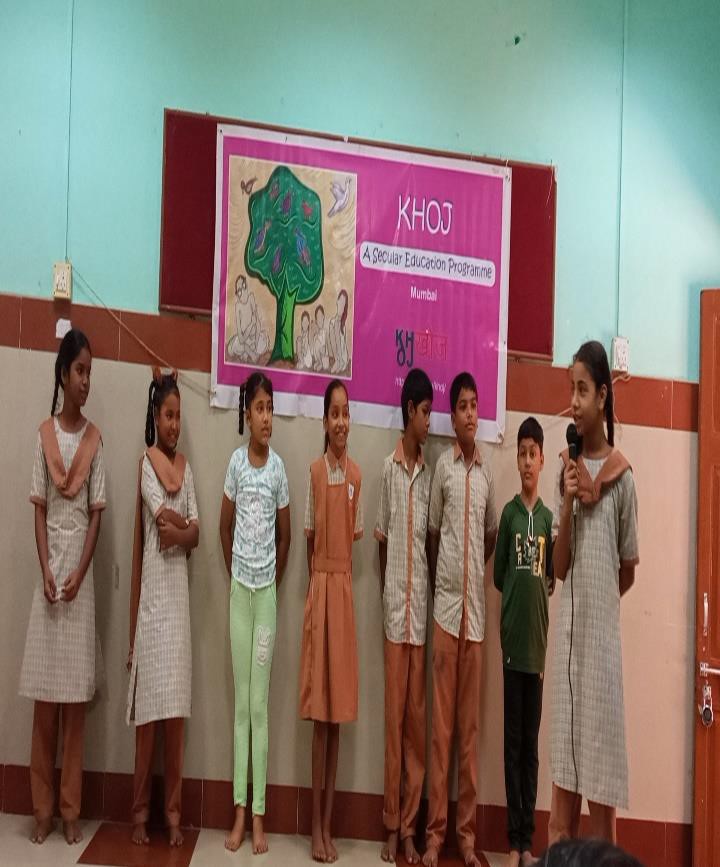

The event had originally been planned for September 5, the traditional date of Teachers’ Day, but was re-scheduled because the schools were closed for the Ganapati festival. Khoj Assistant Director and teacher Noorjahan Sheikh coordinated the logistics, obtained permission from school authorities, involved students in the planning, and helped them prepare their performances.
The programme included welcome dances, speeches on the importance of education, poems in praise of teachers — with titles like “The Teacher is an Angel,” “Magician Sir,” and “Our Dear Madam” — and a play titled “Sapne Kaiy,” (What are our Dreams?) which addressed the theme of cleanliness.
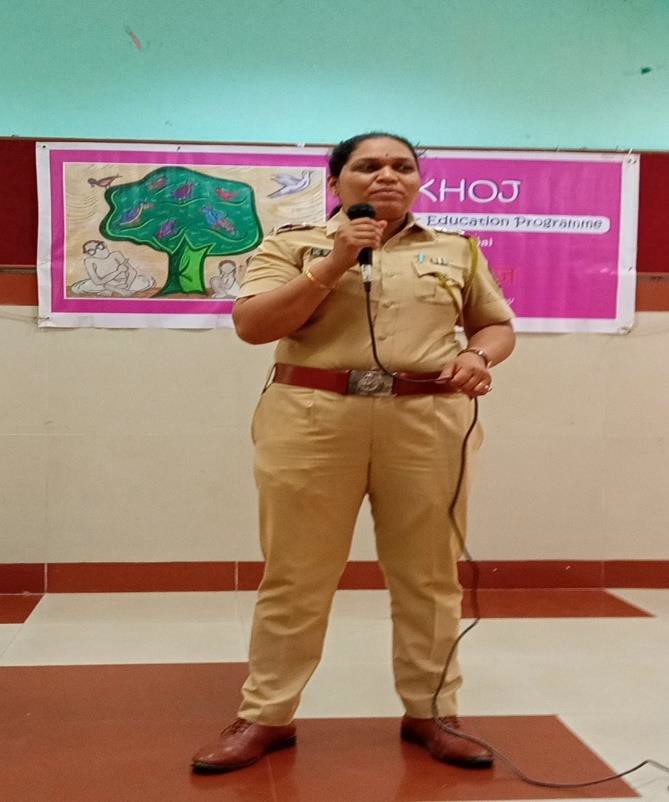

Bringing role models before young minds has also been Khoj’s goal. Gendered violence that the child, and women experience led us this year towards an interesting intervention. We invited a woman police officer to introduce the issues of molestation in children and what the young need to guard against. A special guest, Mrs. Sheetal, an officer from Khar Police Station, addressed the students on child safety, explaining the concepts of good touch and bad touch and informing children about the Nirbhaya Squad and the legal resources available to them.
A regular teacher from the one of the Hindi medium schools where Khoj intervenes, Mr. Vishal Patil, spoke at the event and offered what may be the clearest outside assessment of what Khoj achieves. He said that it was because of Khoj that children had gained the confidence to perform in front of an audience — that the organisation had given them the courage to stand on a stage and express themselves. He urged Khoj to continue coming to the school and to keep helping children develop their all-round abilities.
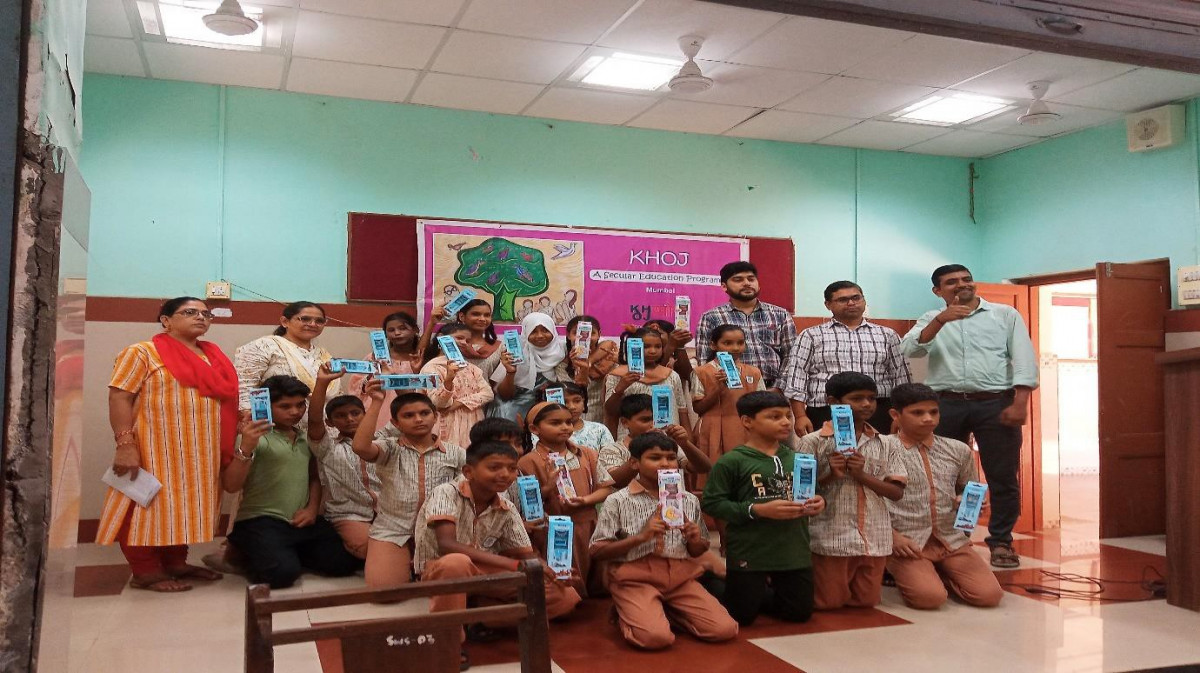

In the end, once the performances were over, students were given prizes by their teachers on behalf of Khoj to encourage them and boost their morale. Khoj also provided snacks for the students. The programme successfully combined both information and entertainment, leaving behind a cherished experience for students and teachers alike.
Gandhi Jayanti
The second major programme of the period, held on October 1, 2025, was organised around Gandhi Jayanti and the International Day of Non-Violence, and involved students from three schools: Principal Wamanrao Mahadik Hindi School No. 1 and 2, and Kane Nagar Marathi School.
Given the large student population across these schools — with multiple sections in each grade — the scale of the undertaking was considerable. Noorjahan Sheikh visited each section from grade 6 to grade 8, introducing the programme and sharing background information about Gandhi’s life and values.
Students responded with enthusiasm. They prepared poems, songs, and speeches on their own initiative. Several students made portraits of Gandhi and presented them to the Khoj teacher. One student wrote a speech in English, while another made a greeting card.
The programme itself was rich with performance and meaning. The programme began with girl students performing a welcome performance. After that, Khoj teacher Noorjahan Sheikh explained to the audience in detail the Khoj project and its work.
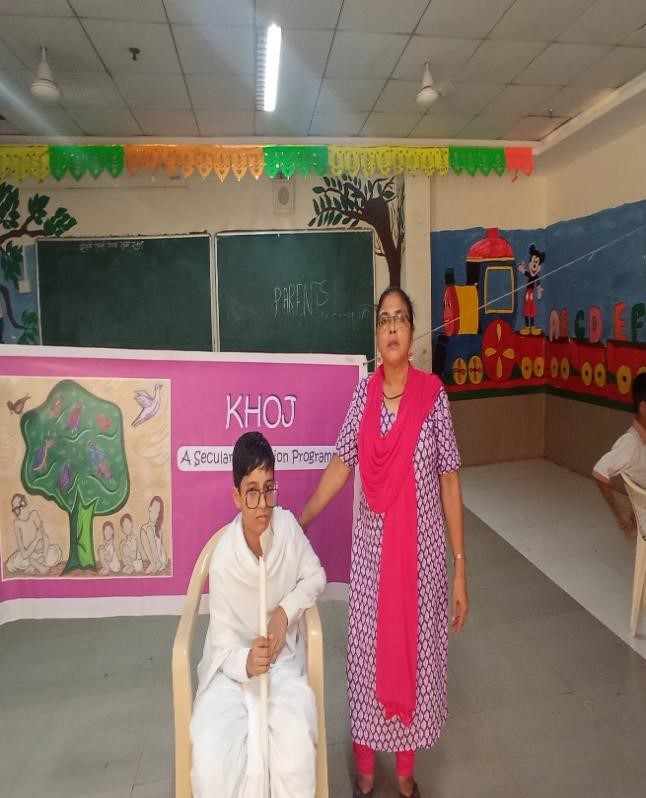

Then a grade 6 student dressed as Gandhi performed a solo act, the act was received well by the audience. Students also gave speeches about Gandhi, sharing some information about his life through it. Following dances, performances of songs like “Na Tanga Na Talwar” and “De Di Hume Aazadi Bina Khadak Bina Dhaal” that were sung with energy and feeling, poems were also recited in tribute to Gandhi’s truth and sacrifice.
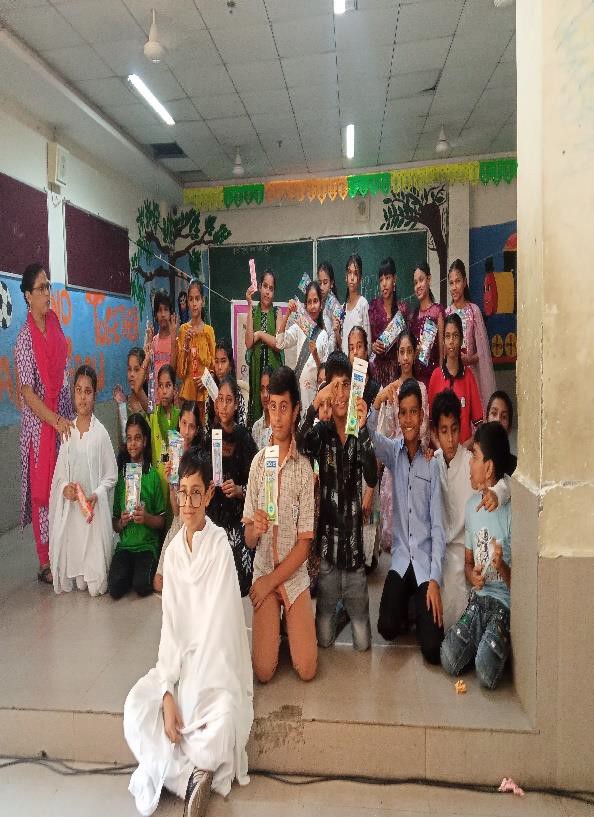
The play “Sapne Kaiy” was repurposed for the occasion to address the environment — a natural extension, given Gandhi’s well-documented concern for cleanliness and ecological restraint. The programme ended with prizes, snacks, and a kind of collective warmth, representing a community coming together around shared values.

What these programmes reveal, beyond the obvious celebration, is a pedagogical method that Khoj has developed with considerable sophistication. The children are not passive recipients of information about Gandhi or about teachers or about non-violence. They are active interpreters of these ideas, translating them into dances, poems, speeches, and plays — into forms that require them to understand the ideas well enough to perform them.
This is a far more demanding and far more lasting form of learning than reading a passage and answering comprehension questions. When a child writes a speech about Gandhi’s Champaran Satyagraha, they must think about what it means, why it matters, and how to communicate that meaning to others.
One grade 6 student was asked what she liked the most about the programme; she mentioned the dance, the songs, and the drama — and said she was most moved by the music. When asked what thoughts came to her mind when she reflected on Gandhi’s personality, she spoke of sacrifice, of the ups and downs of his life, and of the long road to independence. She named three of Gandhi’s movements — the Champaran, Ahmedabad, and Kheda Satyagrahas — and said she admired the Champaran movement most.
She then said she wanted to work like Gandhi. Just as he had helped India gain independence, she too wanted to study hard, succeed, and make a name in the world – not for personal glory, but so that her country would remain protected and clean. She spoke of fearlessness, of fulfilling her duties, and of honouring her parents’ dreams. And then she remarked, “Earlier, I did not think like this, but now I feel that by following Gandhi Ji’s values and duties, I too can earn a respected name.” She ended with the words “I promise.”
Khoj likewise aims to aspire many such young minds into becoming agents of change in their own communities. To read more about other such events organised by Khoj see here, here and here.
Importance

In a society fractured by imposed polarisation around religious identity, economic inequality, and the corrosive influence of social media and its attendant misinformation, building secular, humane, and critically thinking citizens is not a supplementary task — it is, arguably, the most important work that can be done in a school.
Khoj does not pretend that one hour a week can undo all the forces working against this goal. But it asserts, and its experience suggests rightly, that one hour a week, engaged in with care and consistency, can open a pathway through which a child can experience the freedom of asking questions, the joy of expressing themselves on a platform, and the pride of being taken seriously as a thinker, helping them eventually grow into active citizens capable of making a difference.
(The programme research team of CJP also consists of interns; this resource has been worked on by Ishan Bhatnagar)
Related:
Civic awareness and social justice education under Khoj Varanasi
Khoj students in Varanasi engage in activities to challenge prejudice