


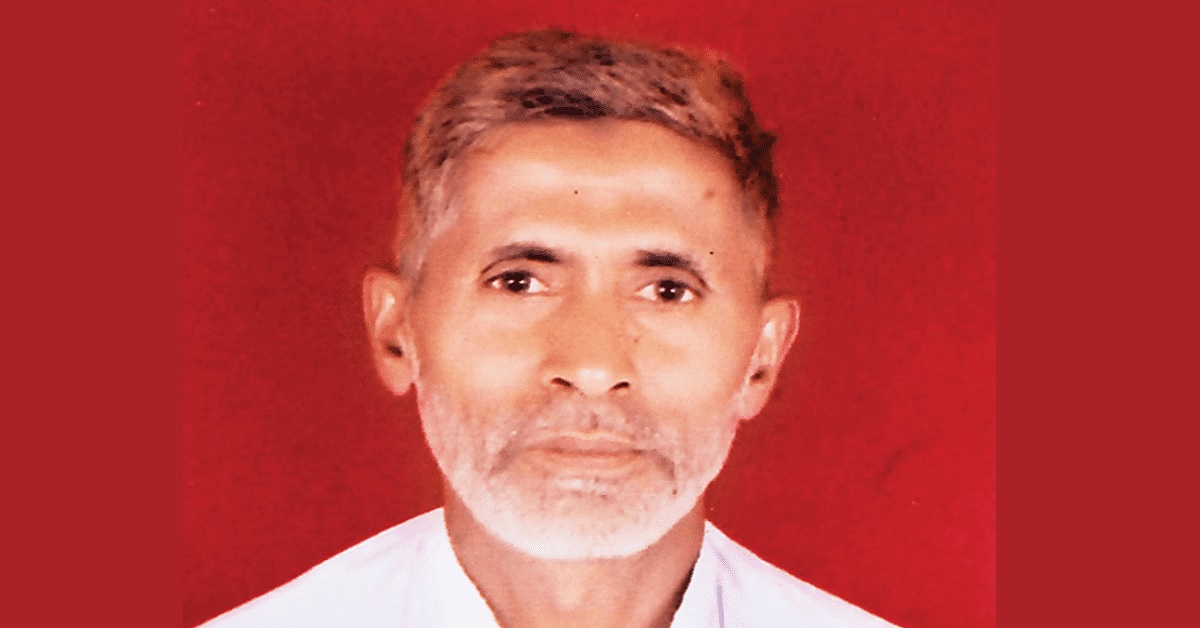
The move by the Uttar Pradesh government on October 25, 2025, to withdraw prosecutions in the lynching of Mohammad Akhlaq – a case that shook the public conscience of India 10 years prior – represents a key turning point in the continuing evolution of society from outrage over violence to acceptance of the status quo. Mohammad Akhlaq was brutally murdered inside his own home in Bisada (Dadri) in 2015, and this incident became an example of growing intolerance within Indian society, causing artists and intellectuals across the country to return awards given by the state. The international community began to take notice of the trends toward mob vigilantism in India. However, it appears that, after 10 years, the state that was responsible for seeking justice for Mohammad Akhlaq and his family is instead burying the very case that led to the beginning of a moral awakening across the country.
The Uttar Pradesh government claims to have only applied to withdraw the prosecution against Mohammad Akhlaq’s killers and that this request will be decided by a judge at the next hearing scheduled for December 12, 2025. However, when viewed through the lens of the history of this case, the timeline for this case, and the current political climate surrounding this case, it is evident that the actions taken by the Uttar Pradesh Government in withdrawing the prosecution against those responsible for lynching Mohammad Akhlaq are not only withdrawing from having any responsibility for pursuing justice but are also an example of how for the past 10 years the government has systematically neglected this case, given political support to those accused of this heinous crime and created an environment of hostility toward the family of Mohammad Akhlaq.
The circumstances surrounding the lynching of one man’s father are now much broader than that man’s father’s murder. The current circumstances have become a long-term narrative about what a state can create over time and distribute through state-sponsored actions, as well as about eliminating any ultimate responsibility associated with that state.
September 28, 2015: The Night that Violence knocked on a Family’s Door
A news announcement spread through the Bisada Temple loudspeaker about animals being slaughtered resulted in the instant transformation of an unsubstantiated rumour into a murder sentence. A mob descended on the home of 50-year-old Mohammad Akhlaq and his family within minutes of the announcement being made, and forcibly removed Akhlaq and his son from the property, beating both Mohammad and his son Danish with sticks and metal rods, not stopping until their bodies lay in a pool of their own blood on the street in front of their house. Akhlaq died as a result of the beating he received; Danish survived but required immediate neurosurgery. This particularly brutal act of violence was planned by those committing the act, as well as the community, through the use of whisper campaigns, political pressure, and the manipulation of the emotional appeal of cow-vigilantism. These events were reconstructed in detail by Sabrang in “Akhlaq’s Lynching: 7 Years On – Only 1 of 25 Witnesses Testifies; Trial Reaches Evidence Stage”.
The FIR that was filed at the Jarcha Police Station references the appropriate sections related to charges of murder, attempted murder, rioting, and unlawful assembly. The nature of the charges against those involved in this act of violence was virtually disregarded from the day it occurred, and politicians, media, and community leaders received ample time to speculate on whether there were indeed any cow products found in Akhlaq’s home before the death of Akhlaq. Public and political perceptions and narratives surrounding the event changed shortly after the announcement of Akhlaq’s death. Sabrang’s “Meet Hari Om: Part of the Mob That Killed Mohd Akhlaque” further illuminated individual roles and admissions from those involved.
The use of the murder scene is an attempt to portray or manipulate the public perception of the incident as a religious act motivated by slights to the religion of Islam.
The Investigation: Charges Filed, yet Justice Already Compromised
The police in Gautam Buddha Nagar, in its first chargesheet, named 15 main accused, including a juvenile and a local BJP leader’s son, along with 25 witnesses. Four more accused were later added, bringing the total to 19. One of them died in 2016. The prosecution has appeared to take its course through the court system; however, beneath the surface, evidence is starting to show that political pressure has compromised the investigation, as well as apathy within the institutions involved.
The Forensic Report coming out of Mathura stated that the sample of red meat taken from the house of a man who was killed had belonged to “a cow or calf,” and it changed the trajectory of this case completely. The family of the victim immediately alleged that their sample was switched. Furthermore, the timing of when the forensic report was delivered raised suspicions because the mob attacked based on a rumour and not the forensic evidence from a laboratory; however, the public debate quickly shifted away from the circumstances surrounding the killing and focused on the purported evidence.
The major shift in this case happened in 2016 when a court in Surajpur ordered that an FIR be filed against the surviving family members of Akhlaq, and thus turned the focus of the case completely upside down. At that point, the surviving family members were already grieving, emotionally traumatized, and socially isolated, and now faced with the criminal allegations of cow slaughter. This whole methodology set forth a structure by which a lynching victim is presumed guilty, while the people who committed the act are presumed to be victims.
2015–2017: Delay, Bail, and the Slow Death of Due Process
The public often forgets that the justice system did not simply fail in 2025; it faltered every year since 2015.
Bail was granted to each of the accused, with repeated adjournments of court hearings and extremely slow progress in witness testimony. Sabrang’s reporting, including “All Killers of Mohammad Akhlaq Get Bail in Dadri Lynching”, captured how each bail order was met with political celebration, further chilling the environment for witnesses. As of December 2017, the trial had barely progressed past the evidence stage. Multiple important witnesses were reluctant to testify in a public courtroom and thus did not receive adequate witness protection. The handling of police transfers caused inconsistencies in the investigation and prosecution of the case. At the same time, the family of the victim suffered from social isolation in Bisada as a result of the crimes, ultimately ending in them being forced to leave their homes. The victim’s family reported receiving threats during this period, and in the village itself, residents celebrated when defendants were released from custody on bail, where they were photographed with local BJP leaders, recognized for their “innocent status” as Hindu youth, celebrated, and received garlands as gifts.
Each public display of support for the accused was another blow to the victim’s family and a message to the justice system.
National Outrage: The Award Wapsi Moment and a Fading Democratic Landscape
In October 2015, there was a lynching and it sparked one of the largest cultural protests of the decade, known as the Award Wapsi Movement. The writers who participated in this movement, such as Nayantara Sahgal, Ashok Vajpeyi, Sara Joseph, Shashi Deshpande and others, all returned their Sahitya Akademi awards to protest against the continued violence. Their action collectively raised awareness of a growing intolerance in the country and directly referred to the lynching of Akhlaq as a moment of moral decline.
The state’s response to the writers was hostile. The government ministers called all of the protesting writers “politically motivated”. An RSS publication even went so far as to quote from the Vedas to imply that cow slaughter justified the death penalty. The Chief Ministers of several states issued statements demanding that any Muslims who consume beef should “go to Pakistan”. These were not isolated statements or the thoughts of a few fringe political groups; they illustrate the political environment that was influencing decisions regarding this case.
However, the anger and activism surrounding this event was short-lived. Today, ten years after the lynching took place and as a result, the state is withdrawing prosecution against those who committed the lynching, the anger expressed by people in 2015 has turned into a sense of quiet fear. Many of the once bold voices have become relatively quiet due to harassment, intimidation and surveillance. The transition from a period of protest to a time where most people are silent does not reflect a changing belief system; it is an indication that democracy has become less expansive.
Legal and Constitutional Problems with the Withdrawal
A major point of contention in regards to the state of Uttar Pradesh’s motion to dismiss was that there was no new exculpatory evidence in support of the defendant. Several media reports indicate that the state’s filing primarily relied on the assertion that there were “inconsistencies” in the witnesses’ testimonies and that social harmony was at risk. Such vague assertions do not meet the legal standards outlined in the jurisprudential interpretation of Section 321 of the CrPC. A defendant cannot be dismissed unless there is newly discovered evidence that would fundamentally alter the state’s case against him. In this case, the medical evidence substantiating Akhlaq and Danish’s injuries and the contemporaneous FIR, and the eyewitness accounts all consistently corroborate the state’s case against them. In similar instances, courts have continued to deny a motion for dismissal. A trial court should require that the state produce a complete and thorough review of the prosecution’s case file, as well as a detailed affidavit from the Prosecuting Attorney detailing changes to the evidence that would justify the dismissal of the case.
Further, the application seems to ignore the very explicit requirements laid out by the Supreme Court in Tehseen S. Poonawalla v. Union of India (2018). The Supreme Court held that mob lynching constitutes a separate social and constitutional emergency and requires immediate intervention. The Court ordered each state to create a “fast track mechanism” for lynching cases, appoint a nodal official, enforce preventive protocols, create strong witness protection systems, and hold police accountable for their failures
Withdrawal attempts in pending lynching trials must be considered in light of whether the state complied with the aforementioned Supreme Court’s orders. The Tehseen Poonawalla case mandates are binding on trial courts. The trial court in Gautam Buddha Nagar must consider whether the state has satisfied its obligations in this matter, and whether permitting withdrawal would defeat the entire remedial framework the Supreme Court established for addressing lynching.
In addition to the requirement to uphold statutory obligations, a factor that should also be of utmost importance for the state is whether the withdrawal has the potential to serve the ‘public interest’. Lynching is not just a crime committed against an individual; it also attacks the rule of law, social order, and equitable treatment of all individuals under the Constitution. A significant deterrent effect exists not just because offenders are punished, but because lynching demonstrates a systematic and transparent application of justice through our court systems. Discontinuation of a lynching prosecution has the potential to increase the likelihood of similar acts of vigilante violence. A decision by the court to withdraw this case must take into account how that decision will affect the larger community, particularly how it sends a message to vulnerable communities. In essence, Articles 14 and 21 of the Constitution impose a duty on the Government to provide protection for life and to ensure that all persons are treated equally under the law. Accordingly, if a withdrawal occurs without adequate justification, which can only be supported through the use of clear and convincing evidence, the function of the Criminal Justice System as a protector will be diminished.
Take into account the possible influence of political factors; as noted in Sabrang’s coverage of the ceremony honouring the defendants, there were reports of assurances given to the defendants, and those reports provide essential contextual background for this case. In addition to the reports from Sabrang, what is also important to take into account are the instances of political patronage that have been shown to exist, be it via public demonstrations of support for persons who were accused or by statements made by politicians elected into office, or through institutional signals indicating support.
In other words, the very existence of political patronage creates a duty upon the court to view any motion to withdraw from prosecution through the prism of “political expediency.” A court must exercise vigilance over any motion to withdraw from a criminal prosecution, especially if it appears that political factors were involved in the decision-making process for prosecuting the case. A court must ensure that there is a clear distinction between prosecutorial discretion exercised for legitimate purposes versus prosecutorial discretion exercised under pressure from the Executive. If the court finds that an order to withdraw from a criminal prosecution merely serves the purpose of political expediency and does not promote the cause of justice, the court should deny any request made for an order to withdraw.
The Survivors: A Family Forced into Silence and Displacement
Victims and Witnesses’ Rights also require Judicial Attention. The family of Mohammad Akhlaq has experienced significant social hostility and displacement, and has been subjected to delays caused by the judicial process for nearly 10 years. Their right to be heard cannot be extinguished solely because the State wishes to withdraw from the trial. Victim Impact Hearings have been required by Courts, and/or Intervention Applications have been allowed for cases that are of large Public Interest. In a case as emotionally charged and symbolic as the Dadri Lynching, the Trial Court has an obligation to provide an opportunity for the survivors to be heard before any decision on withdrawal is made. Providing an opportunity for survivors to be heard acknowledges their constitutional rights to be heard as participants in the justice system and as complainants.
Justice Delayed, Denied, and Now Intentionally Buried
Ten years ago, the brutal murder of Akhlaq led to the emergence of a violent clash between Hindu cow vigilantes and India’s Muslim community, bringing to light the inaction (or complicity) of India’s various governmental and judicial institutions at all levels. Therefore, the prosecution attempt by the State of India to withdraw prosecution against the accused in this case today is not just a legal step but finalizing the death knell of accountability.
The failure of the Justice System was a deliberate and systemic failure at ALL levels of the Indian Judiciary, Executive, and Legislative System. The Justice System failed by creating the accused families as the “accused”; the Justice System failed by honouring the accused; the Justice System failed when judgment was delayed for 10 years; and once again, the Justice System failed if the State successfully withdraws the prosecution against the accused men.
If the Court allows the State to withdraw the prosecution, not only does it allow fifteen men to go free of blame, but it endorses and supports a decade of continuous state violence against marginalized communities so that the so-called “majority” can avenge their “honour”. It sends a message to all marginalized communities that justice will always be conditional, temporary, and rescindable by the State at will.
A government that has been elected through a democratic means should be there to ensure the safety of its citizens. In the example of Mohammad Akhlaq, however, rather than protecting him, the government protected those who killed him by their indifference, inaction, and now erasing his memory.
Akhlaq was killed quickly due to violence. The violence done to Akhlaq by the failure of the system to find justice for him was done by a systematic approach to violence. Unless the courts take immediate action, Akhlaq will no longer have the chance to see justice served against those who killed him.
The judgment in Tehseen S. Poonawalla v. Union of India can be read here:
(The legal research team of CJP consists of lawyers and interns; this resource has been worked on by Preksha Bothara)
Related:
The Lynching of Mohammed Akhlaq
Another mob lynching of Muslim men in Jharkhand and UP
Two separate incidents in West Bengal result in lynching of three Muslim men in 3 days
Akhlaq’s Lynching: 7 Years on, Only 1 of 25 Witnesses Testify as Trial Reaches Evidence Stage
Meet Hari Om, part of a Mob that killed Mohd Akhlaque
Akhlaq’s Killers from Dadri Assured Job in NTPC by BJP MLA: Impunity Surpassed
All Killers of Mohammed Akhlaq Get Bail : Dadri Lynching
FIR Against Akhlaq’s Family Travesty of Justice, UP Govt Must Intervene