


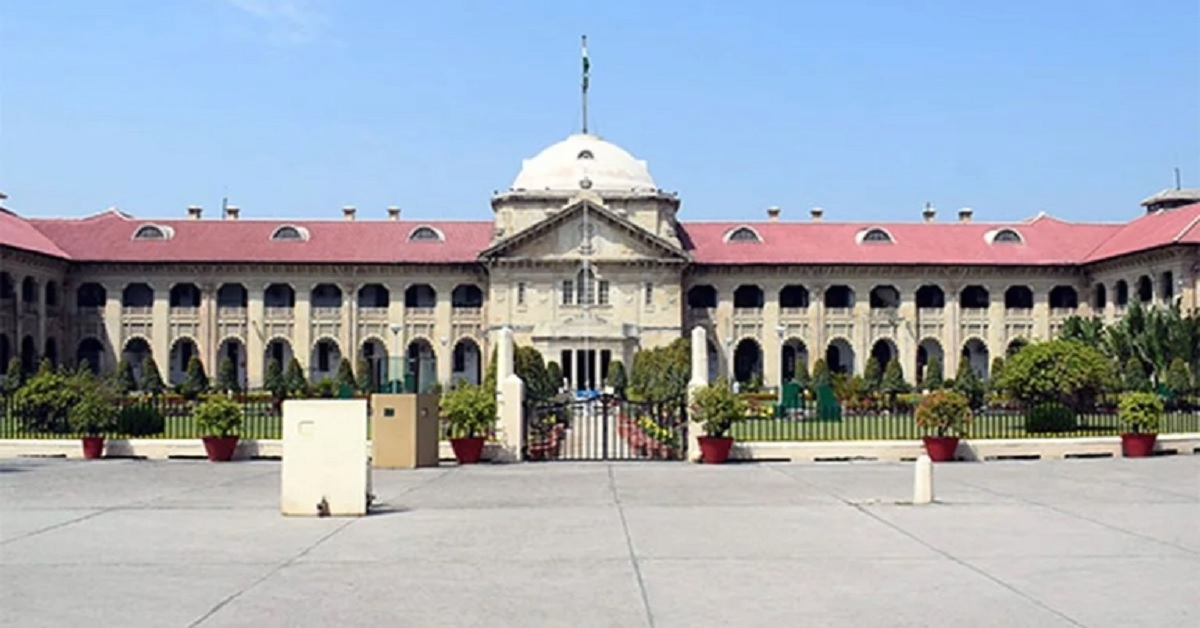
The Allahabad High Court’s July 2, 2026 judgment on the proposed widening of Varanasi’s Dalmandi area is, at one level, a straightforward exercise in statutory interpretation. The Court was called upon to decide whether the Places of Worship (Special Provisions) Act, 1991 prevents the State from acquiring places of worship for public infrastructure projects. Answering the question in the negative, the Division Bench of Justice J.J. Munir and Justice Arun Kumar held that the Act prohibits only the conversion of a place of worship from one religion or denomination to another. It does not, the Court concluded, curtail the State’s sovereign power to acquire land, including religious property, for secular public purposes such as roads, urban redevelopment or infrastructure expansion, provided such acquisition is undertaken in accordance with law.
Viewed narrowly, the judgment settles a local and specific legal controversy. Viewed more broadly, however, it speaks to an increasingly recurring constitutional question: what happens when the State’s power of eminent domain intersects with historic places of worship located within politically and religiously contested urban spaces especially when these culturally and religiously are those of the religious minorities? That question cannot be answered by reading the judgment in isolation.
The litigation arose from the continuing expansion of the Shri Kashi Vishwanath Dham Corridor, a project that has dramatically transformed the Varanasi urban landscape surrounding one of Hinduism’s oldest temples. The political patronage by a specific expansionist, militarist interpretation of the faith (RSS-BJP-VHP combine) is not irrelevant. Hindusim in its purest practiced form has been over the centuries not linear or semitic, by vesting authenticity of faith on three north-Indian shrines –Ayodhya, Mathura and Kashi Viswanath—lies a structured and political effort to semitise the faith that was once localised and eclectic and control power, finance and practice.[1]
Unsurprisingly therefore, with the contours of the Indian state altering since the early 1990s and more sharply and substantively since 2014, the building of shrines at these three sites has drawn political, financial and state support. The Bharatiya Janata Party (BJP) came to power with the steely organisational support of the Rashtriya Swayam Sevak Sangh (RSS) and its more vocal/rabid wings (Bajrang Dal-BD and Vishwa Hindu Parishad-VHP) in the state of Uttar Pradesh in 2017.[2] Even three years prior to this, after the regime change at the Centre (2014), pressure was brought on the Varanasi district administration regarding the Kashi Viswanath shrine.[3]
Since its announcement, the Corridor has been presented by the Uttar Pradesh Government as an exercise in heritage conservation, pilgrimage facilitation and urban renewal. At the same time, it has generated sustained criticism from residents, traders, historians, architects, conservationists and civil society organisations, who have questioned the scale of demolition, displacement and the irreversible alteration of one of India’s oldest living cities.
Consequently, the Allahabad High Court’s interpretation of the Places of Worship Act (POW), 1991 is not simply a technical pronouncement on statutory construction. It is a judicial intervention in a redevelopment project that has, for several years, borne a clear majoritarian stamp: an intersection of constitutional law, heritage conservation, minority rights, urban planning and contemporary politics.
The Kashi Corridor is more than an infrastructure project
Few redevelopment projects in independent India have altered the physical and symbolic landscape of a historic city as dramatically as the Kashi Vishwanath Corridor. Conceived as an ambitious project connecting the Kashi Vishwanath Temple directly to the ghats of the Ganga, the redevelopment sought to replace the centuries-old maze of narrow lanes surrounding the temple with wide pedestrian corridors, plazas and public spaces capable of accommodating millions of pilgrims. The State justified the project as necessary to improve accessibility, crowd management, disaster preparedness and civic infrastructure around one of India’s most visited pilgrimage centres. Yet the area selected for redevelopment was not an empty tract awaiting urban renewal.
The neighbourhood surrounding the Kashi Vishwanath Temple represents one of the oldest continuously inhabited urban settlements in South Asia. For centuries, the sacred geography of Kashi evolved organically through a dense network of ancient and historic local temples of prime religious and cultural significance, shrines, mosques, markets, residences, dharamshalas, akharas, courtyards and interconnected gullies. Its heritage lay not merely in monumental religious structures but equally in the lived urban fabric that connected them. Historians have long described the city as a layered civilisational landscape in which Hindu, Muslim and other communities inhabited overlapping social and religious spaces, creating an urban ecology unlike that of most planned cities.
This evocative report on the issue reflects the majoritarian make-over of the Kashi-Viswanath Dham Corridor, not just in terms of a brute and uni-directional take-over of culture, art, faith and individual rights, but also as a clear-cut political design to re-shape the understanding and practice of the Hindu faith. “The ruling (BJP) government and Modi, who represents Varanasi in the Lok Sabha, Dharma Vyaparis (religion traders) instead of Dharma Adhikaris (religion upholders).” The report may be read here. The Indian Express had then quoted Rajendra Tiwari, the former Mahant of the same Kashi Viswanath temple here: “Every part of the country is represented across these Ganga ghats. Where we are sitting is Lahori Tola, where people from Lahore came and settled. Then there are areas where the Bengalis settled, the South Indians, the Marathis.” They are changing the “vaastu” of the place, he says. “Yeh dharam adhikari nahin, dharam vypari hein (They don’t serve religion, they trade in religion).”
It is in this question that the recent judgement of the Allahabad High Court that clinically ignores. Adopting an approach that is jurisprudentially analysed by scholars as legal formalism (or mechanically applied jurisprudence), such an approach only narrowly protects the rule of law while turning a judicial ostrich like approach away from sociological jurisprudence and legal realism.
By completely ignoring the context of this aggressive and politically intentioned Corridor development and land acquisition, the Allahabad High Court a constitutional court has tragically obliterated the socio-political-administrative background to these demolitions and acquisitions. In leveraging the POW Act of 1991 to do so, the Court has also subtly but surely diluted the content and “Aims and Objectives” of the law.
It is in this overall context that the Dham Corridor “re=development” needs to be understood. Through the period that it took place, the redevelopment therefore triggered concerns extending beyond ordinary questions of land acquisition. Reports documenting the implementation of the project described the acquisition and demolition of hundreds of residential and commercial properties around the temple precinct. Local residents spoke of the disappearance of neighbourhoods that had existed for generations. Conservationists questioned whether the pursuit of monumental redevelopment had come at the cost of preserving Varanasi’s historic urban morphology. Architects debated whether the widening of lanes and creation of expansive public plazas fundamentally altered the cultural identity of a city historically defined by its intimate and densely layered built environment.
The project also generated controversy over the treatment of numerous smaller shrines, temples and archaeological remains reportedly discovered during demolition. While the temple administration maintained that significant structures had been carefully preserved wherever possible, it has been argued that redevelopment had prioritised visual grandeur over conservation of the city’s accumulated architectural heritage. The debate reflected competing visions of heritage itself: whether it should be understood principally through monumental architecture or through the preservation of living neighbourhoods that had evolved over centuries.
Redevelopment within a politically contested landscape
The constitutional significance of the Corridor cannot be understood without recognising another reality. The redevelopment has unfolded alongside continuing legal and political contestation surrounding the Gyanvapi Mosque, situated immediately adjacent to the Kashi Vishwanath Temple. In recent years, the mosque has become the subject of multiple civil suits, archaeological surveys and “competing” historical claims concerning the existence of a pre-existing temple beneath the present structure. Those proceedings, in turn, form part of a broader national debate concerning historical religious sites and the continued relevance of the Places of Worship (Special Provisions) Act, 1991, whose constitutional validity is presently under challenge before the Supreme Court.
Detailed reports on Gyanvapi Mosque, its history and the case may be read here, here, here, here and here.
Detailed reports on the Places of Worship (Special Provisions) Act, 1991 may be read here, here, here and here.
Detailed report on “contested” Mosques and Places of Worship Act may be read here, here and here.
The present litigation did not concern ownership of the Gyanvapi Mosque, nor did it involve competing historical claims regarding religious identity. Nevertheless, it emerged within this broader environment of heightened contestation, where disputes concerning places of worship are rarely perceived as isolated property disputes. Instead, they frequently engage larger constitutional questions concerning secularism, equality, historical memory and the relationship between religion and State power.
It is precisely because of this context that the Allahabad High Court’s interpretation of the Places of Worship Act assumes significance beyond the immediate facts before it. A judgment concerning six mosques in Dalmandi inevitably contributes to the evolving jurisprudence governing one of the Constitution’s most sensitive areas. As said before, it slants and limits the scope of application of a law enacted in 1991 for precisely this purpose: containment of aggressive politico-majoriatrian claims arounds places of worship.
Why the Places of Worship Act matters
To appreciate the importance of the Court’s ruling, it is necessary to revisit the constitutional purpose behind the Places of Worship (Special Provisions) Act, 1991. The legislation was enacted at a moment of extraordinary communal tension. Throughout the 1980s and early 1990s, disputes concerning historical places of worship increasingly became instruments of political mobilisation, culminating in the movement surrounding the Babri Masjid at Ayodhya. Parliament responded by enacting the Places of Worship Act to ensure that, with the sole exception of the Ayodhya dispute, the religious character of every place of worship as it existed on August 15, 1947 would remain unchanged.
The statute represented more than an ordinary property law. It was a legislative affirmation that independent India would not permit historical grievances to become the basis for contemporary contests over religious identity. By freezing the religious status of places of worship at the moment of Independence, Parliament sought to preserve communal harmony and reinforce the constitutional commitment to secularism embodied in the Preamble and the guarantees of equality and religious freedom.
Nearly three decades later, in the Babri Masjid demolition-Ayodhya judgment (2019), the Supreme Court described the Act as a legislative intervention that safeguards the secular character of the Republic by preventing historical wrongs, whether real or perceived, from being reopened through present-day litigation. The Court characterised the legislation as imposing a constitutional obligation of non-retrogression, ensuring that independent India’s future would not be continually reshaped by unresolved disputes from its past. It is against that constitutional backdrop that the Dalmandi dispute reached the Allahabad High Court.
Detailed reports on Babri Masjid demolition-Ayodhya judgment may be read here, here, here and here.
The question before the Court was not whether a mosque could be converted into a temple. The statute answers that unequivocally. Rather, it was whether Parliament intended the protection afforded by the Act to extend further, shielding places of worship from compulsory acquisition itself, or whether acquisition for a genuine public purpose remained outside the Act’s reach.
That seemingly narrow distinction lies at the heart of one of the most consequential interpretations of the Places of Worship Act delivered by any constitutional court since the legislation came into force.
The Dalmandi redevelopment project
The controversy before the Allahabad High Court arose from the Uttar Pradesh Government’s proposal to widen and beautify Dalmandi, one of Varanasi’s oldest commercial neighbourhoods situated approximately 800 metres from the Kashi Vishwanath Temple. As part of the continuing expansion of the Kashi Vishwanath Corridor, the State proposed to acquire numerous residential and commercial properties along the route to facilitate smoother movement of pilgrims and improve connectivity between the temple precinct and adjoining areas.
Unlike the earlier phases of the Corridor project, which had already witnessed extensive demolition of residential and commercial structures surrounding the temple, the proposed redevelopment of Dalmandi raised an additional legal question. The proposed alignment included six centuries-old mosques: Anjuman Intezamia Masjid, Masjid Rangile Shah, Masjid Ali Raza Khan, Masjid Karimullah Baig, Masjid Nisaran and Masjid Sangamarmar. According to the petitioners, these mosques were likely to be acquired and demolished as part of the road-widening exercise.
While urban redevelopment frequently involves difficult choices between public infrastructure and private property, the inclusion of functioning places of worship transformed what might otherwise have been an ordinary land acquisition dispute into a constitutional controversy. It raised a question that courts had not previously addressed in any substantial detail: does the Places of Worship (Special Provisions) Act, 1991 merely prohibit changes in the religious identity of places of worship, or does it also prevent the State from acquiring them altogether?
That question assumed particular significance because the litigation unfolded against the backdrop of continuing constitutional debates over the meaning and future of the Places of Worship Act itself. Several petitions challenging the validity of the legislation, or seeking a narrower interpretation of its provisions, are presently pending before the Supreme Court. Although the Allahabad High Court was not called upon to determine the constitutional validity of the statute, its interpretation of the Act inevitably contributes to the developing jurisprudence on one of India’s most consequential secularism laws.
The petition: More than a challenge to acquisition
The writ petition was filed by six tenants and shopkeepers carrying on business in Dalmandi. Their immediate concern was practical and personal: the proposed acquisition threatened the closure of their establishments and the loss of their livelihoods. Yet the petition deliberately framed the dispute as extending beyond commercial interests. It argued that the redevelopment would simultaneously extinguish historic places of worship that had existed long before Independence and therefore enjoyed statutory protection under the Places of Worship Act.
The petitioners contended that the six mosques proposed to be acquired had retained their religious character continuously since before August 15, 1947, bringing them squarely within the protective ambit of the 1991 legislation. Parliament, they argued, had enacted the Act to preserve precisely such sites from future interference. If pre-Independence places of worship could nevertheless be acquired and demolished in the name of redevelopment, the central objective of the legislation would stand substantially diluted.
Their challenge therefore rested on a purposive understanding of the statute. According to the petitioners, the Act could not be reduced to a prohibition against physically converting a mosque into a temple or vice versa. Such a narrow reading, they argued, ignored the broader legislative purpose of preserving religious sites from becoming casualties of contemporary political or administrative decisions. A mosque that had been acquired and demolished might not have been converted into another religious structure, but its existence as a functioning place of worship would nevertheless come to an end. From that perspective, acquisition could undermine the statutory protection just as effectively as formal conversion.
The petition also invoked broader constitutional guarantees. The petitioners argued that the proposed acquisition violated Articles 14, 21 and 25 of the Constitution by threatening both their right to livelihood and the community’s right to continue worship at long-standing mosques. They further questioned whether the project genuinely satisfied the requirement of public purpose, asserting that alternative alignments were available which could improve access to the temple without requiring demolition of existing neighbourhoods and religious structures.
Another important strand of the petition concerned the social consequences of redevelopment. Dalmandi is not merely a cluster of buildings; it is a living commercial locality whose economy has evolved over generations. The petitioners argued that the project would displace traders, workers and families whose livelihoods depended upon businesses established in the locality over several decades. While acknowledging the importance of improving civic infrastructure, they contended that the State had failed to adequately balance developmental objectives with constitutional guarantees protecting livelihood, religious practice and equality before the law.
The petition further alleged that the proposed alignment disproportionately affected one community and was therefore arbitrary. The High Court later described these assertions as “odd pleadings”, indicating that it found the allegations insufficiently substantiated by specific material placed on record. Nevertheless, the broader concern articulated by the petition—that redevelopment in religiously sensitive spaces demands heightened constitutional scrutiny—continued to inform the legal arguments advanced before the Court.
The State’s response: Eminent domain cannot be displaced by implication
The Uttar Pradesh Government fundamentally disagreed with the petitioners’ interpretation of the 1991 Act. According to the State, the legislation was enacted for a specific and limited purpose: to prohibit the conversion of places of worship from one religion or denomination to another. It was never intended to extinguish the State’s sovereign authority to compulsorily acquire land for public purposes. Reading such an exemption into the statute, the State argued, would effectively place every temple, mosque, church, gurudwara and shrine permanently beyond the reach of land acquisition laws, regardless of compelling public necessity. Parliament, it submitted, had expressed no such intention.
The State therefore relied upon the doctrine of eminent domain, the well-established constitutional principle recognising the State’s authority to acquire private property for a public purpose subject to payment of compensation and compliance with statutory safeguards. That power today is principally regulated by the Right to Fair Compensation and Transparency in Land Acquisition, Rehabilitation and Resettlement Act, 2013 (RFCTLARR Act), which replaced the colonial Land Acquisition Act of 1894 with a framework emphasising social impact assessment, rehabilitation, transparency and fair compensation.
Crucially, the State argued that the RFCTLARR Act does not create a blanket exemption for religious properties. Instead, it prescribes the conditions under which acquisition may occur while balancing developmental needs with the rights of affected persons. If Parliament had intended places of worship to enjoy absolute immunity from acquisition, it could have expressly provided so. The absence of such an exemption, according to the State, was itself significant.
The Government also relied upon provisions of the Waqf Act, 1995, which contemplate acquisition of Waqf properties under certain circumstances while requiring adherence to statutory safeguards and compensation mechanisms. These provisions, the State argued, demonstrated that Parliament recognised acquisition of religious endowments as legally permissible, subject to due process, rather than absolutely prohibited. At a deeper level, the dispute reflected two competing constitutional visions.
For the petitioners, the Places of Worship Act represented a broad constitutional guarantee preserving the continued existence of historic places of worship against contemporary State action. For the State, the Act performed a narrower but equally important function: preventing religious conversion of sites while leaving intact the ordinary operation of land acquisition law. Resolving that conflict required the High Court to answer not merely what the statute says, but what Parliament intended the Act to protect. That inquiry would lead the Bench to adopt one of the narrowest judicial readings of the Places of Worship Act since its enactment in 1991.
The Court’s reasoning: Locus standi, statutory interpretation and the doctrine of eminent domain
The Allahabad High Court’s judgment proceeds in two distinct stages. The first concerns maintainability—whether the petitioners possessed the legal standing to challenge the acquisition. The second addresses the larger constitutional issue of whether the Places of Worship (Special Provisions) Act, 1991 limits the State’s power to compulsorily acquire places of worship. While the Court ultimately dismissed the petition on grounds of locus standi, it nevertheless chose to examine the substantive legal issue. In doing so, it delivered one of the most detailed judicial interpretations of the Places of Worship Act since its enactment.
A threshold question: Who can challenge the acquisition?
The Bench first noted that the petitioners were tenants and shopkeepers, not the owners of the properties proposed to be acquired. Although they undoubtedly stood to lose their businesses and livelihoods, the Court held that the legal challenge to acquisition primarily belongs to those whose proprietary rights are directly affected.
Under the RFCTLARR Act, 2013, it is ordinarily the title holder who possesses the right to object to acquisition, negotiate compensation or challenge the legality of the State’s exercise of eminent domain. Since none of the property owners had approached the Court, the Bench found it difficult to sustain a challenge instituted solely by tenants.
“We would think that the petitioners are more or less here, in order to protect their business and source of livelihood, rather than proprietary rights,” the Court remarked, reported LiveLaw. This observation should not be misunderstood as dismissing the hardships that acquisition may cause tenants. Rather, it reflects a long-established principle of land acquisition law: economic injury does not necessarily confer the same legal standing as proprietary ownership. Yet, the conclusion also reveals one of the limitations of the judgment.
The Court did not meaningfully engage with the evolving constitutional jurisprudence surrounding Article 21, where livelihood has increasingly been recognised as an integral component of the right to life. Decisions such as Olga Tellis v. Bombay Municipal Corporation have acknowledged that displacement and deprivation of livelihood engage constitutional protections beyond conventional property rights. While Olga Tellis arose in a different factual context, the judgment nevertheless illustrates that constitutional standing cannot always be viewed exclusively through the lens of ownership.
The Bench’s approach therefore reflects a relatively traditional understanding of locus standi in acquisition proceedings, even as constitutional jurisprudence has gradually expanded recognition of those indirectly affected by State action.
Can ordinary worshippers defend a mosque?
The Court adopted a similar approach regarding the six mosques proposed to be acquired. The petitioners argued that, as members of the Muslim community, they were entitled to seek judicial protection for places of worship that had existed for centuries. The Court disagreed.
Each of the six mosques, it observed, was a registered Waqf administered by its own Mutawalli. Under the statutory framework governing Waqf properties, it is primarily the Mutawalli and the State Waqf Board that are entrusted with protecting Waqf assets and representing them before courts.
The Bench therefore held:
“The mosques are admittedly registered Waqf, with their own Mutawalli in each case. No doubt, members of the Muslim community may come forward in certain cases, but essentially it is the Mutawalli and the Waqf Board, who have to protect such properties. We have, nevertheless, heard the petitioners on this issue as well. If we hear the petitioners on this issue and pass judgment, it might prejudice the rights of the Mutawalli and the Waqf Board, who might have something to say in the matter, and their locus is pre-eminent, and not of the petitioners”. (Para 36)
Importantly, the Court did not hold that the mosques themselves lacked legal protection. Instead, it concluded that these particular petitioners were not the appropriate parties to assert those rights. This distinction assumes significance because the judgment expressly leaves open the possibility of future litigation by the Waqf Board or the respective Mutawallis. In other words, the Court’s dismissal of the petition cannot be read as foreclosing all future challenges to the acquisition of the mosques.
Interpreting the Places of Worship Act: Conversion is not acquisition
The central legal question before the Bench was whether the Places of Worship (Special Provisions) Act, 1991 prevents the State from acquiring a place of worship that existed before August 15, 1947.
The petitioners relied primarily upon Sections 3 and 4 of the Act. Section 3 prohibits the conversion of any place of worship belonging to one religious denomination into a place of worship of another denomination or another section of the same religion. Section 4 declares that the religious character of every place of worship existing on 15 August 1947 shall continue to remain the same. According to the petitioners, these provisions effectively insulated pre-Independence places of worship from acquisition or demolition because any such action would inevitably alter their religious character.
The High Court rejected this interpretation. The Bench cautioned against reading Section 4 in isolation. If viewed independently, Section 4 might appear to suggest that every place of worship existing on 15 August 1947 must physically remain untouched forever. However, the Court held that such a reading would misconstrue the statute and disregard the legislative context in which it was enacted.
Instead, the Court adopted what it described as a harmonious construction of Sections 3 and 4. Read together, these provisions reveal Parliament’s true objective—to prevent one religious community or denomination from converting a place of worship belonging to another community after Independence. Thus, a temple existing on 15 August 1947 cannot subsequently become a mosque or church; equally, a mosque cannot be converted into a temple or any other place of worship. That, according to the Court, is the extent of the statutory prohibition.
The judgment stressed that Parliament enacted the Places of Worship Act in the aftermath of escalating communal disputes over religious sites to preserve communal harmony and maintain the religious status quo existing at the time of Independence. Nothing in the language of the Act, however, indicates an intention to withdraw the State’s traditional power to acquire land for public purposes.
“Now, Sections 3 and 4 of the Act of 1991 have to be harmoniously construed, in particular, sub-Section (1) of Section 4. Read in isolation, sub-Section (1) of Section 4 might seem to declare that the religious character of a place of worship existing on the 15th day of August, 1947 is immutable, to wit, if it was a temple, it will remain a temple, if a church, it would remain that, and if a mosque, it would continue to be so. But reading it this way, would be a misconstruction of the scope of the Statute. When Section 4(1) of the Act of 1991 is read together with Section 3, it is evident that there is a prohibition imposed by Section 3 upon any person converting any place of worship of any religious denomination or a sect thereof into a place of worship of a different sect of the same denomination or to that of a different religious denomination. Sections 3 and 4 of the Act of 1991, when harmoniously construed, prevent the religious character of a place of worship belonging to a religious denomination from being changed into a place of worship of another religious denomination, from whatever it was on the 15th day of August, 1947. In short, a temple on 15th August, 1947 cannot be converted to a church or a mosque, and likewise, a mosque or a church to a temple.” (Para 42)
According to the Court, interpreting the 1991 Act as creating absolute immunity from acquisition would place every religious property beyond the reach of public infrastructure projects, regardless of necessity or public interest. Such an interpretation, the Bench held, finds no support either in the statutory language or in the legislative purpose underlying the Act.
The Court therefore concluded that the Places of Worship Act protects religious identity, not ownership. It prevents the alteration of the religious character of places of worship but does not prohibit their acquisition for roads, public infrastructure or other secular public purposes carried out in accordance with law and accompanied by payment of compensation.
The Bench also found support for this interpretation in the amended provisions of the Waqf Act, 1995. Section 51 expressly recognises that Waqf properties may be acquired for public purposes under the RFCTLARR Act or other land acquisition laws, provided the acquisition is undertaken in consultation with the Waqf Board and subject to statutory safeguards, including that it should not contravene the Places of Worship Act, be for an undisputed public purpose, and provide appropriate compensation or suitable alternative land where required. Far from prohibiting acquisition, the Waqf Act, the Court held, prescribes the conditions under which such acquisition may lawfully take place.
“Section 51 of the Waqf Act, 1995 (as amended by Act No. 14 of 2025) provides, by virtue of the second proviso to sub-Section (1A) of Section 51 that nothing contained in this sub-Section, that is to say, the prohibition on sale, gift, exchange, mortgage or transfer of Waqf property being void, shall affect any acquisition of Waqf properties for a public purpose, under the Act of 2013, or any other law relating to acquisition of land, if such acquisition is made in consultation with the Board. The Board, of course, means the Waqf Board. The third proviso says that the acquisition shall not be in contravention of the Act of 1991, the provision upon which learned Counsel for the petitioner has much harped.” (Para 44)
The Court’s understanding of eminent domain
The judgment is equally significant for its reaffirmation of the constitutional doctrine of eminent domain. The Bench held that nothing in the Places of Worship Act suggests Parliament intended to curtail the State’s sovereign authority to acquire land for public purposes. Such a conclusion, it reasoned, would create an extraordinary category of property permanently insulated from acquisition—something Parliament neither expressly stated nor necessarily intended.
The Court explained:
“The purport of the Act of 1991 is not to place beyond the pale of authority of the State’s right as the owner paramount of all lands in the territory of India and to acquire and use it for any public purpose, subject, of course, to the owner’s right to receive just and fair compensation. That is what the doctrine of eminent domain, after all, means. The Act of 1991 is not meant to derogate from that right of the State.” (Para 42)
The reasoning reflects a limited ,classical understanding of eminent domain: private rights yield to public necessity, subject to legality, due process and compensation. However, the judgment also illustrates a recurring feature of Indian constitutional adjudication. The Court devotes considerable attention to affirming the State’s acquisition powers but relatively little to examining the quality of judicial review that should accompany their exercise—particularly where acquisition affects centuries-old religious institutions. The distinction is important.
Recognising that the State possesses the power to acquire land does not automatically answer whether a particular acquisition satisfies constitutional standards of fairness, proportionality or necessity.
Reliance on Ismail Faruqui
To reinforce its interpretation, the Bench relied upon the Constitution Bench decision in Dr. M. Ismail Faruqui v. Union of India (1994). That decision, delivered in the aftermath of the acquisition of land around the disputed Ayodhya site, held that acquisition of a mosque is not constitutionally prohibited merely because it is a place of worship. The Constitution Bench observed that offering namaz is not necessarily confined to a mosque, and consequently a mosque does not enjoy absolute immunity from acquisition.
The Allahabad High Court relied upon these observations to conclude that acquisition of religious property remains constitutionally permissible where undertaken for a legitimate public purpose. The reliance is doctrinally understandable because Ismail Faruqui continues to remain binding precedent on land acquisition. Yet it also revives one of the most debated aspects of Indian constitutional law.
The observations concerning the essentiality of mosques to Islamic practice have been criticised by constitutional lawyers for venturing into theological questions that were arguably unnecessary for deciding the acquisition dispute before the Court. Indeed, in M. Siddiq v. Mahant Suresh Das (Ayodhya, 2019), the Supreme Court clarified that Ismail Faruqui should be understood in the limited context of acquisition and should not be read as a broader pronouncement on Islamic doctrine.
The Allahabad High Court follows precisely that limited approach. It relies on Ismail Faruqui not to determine the importance of mosques within Islam, but to reaffirm the narrower proposition that religious properties are not constitutionally immune from compulsory acquisition. Yet that conclusion, while legally defensible, does not exhaust the constitutional questions raised by the case. The more difficult issue is not whether acquisition is legally permissible.
It is how courts should scrutinise the exercise of that power when acquisition affects historic places of worship situated within politically contested landscapes. That question, significantly, remains largely unanswered by the judgment.
A narrow reading of a law enacted to preserve constitutional secularism
The Allahabad High Court’s judgment is likely to become an important precedent in future disputes involving religious properties and public infrastructure. Its central holding—that the Places of Worship (Special Provisions) Act, 1991 does not prohibit the State from acquiring places of worship for secular public purposes—is likely to be cited in litigation involving roads, railways, metro projects, heritage redevelopment and urban renewal schemes across the country. Yet, while the judgment provides a coherent textual interpretation of the statute, it also leaves several constitutional questions unanswered. These unanswered questions are important because they go to the heart of the constitutional balance between State power, religious freedom and secularism.
The High Court proceeds on the premise that Parliament intended the Places of Worship Act to prevent only one mischief—the conversion of a place of worship from one religion to another. There is textual support for this conclusion. Sections 3 and 4 repeatedly refer to “conversion” and “religious character.” Read literally, they do not expressly prohibit acquisition. However, constitutional interpretation rarely ends with the literal text. Every statute must also be understood in light of the constitutional purpose it seeks to achieve.
The Places of Worship Act was enacted in September 1991 during one of independent India’s most volatile communal moments. The Ram Janmabhoomi movement had transformed disputes over historical religious sites into instruments of mass political mobilisation. Parliament responded by freezing the religious character of every place of worship as it existed on August 15, 1947, making a conscious constitutional choice that independent India would not continually reopen disputes rooted in medieval history. In Ayodhya jugdment, the Supreme Court recognised precisely this objective.
The Court described the Places of Worship Act as a legislative instrument that protects the secular foundations of the Constitution by preventing history from becoming a source of recurring communal conflict. It called the Act a statutory reflection of India’s constitutional commitment to equality, fraternity and secularism, observing that the law imposes a principle of constitutional non-retrogression—the Republic would move forward from the moment of Independence rather than repeatedly litigate the past. Against that backdrop, an important question arises.
If Parliament intended to preserve communal harmony by protecting historic places of worship, does that protection concern only their religious identity, or also their continued existence? The Allahabad High Court answers only the first question. It does not meaningfully engage with the second. That omission does not necessarily render the judgment incorrect. But it does illustrate the limits of a purely textual approach when interpreting legislation enacted to serve a larger constitutional purpose.
Conversion and acquisition: A distinction that invites further debate
The judgment rests upon a clear distinction between conversion and acquisition. According to the Court, acquisition changes ownership; conversion changes religious identity. Legally, the distinction is logical. Constitutionally, however, it is more complicated. A mosque acquired for a road project has not become a temple; a church acquired for a metro line has not become a gurudwara; yet neither continues to function as a place of worship. This raises an important constitutional question that the judgment leaves unanswered.
Can the religious character of a place meaningfully survive once the place itself has ceased to exist? The answer is not obvious. One could argue, as the Court does, that Parliament deliberately chose only to prohibit conversion and not acquisition. Equally, one could argue that the continued existence of historic places of worship forms part of the very constitutional settlement the Act sought to preserve after Independence. Neither interpretation is implausible. The issue is likely to acquire greater significance if future redevelopment projects affect historic temples, mosques, churches or gurudwaras elsewhere in the country.
The meaning of “public purpose”
Perhaps the most important constitutional issue left largely unexplored by the judgment concerns the idea of public purpose. Throughout the decision, the Court accepts road widening, urban infrastructure and improved pilgrimage access as legitimate public purposes. Ordinarily, that proposition is uncontroversial. Courts have long recognised roads, railways, public transport and civic infrastructure as classic examples of public purpose. However, constitutional adjudication ordinarily does not stop there.
Where fundamental rights are affected, courts frequently ask additional questions.
- Is the objective legitimate?
- Was due fair and reasonable process followed in the actions of acquisition of ancient temples and mosques: dialogues, engagements, adjudication?
- Is the chosen measure necessary?
- Could the same objective have been achieved through less restrictive means?
- Has the State adequately balanced competing constitutional interests?
Those questions receive relatively limited attention in the present judgment. This is partly explained by the Court’s finding that the petition itself suffered from lack of locus standi. Once the Court concluded that the petitioners were not the appropriate parties to challenge the acquisition, it understandably refrained from undertaking a detailed proportionality analysis. Nevertheless, the broader constitutional issue remains. Redevelopment projects affecting centuries-old places of worship occupy a category distinct from ordinary land acquisition disputes. Such projects implicate not merely property rights but also religious freedom, cultural heritage, community identity and constitutional secularism. Future litigation instituted by title holders, Mutawallis or Waqf Boards may therefore require courts to scrutinise more closely whether the asserted public purpose justifies the particular acquisition in question.
The heritage dimension
Another notable feature of the judgment is what it does not discuss. The decision treats the dispute primarily as one concerning statutory interpretation and land acquisition. It says relatively little about heritage. Yet heritage formed an important part of the wider public debate surrounding the Kashi Vishwanath Corridor.
For several years, historians, architects, urban planners and conservationists have debated whether redevelopment of the temple precinct should be understood merely as infrastructure expansion or also as a profound transformation of one of India’s oldest living cities. The issue extends beyond individual buildings. Varanasi’s historic significance lies not only in monumental structures such as the Kashi Vishwanath Temple or the Gyanvapi Mosque but equally in the intricate network of neighbourhoods, shrines, markets and narrow lanes that evolved over centuries.
Urban heritage increasingly recognises that cities possess value not merely because of isolated monuments but because of the relationships between monuments, communities and everyday life. Indian constitutional law itself reflects this concern. Article 49 places an obligation upon the State to protect monuments of national importance, and Article 51A(f) recognises a fundamental duty to value and preserve the country’s composite culture. Neither provision directly governed the dispute before the Allahabad High Court. Yet both remind us that redevelopment of historically significant urban spaces inevitably raises constitutional questions extending beyond land acquisition alone.
What the judgment leaves open
It is equally important to understand what the Court did not decide. The judgment does not hold that every acquisition of a religious property is automatically valid. Nor does it approve every aspect of the Dalmandi redevelopment project. The Court does not examine whether the acquisition satisfies every procedural safeguard under the RFCTLARR Act; it does not determine whether consultation requirements under the Waqf Act were fully complied with; and it does not decide whether compensation is adequate. Nor does it adjudicate upon the independent rights of the Waqf Board or the Mutawallis, expressly leaving those questions open for future proceedings. Accordingly, the judgment should not be read more broadly than its ratio permits.
Its central proposition is narrower: the Places of Worship Act, by itself, does not prohibit acquisition of places of worship for a lawful public purpose. Whether a particular acquisition satisfies constitutional and statutory safeguards remains a separate inquiry.
Conclusion: Development, secularism and the future of the Places of Worship Act
The Allahabad High Court’s decision arrives at a moment when the constitutional future of the Places of Worship (Special Provisions) Act, 1991 itself remains under scrutiny before the Supreme Court. In that sense, the judgment is likely to influence debates extending far beyond the immediate dispute in Dalmandi. Its importance lies not because it diminishes the constitutional value of secularism, the Court expressly accepts the continuing force of the 1991 Act, but because it narrows the statute’s operational field. By distinguishing conversion from acquisition, the Court shifts future disputes involving redevelopment away from the Places of Worship Act and towards the law of eminent domain, land acquisition, proportionality and procedural fairness. Whether that shift ultimately strengthens constitutional governance or weakens one of Parliament’s most significant secular safeguards remains an open question.
If accepted more broadly, the judgment means that the principal legal battleground in future cases may no longer be whether the Places of Worship Act bars State action, but whether the exercise of eminent domain itself satisfies constitutional standards of fairness, necessity, proportionality and non-discrimination. That is a significant doctrinal shift. It also reflects a larger constitutional reality.
As Indian cities continue to redevelop historic religious precincts, whether in Varanasi, Mathura, Ujjain, Ayodhya or elsewhere, courts will increasingly be called upon to reconcile competing constitutional values: development and conservation, public infrastructure and religious freedom, State power and minority rights, heritage and modernisation. The Dalmandi judgment does not resolve those tensions. It marks the beginning of a new chapter in that conversation.
The complete judgment may be read below:
Related:
The Challenge to Places of Worship Special Provisions Act, 1991 is Misconceived
Article 32 cannot be invoked to enforce all disputes relating to the Places of Worship Act: SC
When and How Ram Vilas Paswan made a strong pitch for the Places of Worship Act, 1991
Understanding the Supreme Court’s Interim Intervention in the Waqf Amendments, 2025
[1] Announced with much fanfare in March 2019, when prime minister Modi laid the foundation stone, it was formally inaugurated in 2021; https://www.pib.gov.in/PressReleasePage.aspx?PRID=2122058®=48&lang=2
[2] https://www.thehinducentre.com/the-arena/current-issues/advani-to-modi-to-yogi-a-hindutva-story-foretold/article64931577.ece; https://frontline.thehindu.com/cover-story/article25545271.ece
[3] Babri Masjid Demolition: Point of Departure, and of Arrival, Teesta Setalvad, Social Scientist; https://www.jstor.org/stable/27249507