


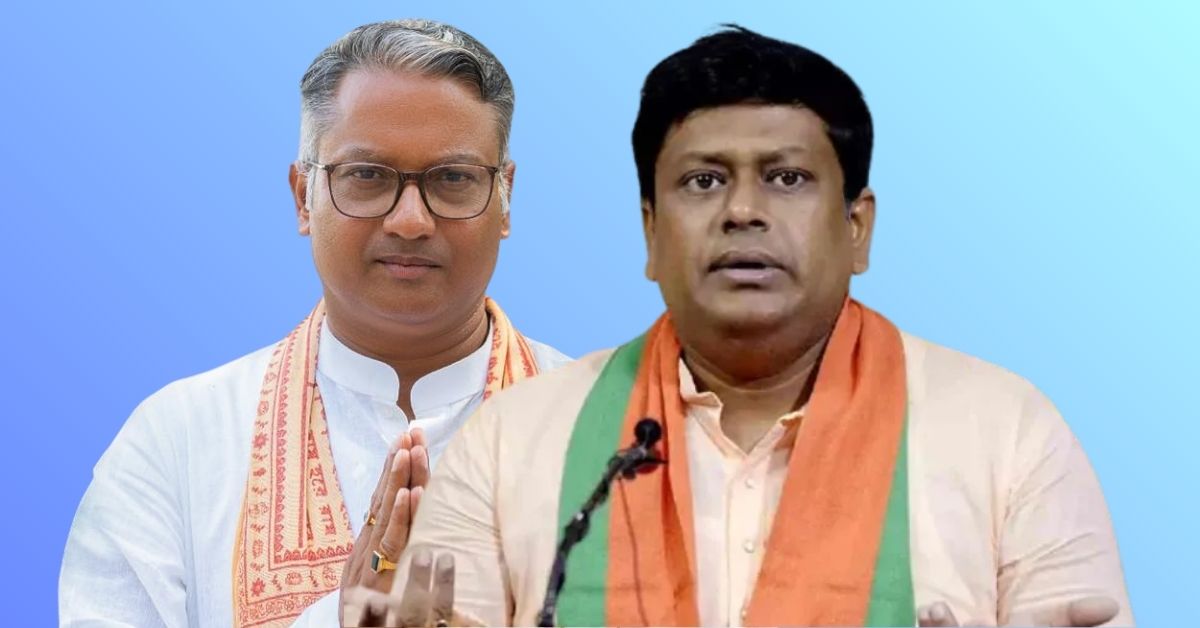
Citizens for Justice and Peace (CJP) has filed two separate complaints before election and law-enforcement authorities in West Bengal alleging serious violations of the Model Code of Conduct (MCC), the Representation of the People Act, 1951 (RPA), and provisions of the Bharatiya Nyaya Sanhita, 2023 (BNS) by Bharatiya Janata Party leaders during the ongoing election campaign in the state.
The complaints, both dated April 27, 2026, concern speeches allegedly delivered by Union Minister of State for Education and BJP MP Sukanta Majumdar in Panihati, North 24 Parganas on March 29, 2026, and BJP candidate Jagannath Chattopadhyay in Suri, Birbhum on April 9, 2026.
According to CJP, both speeches amounted to appeals on religious grounds, promotion of hostility between communities, and attempts to influence the electoral process through communal polarisation. The organisation has sought intervention from election authorities and police officials, urging registration of criminal cases, issuance of show-cause notices, and other corrective measures.
CJP’s complaint against Sukanta Majumdar
On April 27, 2026, in its complaint addressed to the Chief Electoral Officer of West Bengal and the Commissioner of Police, Barrackpore, CJP alleged that Sukanta Majumdar delivered what it described as an explicitly communal and divisive speech during an election campaign in Panihati on March 29.
According to the complaint, Majumdar defended the idea of being “communal” as necessary for the protection of religion and culture and asserted that secularism had failed after Partition. CJP contends that these remarks amounted to a direct rejection of constitutional secularism and sought to create hostility toward a religious minority.
The complaint reproduces portions of the speech in which Majumdar allegedly stated that understanding the “true condition” of West Bengal required visiting districts with significant Muslim populations, specifically naming Malda and Murshidabad. CJP argues that these references portrayed Muslim-majority areas as symbols of decline and disorder and were intended to provoke suspicion and hostility against members of the minority community.
The organisation further alleges that Majumdar linked the political participation of Muslims with adverse consequences for Hindus by claiming that the Trinamool Congress deliberately allotted electoral tickets to Muslim leaders and by alleging restrictions on the use of microphones during Durga Puja celebrations in certain areas.
According to CJP, these remarks created a narrative in which the political representation of Muslims was portrayed as a threat to Hindu cultural and religious practices. The complaint argues that such rhetoric was designed to influence voters by invoking religious identity and fears of cultural displacement.
Allegations of religious polarisation
CJP maintains that the Panihati speech relied heavily on references to religion, communal violence, and Partition. According to the complaint, the repeated invocation of these themes was intended to establish a binary opposition between Hindu cultural interests and Muslim political participation.
The organisation contends that describing secularism as a failed project and presenting communal identification as necessary for cultural survival undermines the constitutional commitment to equality and secular governance. It argues that these statements sought to legitimise exclusionary politics and encourage electoral mobilisation based on religious identity.
Particular emphasis is placed on references to Malda and Murshidabad. CJP alleges that these districts were singled out not for administrative or developmental reasons but because of their demographic composition. The complaint argues that such references encouraged audiences to associate Muslim-majority regions with social or political deterioration and thereby contributed to communal stereotyping.
The complaint further characterises allegations regarding restrictions on Durga Puja festivities as attempts to create resentment and distrust toward minority communities. According to CJP, these statements transformed a religious and cultural issue into a political weapon during an election campaign.
Legal grounds raised against Majumdar
The complaint alleges that Majumdar’s speech violated provisions of the Model Code of Conduct prohibiting activities that aggravate differences or create hatred between religious communities.
CJP also invokes Sections 123(2), 123(3), 123(3A), and 125 of the Representation of the People Act, 1951. According to the complaint, the speech amounted to undue influence upon voters, appeals on religious grounds, promotion of enmity between communities, and attempts to foster hatred during an election.
The organisation further alleges violations of Sections 196, 197(1), 299, 352, and 353 of the Bharatiya Nyaya Sanhita, 2023. It argues that the speech promoted enmity between groups, undermined constitutional values, insulted a religious community, provoked public disorder, and disseminated claims intended to create fear and hostility.
The entire complaint may be read here:
Complaint against Jagannath Chattopadhyay
In a separate complaint on April 27, 2026 addressed to the Chief Electoral Officer, the District Magistrate of Birbhum, the Superintendent of Police, Birbhum, and the Inspector of Police, Suri Police Station, CJP raised allegations against BJP candidate Jagannath Chattopadhyay in connection with a campaign speech delivered in Suri on April 9, 2026.
According to the complaint, Chattopadhyay repeatedly framed the election as a battle to save Hindu culture and religious symbols. CJP alleges that he appealed directly to religious sentiments by urging voters to support the BJP in order to protect practices and symbols including Kanthi, Tilak, Panchali observances, Satyanarayan rituals, Shakha, Pola, Sindoor, and various places of worship.
The complaint reproduces portions of the speech in which Chattopadhyay allegedly declared that the election was necessary to safeguard these religious traditions and to protect the honour of “Sanatani Bengali women.”
CJP argues that such statements transformed the election from a contest over governance into what it describes as a religious mobilisation campaign directed at Hindu voters.
References to “Jihadis” and “Love Jihad”
A central aspect of the complaint concerns statements allegedly made by Chattopadhyay regarding “jihadis” and “Love Jihad.”
According to CJP, Chattopadhyay claimed that if the BJP did not come to power, “jihadis” would attack the Tulsi Mancha and Maa Kali would be placed in a prison van. The complaint also refers to statements concerning “Love Jihad,” which it characterises as an anti-Muslim conspiracy theory employed to create fear and hostility toward the minority community.
The organisation contends that these statements presented Muslims as existential threats to Hindu religious practices, women, and sacred spaces. According to the complaint, such rhetoric was intended to generate insecurity and resentment among voters and to encourage political support on explicitly religious grounds.
CJP argues that references to attacks on shrines, threats to deities, and dangers allegedly posed by “jihadis” served no legitimate electoral purpose and instead functioned as deliberate provocations designed to heighten communal tensions.
Electoral and constitutional concerns
The complaint states that Chattopadhyay’s speech repeatedly connected electoral success with the protection of religious symbols and practices. According to CJP, this transformed religious identity into a determining factor in electoral decision-making and thereby violated the principle that elections in a secular republic must remain free from religious appeals.
The organisation further alleges that the speech portrayed minorities as hostile actors while presenting the BJP as the sole defender of Hindu culture and safety. Such framing, according to the complaint, creates a climate of fear and exclusion that is incompatible with constitutional guarantees of equality and equal citizenship.
The complaint also contends that repeated references to “Love Jihad” and attacks on sacred sites created an atmosphere conducive to communal hostility and social unrest.
Legal provisions invoked
As in the complaint against Majumdar, CJP alleges violations of the Model Code of Conduct as well as Sections 123(2), 123(3), 123(3A), and 125 of the Representation of the People Act.
The organisation argues that the speech constituted an appeal to vote on religious grounds, promoted enmity between communities, and amounted to undue influence over voters through fear-based narratives.
CJP additionally invokes Sections 196, 197(1), 299, 352, and 353 of the Bharatiya Nyaya Sanhita, alleging that the speech promoted hostility between groups, attacked constitutional values, insulted a religious community, and was likely to provoke public disorder.
The complaint relies on the same line of Supreme Court jurisprudence cited in the complaint against Majumdar, arguing that religious appeals during elections and speech targeting religious communities undermine democratic principles and constitutional values.
Common themes across both complaints
A striking feature of both complaints is CJP’s argument that the speeches were not isolated political remarks but formed part of a broader pattern of electoral mobilisation through religious polarisation.
In both cases, the organisation alleges that Muslim communities were portrayed as threats to Hindu culture, religious practices, and public life. Both complaints assert that references to demographic realities, religious symbols, festivals, and communal narratives were used to create divisions between communities and influence voter behaviour.
CJP further argues that both speeches were delivered during an active election period when the Model Code of Conduct was in force and therefore carried heightened implications for the integrity of the electoral process.
The entire complaint may be read here:
Reliefs sought by CJP
In both complaints, CJP has requested election authorities and police officials to initiate immediate action against the individuals concerned.
CJP has sought issuance of show-cause notices for alleged violations of the Model Code of Conduct, registration of FIRs under provisions of the Representation of the People Act and Bharatiya Nyaya Sanhita, and action against event organisers.
It has also requested that the individuals concerned be censured and barred from further election campaigning, that dissemination of the speeches be restricted, and that authorities disclose whether the events were videographed in accordance with Supreme Court directions relating to hate speech monitoring.
Related
CJP files 5 hate speech complaints before CEO Maharashtra as violated MCC
CJP files 3 MCC violation complaints with CEO Maharashtra against Suresh Chavhanke for hate speech