


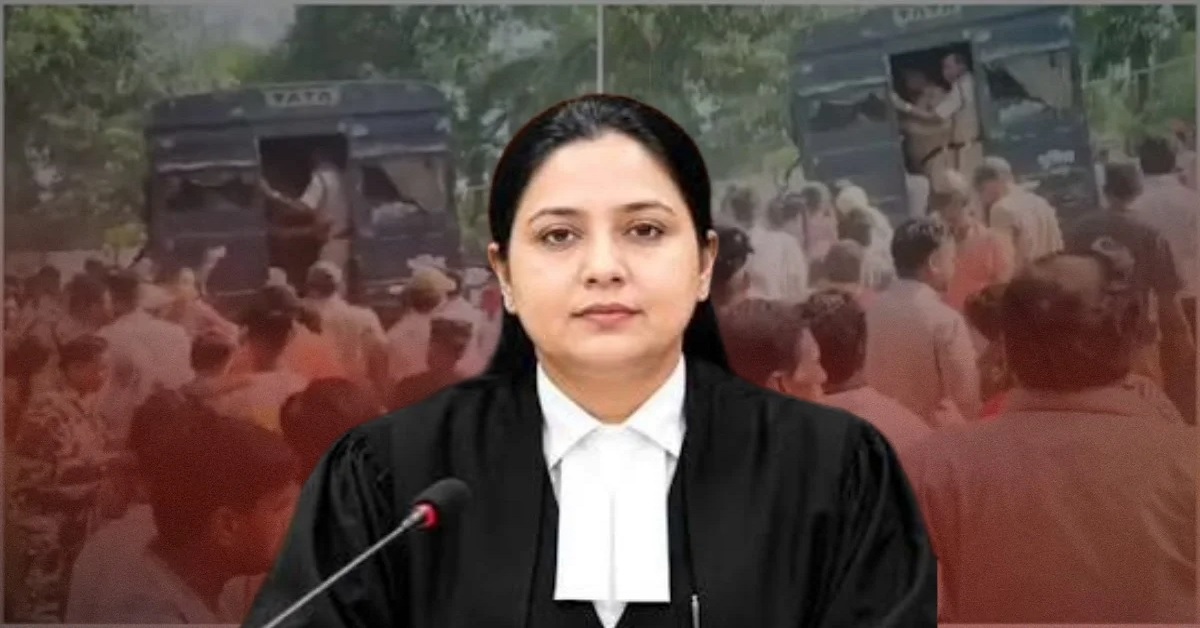
The conviction of the men responsible for the lynching of truck driver Nazir Ahmed should ordinarily have been hailed as the conclusion of one stage of a criminal prosecution. After nearly four years of investigation and trial, the Sessions Court delivered a reasoned judgment based on witness testimony, medical evidence, forensic material and the applicable provisions of criminal law. Those dissatisfied with the verdict had a constitutionally recognised remedy available to them—the right to challenge the conviction before the Madhya Pradesh High Court through an appeal. Instead, what followed was an organised campaign that sought to place the judge herself, rather than the judgment, on trial. The reason: the identity of the Judge.
Almost immediately after Additional District and Sessions Judge Tabassum Khan sentenced the accused to life imprisonment, on June 12, 2026, the focus of public discourse shifted away from the evidence, the findings of the court and the legal reasoning contained in the judgment. Instead, the controversy was deliberately reframed around the religious identity of the judge. Rather than questioning the correctness of the verdict through legal argument, sections of the cow vigilante movement, Hindutva organisations and right-wing commentators portrayed the decision as the product of the judge’s Muslim identity. The result was the systematic communalisation of an ordinary criminal proceeding.
As reported by Newslaundry, the atmosphere outside the courtroom became tense immediately after the judgment was pronounced. Family members of the convicted men protested as the police began taking the convicts into custody. Relatives reportedly lay down in front of police vehicles in an attempt to prevent their transportation. According to Hazari Lal Gurjar, President of the local Bar Association, it was during these immediate protests that the issue first began to acquire a communal colour. What had begun as emotional reactions by the families of convicted persons quickly transformed into a larger narrative portraying the judgment itself as an attack on Hindus because the presiding judge happened to be Muslim.
CJP is dedicated to finding and bringing to light instances of Hate Speech, so that the persons propagating these venomous ideas can be unmasked and brought to justice. To learn more about our campaign against hate speech, please become a member. To support our initiatives, please donate now!
The shift was significant. Criminal courts are expected to determine guilt on the basis of evidence placed before them. The personal religion, caste or background of a judge has no legal relevance to the adjudicatory process. Yet, rather than engaging with the court’s findings regarding unlawful assembly, common object, eyewitness testimony, forensic evidence and the brutality of the assault, attention rapidly shifted towards Judge Khan herself. In effect, the messenger of justice became more important than the message.
Background of the judgment
Before discussing the communal campaign against Judge Tabassum Khan, it is important to understand the significance of the judgment itself. The controversy did not arise in a legal vacuum. It followed a detailed trial concerning the brutal lynching of Nazir Ahmed, who was attacked while transporting cattle through Madhya Pradesh in August 2022. After examining eyewitness testimonies, medical evidence, forensic reports, recoveries made during investigation and other documentary material, the Sessions Court concluded that the prosecution had established the guilt of the accused beyond reasonable doubt. The court held that the accused had formed an unlawful assembly, intercepted the vehicle, violently assaulted the victims with deadly weapons and were collectively responsible for the murder of Nazir Ahmed and the attempted murder of the two surviving victims.
In a significant aspect of the judgment, Additional District and Sessions Judge Tabassum Khan expressly recognised the offence as one of mob lynching, observing that the prosecution had successfully established that the accused had acted as members of an unlawful assembly and had committed a brutal act of collective violence. While considering the question of sentence, the Court treated the mob nature of the crime as an aggravating circumstance. It emphasised the exceptional brutality of the assault, the fatal injuries inflicted upon Nazir Ahmed, the serious injuries suffered by the surviving victims, and the fact that the accused had acted in concert while armed with deadly weapons. The judgment thus acknowledged not merely the commission of murder but the distinct menace posed by vigilante violence carried out by organised groups.
The Court nevertheless declined to impose the death penalty. Relying on the Supreme Court’s jurisprudence in Bachan Singh v. State of Punjab, Machi Singh v. State of Punjab and Santosh Kumar Satishbhushan Bariyar v. State of Maharashtra (or as cited in the judgment, Santosh Kumar Singh), Judge Khan held that the case did not satisfy the stringent “rarest of rare” threshold governing capital punishment. Instead, the accused were sentenced to life imprisonment for murder under Sections 302 and 149 of the Indian Penal Code, along with separate sentences for rioting and the attempted murder of the surviving victims. The judgment thus represented a careful application of settled criminal law principles, balancing the gravity of the offence with the constitutional limitations governing the imposition of the death penalty. Most crucially, it upheld the path of reformative rather than retributive justice.
Far from being an arbitrary or summary decision, the verdict was a reasoned judicial determination running through the evidence in considerable detail. Yet, rather than engaging with the Court’s legal reasoning or challenging its findings before the appellate courts, the public discourse surrounding the case rapidly shifted away from the judgment itself. The evidence, legal analysis and findings of the trial court were overshadowed by a campaign that sought to question the verdict on the basis of the religious identity of the judge, setting the stage for one of the most disturbing instances of communal targeting of a serving judicial officer in recent years.
The detailed report may be read here.
Organised protests and the manufacture of a communal narrative
What initially appeared to be local dissatisfaction soon evolved into a coordinated campaign extending beyond the district in which the trial had taken place. Reports published by Newslaundry, Siasat and other news organisations indicate that several self-described cow protection organisations and Hindutva groups organised protests condemning the verdict, not primarily on legal grounds but by questioning the religious identity and impartiality of the judge.
Among the most visible organisations participating in these protests was the Gau Raksha Parishad. Demonstrations were organised in which effigies of Judge Tabassum Khan were publicly burnt while slogans branding her “anti-Hindu” were raised. Rather than calling for appellate review of the judgment, the demonstrations sought to portray the conviction itself as an act of religious discrimination against Hindus. The symbolism of burning a judge’s effigy represented a significant escalation from criticism of a judicial decision to the personal targeting of a serving judicial officer.
According to Newslaundry, these demonstrations did not remain confined to Madhya Pradesh. On June 22, members of Gau Raksha Parishad organised a ‘protest’ in Peer Muchalla in Mohali, Punjab, where demonstrators burned an effigy of Judge Khan while shouting slogans demanding the release of the convicted men. Similar protests were subsequently reported from Uttar Pradesh, where members of the Antarrashtriya Hindu Parishad-Rashtriya Bajrang Dal staged demonstrations against the judgment inside government premises! Authorities in that state allowed these unchecked. The geographical spread of these ‘protests’ suggested that the issue had acquired national dimensions, fuelled largely through coordinated organisational and social media mobilisation rather than any fresh legal developments in the case. As significantly, they signified powerful political patronage behind the acts.
Equally revealing was the language adopted by many protesters. Instead of describing the judgment as legally incorrect or identifying alleged errors in the appreciation of evidence, the demonstrations repeatedly referred to Judge Khan’s religion. Her Muslim identity became the principal basis upon which the legitimacy of the judgment was questioned. This represented a dangerous inversion of constitutional values. Judicial decisions are meant to be evaluated through legal reasoning, not through the religious identity of the individual delivering them.
Social media as a vehicle for intimidation
The campaign rapidly migrated from public demonstrations to social media, where it assumed an even more disturbing form. An extensive online campaign filled with communal abuse, personal attacks and threats directed specifically at Judge Khan.
Numerous social media posts reportedly described her as “anti-Hindu” and questioned her ability to dispense impartial justice because she was Muslim. Others employed openly derogatory communal slurs directed at Muslim women. These posts did not merely criticise the verdict; they sought to delegitimise Judge Khan’s authority as a judicial officer by reducing her identity to her religion. Gender dimensions of targeted majoritarian abuse have been increasingly common phenomenon witnessed by Muslim women in public life at multiple levels.
Several videos circulated widely across social media platforms, amplifying these narratives before large audiences. One of the most disturbing videos reportedly featured an individual using deeply offensive communal language while referring to the judge and warning that there would be a “bloodbath” if the convicted men were not released within ten days. The individual threatened violence extending beyond Madhya Pradesh and attempted to portray the judicial verdict as justification for communal mobilisation.
Judge: ADJ Tabassum Khan
14 गौ रक्षकों को सुनाई उमर क़ैद की सजा
ADJ Tabassum Khan जैसे लोग कितना भी
पढ़ ले मक़सद इनका एक ही रहता है हिंदू काफिर हैजो पहले अपने मजबह को देखते बाद में संविधान
को वो कभी न्याय नहीं कर सकतेहिंदुओं ऐसे लोगो से देश से भगाना जरूरी है pic.twitter.com/mNHeVWSbvQ
— Amrendra Bahubali 🇮🇳 (@TheBahubali_IND) June 17, 2026
Hindutva Scum calls for killing of a judge who sent 7 criminals to jail for lynching a Muslim
Instead of arresting the scum,MHA
Cyber Cell sent me a notice to remove the video or face actionOnly in India,a criminal goes scot free while the whistleblower faces intimidation pic.twitter.com/VKcLJRLUDL
— Nehr_who? (@Nher_who) June 26, 2026
Another widely circulated video showed a self-described cow protector standing beside a truck transporting cattle. Rather than discussing the legal findings of the Sessions Court, he argued that cow protection groups should no longer intercept vehicles because those who had done so in the present case had been sentenced to life imprisonment. He went further by declaring that Judge Tabassum Khan would have to reverse her decision and called upon cow protection groups from Agra and other regions to organise protests against her.
Such statements represented an outright attack on India’s constitutional structure governing criminal justice. Judicial orders are not reversed because of public demonstrations or threats of violence. They are challenged through appeals before superior courts. The repeated demands that the judge herself “reverse” the judgment fundamentally misunderstood—and arguably rejected—the institutional framework of the Indian judiciary.
Amplification by influential public figures
The controversy received additional momentum when influential right-wing personalities publicly endorsed the campaign against the judgment. Among the most prominent was Sudarshan News editor Suresh Chavhanke.
14 गौ रक्षकों को उम्रक़ैद.. जज तबस्सुम ख़ान के फैसले पर न्याय संग्राम
देखें #बिंदास_बोल मेरे साथ @DrMohanYadav51 https://t.co/4gJZkzlUfh
— Dr. Suresh Chavhanke “Sudarshan News” (@SureshChavhanke) June 19, 2026
As reported by Newslaundry, Chavhanke described the Sessions Court’s judgment as “judicial lynching” during a televised programme. Declaring his solidarity with the convicted men and their families, he stated: “We stand with all the gau-rakshaks and their families. This fight is not yours alone; it is ours too.”
The significance of such statements lies not merely in their criticism of the verdict but in the authority and reach of the platform from which they were delivered. When prominent media personalities portray judicial decisions as manifestations of religious bias without engaging with the reasoning contained in the judgment, they contribute to the erosion of public confidence in the impartiality of the judiciary. Such narratives risk encouraging audiences to view judges not as neutral adjudicators but as representatives of religious communities.
Police intervention and criminal investigation
As the campaign intensified, law enforcement authorities eventually intervened. According to Newslaundry, the Seoni Malwa Police registered a First Information Report after taking suo- motu cognisance of the communal and threatening material circulating online.
Station House Officer Sudhakar Bhaskar confirmed that the FIR had been registered against individuals responsible for communal posts and videos under relevant provisions of the Bharatiya Nyaya Sanhita. He further stated that the cyber cell had been tasked with identifying the origin of the viral videos, tracing those responsible for their circulation and continuously monitoring social media platforms for additional inflammatory content.
The registration of the FIR reflected official recognition that the controversy had moved beyond ordinary criticism of a judicial verdict. The campaign contained elements capable of promoting communal hostility, intimidating a judicial officer and potentially disturbing public order. Police intervention therefore became necessary not to suppress legitimate criticism but to investigate conduct that allegedly crossed the threshold into criminal intimidation and hate speech.
Concern within the legal community
The developments also generated widespread concern among members of the legal fraternity. Hazari Lal Gurjar, President of the Bar Association, questioned why stronger institutional measures had not been initiated despite the communal targeting of a serving judicial officer. Speaking to Newslaundry, he expressed concern that a woman judge was facing communal abuse, gendered insults and threats of violence while the higher judiciary had not initiated suo motu contempt proceedings or taken more visible action to protect judicial independence.
Former Chief Judicial Magistrate Pawan Kumar similarly emphasised that the rule of law provides an established remedy for any litigant dissatisfied with a judgment. The correctness of judicial decisions is examined by appellate courts through structured legal procedures, not by personal attacks directed at judges. Public confidence in the judiciary depends upon preserving this distinction.
Several lawyers also reportedly observed that many of those criticising the judgment had not actually read it. According to Advocate Sumit Gehlot, quoted by Newslaundry, much of the outrage appeared to stem from hearsay rather than any informed engagement with the evidence analysed by the court.
Senior Congress leader Pawan Khera also spoke out on social media in support of Judge Tabassum Khan, and said “On June 12, 2026, First Additional Sessions Judge Tabassum Khan sentenced seven men to life imprisonment for the 2022 lynching of Najir Ahmed. All the convicts are indeed Hindu men. But they were not convicted because of their religion; they were convicted because the investigation found them guilty of rioting, attempted murder and murder. Yet our Hindu brother in the video is not outraged by their behaviour. His outrage is reserved for one fact alone: that the judge who convicted them is a Muslim woman. In any civilised society, such bigotry would invite swift legal action. In Modi’s India, however, this man spewing hate walks free while notices are sent to those questioning his conduct. Jai ho!”
On June 12, 2026, First Additional Sessions Judge Tabassum Khan sentenced seven men to life imprisonment for the 2022 lynching of Najir Ahmed.
All the convicts are indeed Hindu men. But they were not convicted because of their religion; they were convicted because the… https://t.co/xzccM88CHv
— Pawan Khera 🇮🇳 ಪವನ್ ಖೇರಾ (@Pawankhera) June 26, 2026
An attack on judicial independence
The events following Judge Tabassum Khan’s verdict raise constitutional concerns extending far beyond the facts of one criminal case. Judicial independence forms part of the basic structure of the Constitution and requires judges to decide cases without fear, favour, affection or ill will. This principle necessarily includes protection from organised campaigns of communal intimidation.
Public criticism of judicial decisions is entirely legitimate in a constitutional democracy. Courts are not immune from scrutiny, and judgments are frequently debated, criticised and overturned by appellate courts. However, there exists a profound distinction between criticising judicial reasoning and attacking a judge because of her religion.
The campaign against Judge Khan sought to erase this distinction. Rather than analysing the evidence relied upon by the Sessions Court or identifying legal errors warranting appellate interference, sections of the protest movement suggested that the judgment itself lacked legitimacy because it had been authored by a Muslim judge. Such narratives threaten to transform the judiciary into another arena of communal polarisation, where judicial authority depends not upon constitutional office but upon religious identity.
The implications extend well beyond one individual judge. If judges are made to fear organised campaigns of vilification whenever they deliver decisions against politically influential groups, the independence of the judiciary itself is weakened. The message conveyed is that legal reasoning may become secondary to identity-based mobilisation and that adverse judgments may invite not merely appeals but sustained communal intimidation. In a legal system governed by the rule of law, judges must be assessed on the strength of their reasoning and the legality of their decisions; not on the basis of their religion, gender or personal identity. Preserving that principle is essential not only for the safety of individual judges but for maintaining public confidence in the impartial administration of justice itself.
Related:
Mob lynching: Three separate incidents surface, even minors and partially disabled Muslims not safe
Another cow lynching in Nashik, one dead
Maharashtra’s shame: Cow lynching episode reported in Nashik
Allahabad HC points out misuse of cow slaughter law
K’taka: Bail to cow vigilante, Puneeth Kerehalli, accused of killing Muslim man
Cow vigilantism casts its ugly shadow on Maharashtra
Allahabad HC calls out misuse of law in cow slaughter case as only cow dung recovered from scene